If you live with Generalized Anxiety Disorder (GAD), you understand the relentless cycle of worry and apprehension. Often, this internal struggle extends beyond anxiety itself, quietly eroding your sense of self-worth. Many individuals grappling with GAD also face the challenging symptom of low self-esteem, feeling a diminished sense of confidence or even worthlessness. The good news is that there are tangible, effective strategies for how to improve self-esteem even while managing GAD. This guide will explore practical approaches to cultivate a stronger, more positive self-image.
Understanding the Link Between GAD and Self-Esteem
Self-esteem theory suggests that our sense of self-worth is deeply tied to our perception of social acceptance and rejection. We've evolved to emotionally register inclusion and avoidance, with our self-esteem levels often reflecting how we believe others react to us. In theory, more acceptance should lead to higher self-esteem, while more rejection fosters lower self-esteem (Psychology Today, 2023).
The challenge for many, especially those with GAD, is that their anxiety can significantly distort this perception. The constant worry, rumination, and heightened self-consciousness characteristic of GAD can lead individuals to misinterpret neutral or even positive social cues as rejection or judgment. This skewed lens can cause a person to feel unloved or inadequate, even when they are intelligent, capable, and surrounded by supportive people. Recognizing this distortion is the first crucial step.
Reframe Your Social Mirror
One powerful way to address low self-esteem linked to GAD is to actively challenge your perceptions of social acceptance. Our anxious minds often fixate on negative interactions - a brief glance, a perceived slight, or someone's momentary unavailability - while overlooking the vast majority of positive connections. To truly understand how to improve self-esteem, you must consciously shift your focus.
Take a deliberate inventory of the people in your life who genuinely care for you versus those who neglect or reject you. You might be surprised to find that the number of supportive individuals far outweighs the negative ones. For example, consider a friend who consistently checks in, a family member who offers unconditional support, or even a colleague who praises your work. Keep a "Gratitude for Connection" journal, where you specifically list these instances of acceptance and care. Seeing these concrete examples written down can provide a powerful counter-narrative to anxious thoughts (National Institute of Mental Health, 2024).
If, after honest reflection, you find more people are avoiding you, it's an opportunity for introspection. Sometimes, the stress and worrying associated with GAD can inadvertently create distance in relationships. This is not a personal failing, but a symptom that can be addressed. Seeking therapy can provide tools to manage GAD symptoms, which in turn can significantly improve your interpersonal relationships and, consequently, your self-esteem.
Take Courageous Steps Forward
Low self-esteem often breeds inaction, as individuals become paralyzed by the fear of failure or rejection. The instinct is to avoid situations that might confirm negative self-beliefs, but this avoidance only perpetuates the cycle. A critical component of how to improve self-esteem involves deliberately taking action, even when it feels uncomfortable.
Finding the courage to branch out, engage with new people, or increase positive social interactions can have a profound impact. Start small: instead of aiming to make five new best friends, try simply striking up a conversation with a barista, complimenting a stranger's outfit, or joining a low-stakes community group like a local book club or a walking group. These small, successful interactions build confidence and provide evidence against your anxiety's predictions (Cognitive Behavioral Therapy Institute, 2023).
For those with GAD, the thought of meeting new people or facing judgment can be overwhelming. This is where the support of a therapist becomes invaluable. They can help you develop coping strategies, practice social skills in a safe environment, and gradually expose you to situations that build your confidence without triggering intense anxiety.
Cultivate Internal Validation
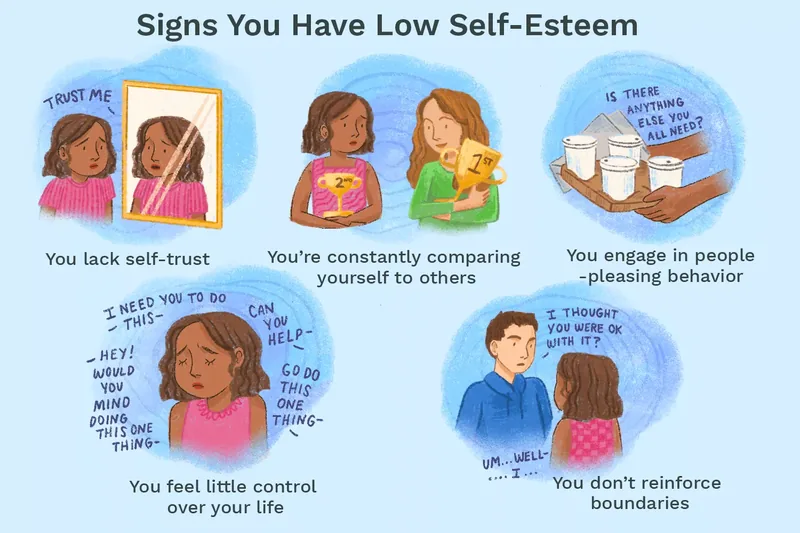
Beyond external interactions, a significant part of how to improve self-esteem lies in transforming your internal dialogue. People with low self-esteem often engage in a relentless cycle of self-criticism, with subconscious thoughts focusing on self-defeat and limitations. GAD can amplify this, making it harder to silence the inner critic.
Make a conscious effort each day to acknowledge and celebrate your strengths, achievements, and positive qualities. This isn't about arrogance, but about balanced self-perception. Try keeping a "Daily Wins" log, where you jot down even the smallest successes: completing a challenging task at work, sticking to a healthy habit, or simply managing an anxious moment effectively. These concrete reminders serve as powerful evidence of your capabilities during moments of self-doubt (Mindfulness Research Center, 2024).
Practicing self-compassion is also vital. Treat yourself with the same kindness and understanding you would offer a close friend. Instead of berating yourself for a mistake, acknowledge the difficulty, learn from it, and move forward with empathy. Challenging negative self-talk and replacing it with more realistic, compassionate thoughts can gradually rewire your brain for greater self-acceptance.
Seek Professional Guidance
If you have Generalized Anxiety Disorder and consistently struggle with low self-esteem, remember that you don't have to navigate this journey alone. Professional support is a highly effective way to manage both GAD symptoms and their impact on your self-worth. Understanding how to improve self-esteem often requires specialized tools and guidance.
Therapists can offer various treatment options tailored to your needs. Cognitive-Behavioral Therapy (CBT), for instance, is highly effective in helping individuals identify and challenge distorted thought patterns and develop healthier coping mechanisms for both anxiety and negative self-perception. Other approaches, such as Acceptance and Commitment Therapy (ACT), can help you accept difficult thoughts and feelings while committing to actions that align with your values.
In some cases, medication may also be an option to help manage the severe symptoms of GAD, which can then create space for therapeutic work on self-esteem. Discussing your experiences with a qualified mental health professional can help you explore the best path forward, empowering you to manage your anxiety, build robust self-esteem, and ultimately reach your full potential.