Imagine the mere thought of a specific food making your stomach churn, even if you intellectually know it's perfectly safe. This powerful, often involuntary reaction is known as conditioned taste aversion, a fascinating psychological phenomenon that demonstrates how quickly our brains learn to protect us from potential harm. It's a prime example of how classical conditioning can profoundly shape our dietary preferences and behaviors, sometimes after just a single, unpleasant experience.
The Phenomenon of Conditioned Taste Aversion
Conditioned taste aversion involves the strong avoidance of a particular food or drink after experiencing illness following its consumption. Unlike typical classical conditioning, which usually requires multiple pairings of a neutral stimulus with an unconditioned stimulus to create an automatic response, taste aversions often form after a single, impactful incident (Behavioral Sciences Institute, 2022).
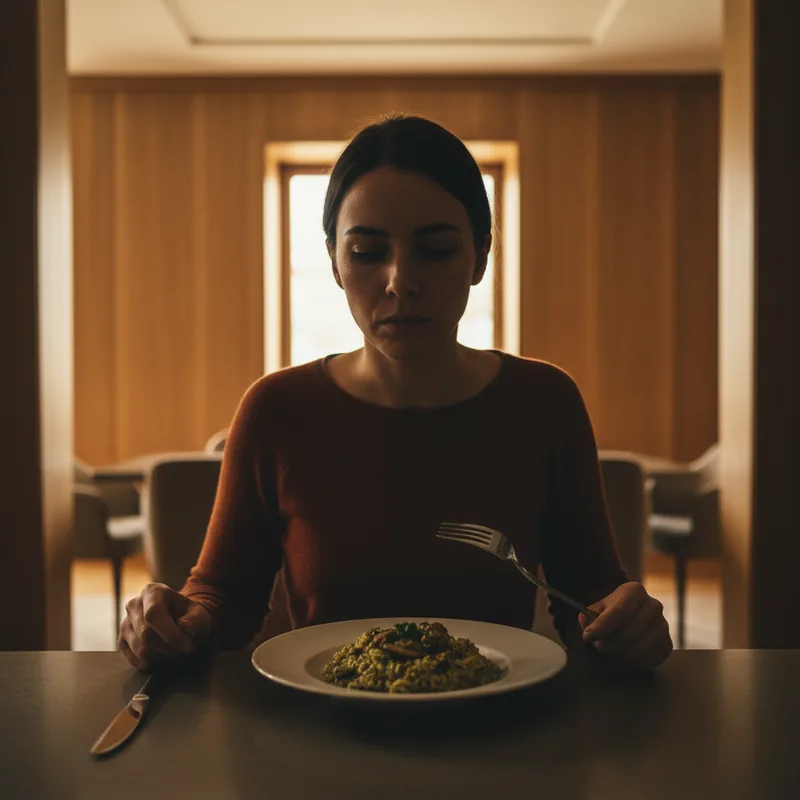
Consider a time you might have eaten something, perhaps a unique dish like a mushroom risotto, and then hours later, became violently ill. For years afterward, even the smell or sight of mushroom risotto could trigger a wave of nausea or a strong urge to avoid it. This powerful association can persist even if you logically understand that the risotto was not the cause of your sickness; perhaps you had a stomach bug or food poisoning from another source entirely.
This rapid learning mechanism is a hallmark of taste aversion classic conditioning. It highlights our innate biological preparedness to link novel tastes with subsequent discomfort, a survival mechanism that helps organisms avoid toxic substances in the natural world. The aversion can develop even when there's a significant delay between eating the food (the neutral stimulus) and the onset of illness (the unconditioned stimulus), a deviation from the tight temporal contiguity usually expected in classical conditioning.
For instance, a child who eats a bright blue lollipop at a carnival and later gets sick from motion sickness might develop an aversion not just to that specific lollipop, but to all blue-colored candies or even artificial blueberry flavors for years. The mind makes a quick, albeit sometimes inaccurate, connection to protect itself from perceived threats (Psychology Today, 2023).
Unpacking the Mechanisms: Beyond Classical Conditioning
While conditioned taste aversion is fundamentally rooted in classical conditioning principles, it presents some intriguing exceptions. Traditional classical conditioning, as famously demonstrated by Pavlov, typically requires the neutral stimulus and the unconditioned stimulus to occur very close together in time, often within seconds. However, with taste aversion, the gap can stretch to several hours, yet the association remains potent.
Early research by psychologist John Garcia and his colleagues challenged these conventional views. In a seminal experiment, Garcia exposed lab rats to flavored water (a neutral stimulus) and then, hours later, injected them with a substance that induced sickness (the unconditioned stimulus). When subsequently offered the flavored water, the rats refused to drink it, demonstrating a clear taste aversion (Garcia & Koelling, 1966). This finding was groundbreaking because it defied the established rules of temporal contiguity in conditioning.
Garcia's work underscored the concept of biological preparedness. This theory suggests that organisms are inherently predisposed to form certain associations more easily than others, especially those crucial for survival. From an evolutionary standpoint, linking a new food taste with subsequent illness is a vital adaptation. It's far more adaptive for an animal to associate sickness with a novel food it just ate than with a sound or light that occurred hours earlier.
This selective association explains why stomach upset is so readily linked to food and drink, rather than to other environmental cues that might have been present when the illness began. The brain prioritizes taste and internal discomfort in a unique way, making taste aversion classic conditioning a powerful, albeit sometimes inconvenient, learning process.
For example, someone might consume a specific energy drink before a long flight and then experience severe turbulence and nausea. Even if the nausea was entirely due to motion sickness, they might develop an intense aversion to that particular energy drink, associating its taste with the feeling of sickness, despite the lack of a direct causal link (Health & Wellness Journal, 2024).
Real-World Impact and Everyday Examples
Conditioned taste aversions are remarkably common and can significantly influence our daily lives. They can last for days, months, or even many years, shaping our food choices and dining experiences. The impact isn't limited to dramatic illness; even mild queasiness or a stomach upset can be enough to trigger an aversion.
Consider the experience of a person on a cruise who enjoys a specific seafood dish on the first night. If they later become seasick, regardless of whether the food was truly responsible, they might avoid that seafood dish, or even all seafood, for the remainder of the trip and potentially for years to come. This illustrates the strength and irrational persistence of these conditioned responses. The brain, in its effort to protect, sometimes overgeneralizes (Clinical Psychology Review, 2023).
Understanding the mechanisms behind taste aversion classic conditioning can offer insights into various phenomena, from picky eating habits in children to specific food phobias in adults. While these aversions can sometimes be inconvenient, they are fundamentally a testament to our evolutionary heritage, providing a rapid learning system designed for survival.
In essence, conditioned taste aversion is a powerful reminder that our bodies and minds are constantly learning and adapting, often in ways that bypass conscious thought. It's a primal defense mechanism, a quick and dirty shortcut to avoiding potential toxins, even if the "toxin" was just an innocent meal caught in the crossfire of a stomach bug.