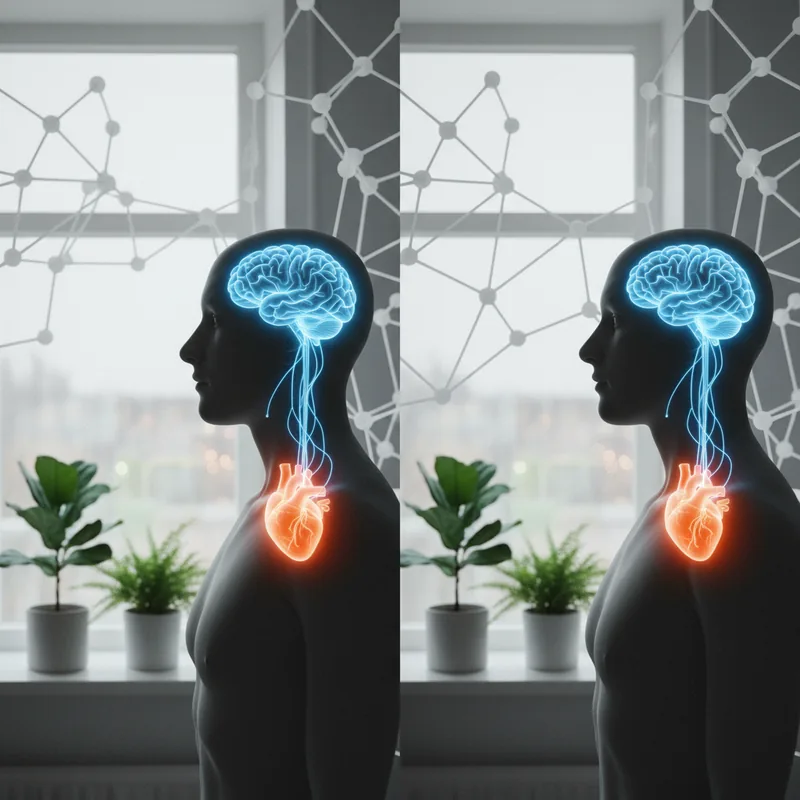
You're standing at the edge of a diving board, heart pounding, palms sweating. Is it fear of the height, or exhilaration at the thrill? The answer depends on what your brain decides--and that decision process is exactly what the two-factor theory explains key aspects of human emotion.
What Is the Two-Factor Theory?
The Schachter-Singer theory proposes that emotions emerge from two distinct components working in concert: physiological arousal and cognitive interpretation. Unlike theories that suggest emotions happen automatically, this model argues that we actively construct our emotional experiences by labeling our body's responses.
According to Harvard, 2024, this cognitive-emotional framework revolutionized psychology by demonstrating that our feelings aren't just reflexes--they're interpretations. When your body reacts to a stimulus, your brain searches for context to make sense of those physical sensations.
Consider this scenario: You're rushing to a critical meeting when your phone buzzes with an urgent notification. Your pulse quickens and adrenaline surges. Without context, you might label this as anxiety. But if the notification reveals you've won a major opportunity, that identical physiological response transforms into excitement. The physical state remains constant; only the cognitive label changes.
The Groundbreaking Experiment
In 1962, Schachter and Singer conducted a landmark study that would challenge everything we thought we knew about emotion. They injected 184 participants with epinephrine--a hormone that triggers arousal symptoms like rapid heartbeat, trembling, and faster breathing.
Here's where it gets fascinating: Participants were divided into groups. One group received full information about the drug's effects. The other group remained uninformed. Each participant was then placed in a room with a confederate who either acted euphoric or irritable.
The results were striking. Those who didn't understand why their bodies were reacting were profoundly influenced by their surroundings. People exposed to a happy confederate reported feeling joyful. Those with an angry confederate felt hostility. The informed group, however, remained emotionally stable--because they could attribute their symptoms to the injection.
This demonstrates a crucial insight: Two-factor theory explains key emotional vulnerability. When we can't identify the source of our arousal, we become emotional chameleons, reflecting our environment.
Real-World Applications
The theory's relevance extends far beyond laboratory settings. Here are three scenarios that illustrate how this mechanism operates in daily life:
First Date Jitters
Meeting someone new creates physiological chaos--racing heart, flushed cheeks, nervous energy. Is this attraction or social anxiety? The two-factor theory explains key differences in how we interpret these signals. If the conversation flows and chemistry feels mutual, we label it excitement. If the setting feels awkward, we call it nervousness. Same physical state, different emotional reality.
Fitness Intensity
After an intense workout, your body is flooded with endorphins and adrenaline. Your heart pounds, you're breathless, and sweat pours down. Some people interpret this cascade as euphoric achievement. Others experience it as exhaustion and discomfort. The physical exertion is identical; the cognitive framing determines whether you feel like a champion or a victim.
Presentation Adrenaline
Standing before an audience triggers classic arousal symptoms: dry mouth, trembling hands, hyper-alertness. A seasoned speaker might interpret these signals as readiness and power, channeling them into dynamic delivery. A nervous novice labels the same sensations as fear, creating a self-fulfilling prophecy. The two-factor theory explains key performance outcomes through this labeling process.
Criticisms and Limitations
Despite its influence, the theory has faced significant scrutiny. Replication attempts have yielded mixed results. Marshall and Zimbardo's follow-up study found that participants weren't significantly more likely to adopt emotional states from confederates than from neutral observers.
Another challenge came from Maslach's research, which used hypnotic suggestion instead of epinephrine. This study revealed that unexplained arousal tends to generate negative emotions regardless of external context--a finding that contradicts the original theory's flexibility.
Perhaps most compelling is the temporal criticism: some emotions appear to precede cognitive processing entirely. The James-Lange perspective suggests that physiological differences between emotions are real and measurable, not just interpretive labels.
As noted in Mayo Clinic, 2023, modern neuroscience has revealed that emotional processing involves complex neural pathways that operate both before and during conscious awareness. This suggests the relationship between arousal and cognition may be more bidirectional than the original theory proposed.
Alternative Theories of Emotion
To fully appreciate the two-factor model, it helps to understand what came before and what challenges it:
James-Lange Theory
Proposed in the 1880s, this theory argues that emotions ARE our physiological responses. We don't tremble because we're afraid--we're afraid because we tremble. Each emotion has a unique physiological signature. The two-factor theory flips this: arousal is undifferentiated; cognition provides the meaning.
Cannon-Bard Theory
This model suggests emotions and physiological responses occur simultaneously but independently. When someone cuts you off in traffic, your heart rate spikes at the exact moment you feel fear. There's no causal sequence--just parallel processes.
Modern Synthesis
Current research suggests emotion is more complex than any single theory captures. Brain imaging shows that emotional experiences involve multiple neural networks operating at different speeds. The two-factor theory explains key aspects of conscious emotional experience, but may not account for rapid, pre-conscious emotional responses.
Practical Implications
Understanding this theory offers powerful tools for emotional regulation. Since two-factor theory explains key emotional experiences through labeling, we can influence our feelings by adjusting our interpretations.
When you feel arousal without clear cause, pause to examine context before labeling. That flutter in your stomach before a performance could be stage fright--or it could be your body preparing for excellence. The difference lies in the story you tell yourself.
This awareness also helps in relationships. Misunderstandings often arise when we attribute our partner's physiological responses incorrectly. Recognizing that arousal needs interpretation can defuse conflicts and build empathy.
The theory's greatest contribution may be this: emotions aren't passive occurrences we endure. They're active constructions we participate in creating. By understanding the two-factor mechanism, we gain agency over our emotional lives--transforming raw sensation into meaningful experience.