We demand digital safety for our children, yet the systems designed to protect them are often built on foundations of guesswork and deception. This is the paradox at the heart of Roblox's new age verification mandate.
Following intense pressure from regulators and child safety advocates, Roblox rolled out facial scanning and ID verification to segment its massive user base. The premise is simple: prove your age, get access to age-appropriate chats. But as the system goes live in the U.S., a troubling pattern is emerging. Roblox's age verification is proving to be less of a security fortress and more of a porous sieve that savvy kids can easily bypass.
The Promised Safety System
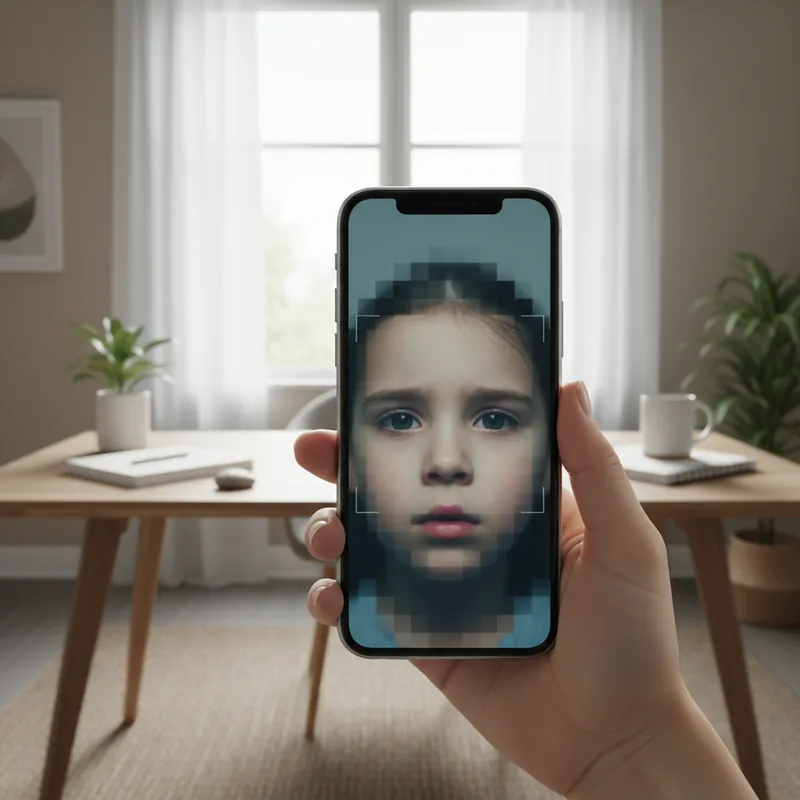
To access chat features, users must now complete a "Facial Age Estimation" through the Roblox app, powered by the third-party service Persona. The system scans your face and estimates an age range, which determines your chat group. Alternatively, users 13 and older can submit a government ID for a more definitive verification.
The logic is sound on paper. Roblox segments users into cohorts: 9-12, 13-15, 16-17, 18-20, and 21+. The goal is to create digital playgrounds where children aren't interacting with adults they don't know. As noted in a 2024 Harvard study on youth digital safety, age-gating is becoming the standard response to protect minors online (Harvard, 2024).
However, the implementation reveals critical flaws. Users can opt out of verification entirely, but they lose all chat functionality. For a platform built on social interaction, this is a significant penalty. The system also includes a "Trusted Connections" feature, allowing verified users to chat across age groups if they add each other via phone contacts or in-person QR scans.
The Workarounds and Failures
The moment the system launched, users began exposing its vulnerabilities. The facial estimation technology is notoriously inconsistent. We've seen reports of 10-year-olds being flagged as 18+, and full-grown adults with beards being placed in the 13-15 age bracket. This isn't just a minor glitch; it creates the exact cross-generational contact the system aims to prevent.
Even more alarming are the deliberate exploits. Roblox's age verification is easily defeated by simple tricks:
- The Avatar Swap: Children are using photos of older siblings or even drawing fake beards on their faces to fool the AI into estimating an older age.
- The eBay Market: A thriving black market has emerged where verified accounts are sold to minors for as little as $4, completely bypassing the identity check.
- The Parental Override: Parents are willingly scanning their faces for children, handing them unrestricted access to adult chats.
These aren't sophisticated hacks; they are basic deceptions that any tech-savvy child could attempt. One mother reported her 11-year-old son gained 18+ access within minutes by using a photo of his uncle.
The Broader Implications
The failure of Roblox's age verification is symptomatic of a larger issue in tech: the over-reliance on AI as a silver bullet for complex human problems. Facial recognition algorithms struggle with diverse skin tones, facial hair, and lighting conditions. A 2023 report by the Electronic Frontier Foundation highlighted that these systems often misidentify minors from minority backgrounds at higher rates (EFF, 2023).
Furthermore, the privacy implications are significant. Users are handing over biometric data--facial scans and government IDs--to a third-party service. While Roblox claims this data is deleted, the precedent of mandatory biometric verification for children is concerning. It normalizes surveillance for the youngest internet users.
Users are voicing their frustration across forums. Many legitimate adults are locked out of chatting with friends because the AI misjudged them. Meanwhile, predators can simply buy a verified account for a few dollars or use a fake ID generator. The system punishes honest users while failing to stop bad actors.
The Search for Better Solutions
Is there a better way? Possibly. Instead of invasive scans, platforms could rely on behavioral analysis or graduated access models that build trust over time. Some experts suggest that Roblox's age verification is a step in the right direction, but the technology simply isn't ready.
Roblox has acknowledged the issues, promising updates to allow parents to correct age estimations and to block parental falsification. But these are reactive patches to a fundamentally flawed system. Until technology can accurately verify age without bias or easy exploits, the promise of a safe digital playground remains just that--a promise. For now, parents should remain vigilant: the "verified" badge is no guarantee of safety.