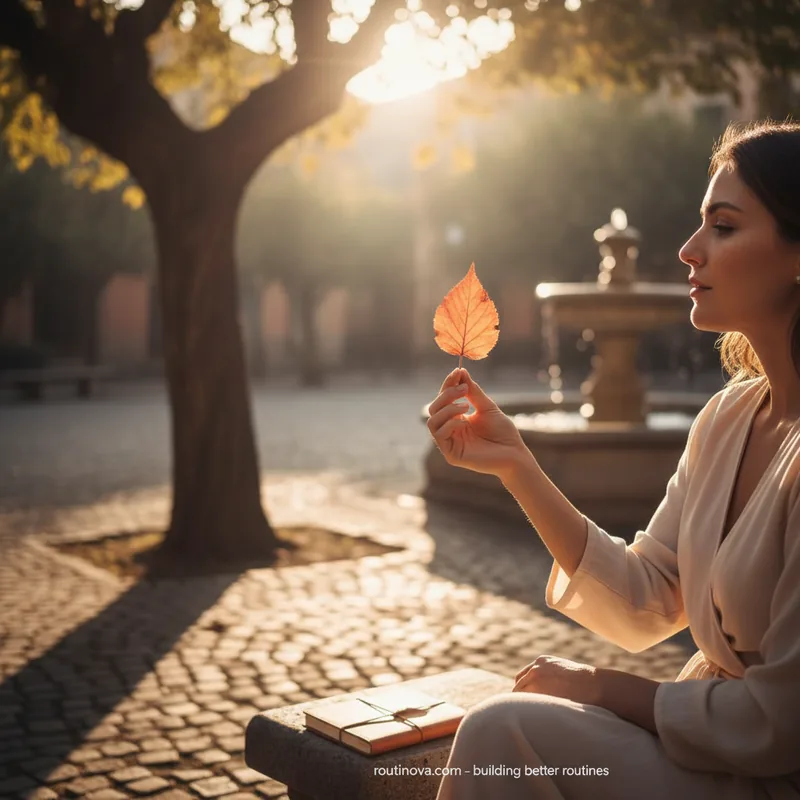
It’s 7:15 AM, and the quiet hum of your home is already battling the internal static of a mind too busy. You've tried. You’ve sat cross-legged, closed your eyes, and attempted to “clear your mind,” only to be met with a relentless torrent of thoughts, a twitching leg, or the nagging feeling that you’re doing it all wrong. The promise of calm and presence from meditation feels like a distant shore, perpetually out of reach. If this sounds familiar, you're not alone. Many of us grapple with the perceived failure of traditional mindfulness practices. For me, how I found focus wasn't through forcing stillness, but by discovering an unexpected doorway: the gentle, undemanding attention to the world around me. This journey taught me that sometimes, presence arrives when we stop chasing it and simply allow ourselves to be met by the ordinary.
The Meditation Paradox: When Stillness Feels Like Struggle
I devoured books, absorbed the wisdom, and understood, intellectually, that cultivating breath awareness was a pathway to inner peace. Yet, each attempt felt like wrestling with myself. My mind raced, my body felt exposed, and stillness didn't feel like a sanctuary; it felt like being left alone with a part of me that didn't know how to settle. So, I stopped trying.
For a long time, I carried a quiet shame, assuming there was something inherently wrong with me. I lacked discipline, I hadn’t tried hard enough, or perhaps everyone else had received a secret lesson in presence that I’d somehow missed. This common internal narrative, where we blame ourselves for not achieving an ideal state, can be more detrimental than the initial struggle itself.
Finding Your Anchor: How I Found Focus in the Everyday
Then one afternoon, without meaning to, I stumbled upon an accidental revelation. Weary from the relentless demands of early motherhood, moving through days without a quiet place to land, I was walking a familiar park path. My mind buzzed with the day’s residue, a low, persistent fatigue that felt more like a dull ache than dramatic sadness.
I paused near a tree, my gaze falling upon a single leaf. Nothing extraordinary, just a simple leaf. But something in me softened. I stayed there longer than expected, watching the way the late afternoon light touched its surface, the fine lines branching outward, the subtle dance it performed in the breeze. I wasn't trying to concentrate. I wasn't correcting my thoughts or following my breath. I was just looking.
And somewhere in that looking, something shifted. Not dramatically, without any profound insight I could name. But I felt myself arrive—in my body, in the moment—without effort. This simple act was how I found focus without any internal resistance. When I eventually moved on, my shoulders had dropped, my breathing had slowed, and the quiet vigilance I usually carried had loosened, just a little. It stayed with me.
Similarly, I once found myself captivated by the intricate patterns on a dew-kissed spiderweb in my garden, the delicate geometry holding my attention without effort. These small, undemanding observations became my unexpected anchors.
The Power of Outward Attention: A Gentle Invitation
This kind of attention—spontaneous, gentle, outward—felt profoundly different from the inward-focused practices I had struggled with. Traditional inward-focused practices often demand a readiness for introspection that isn’t always present. The world outside, however, offers a different kind of invitation. It asks nothing of us; it simply offers itself to be met.
This principle, often explored in studies of environmental psychology, suggests that natural settings can reduce cognitive load and foster 'soft fascination,' a state of effortless attention (University of Michigan, 2022). For me, it wasn’t about holding myself together; the world was already doing that. My attention wandered and returned on its own, unforced.
Over time, these moments multiplied. A patch of moss on a stone wall, the sound of water trickling over rocks, the quiet satisfaction of noticing what was ripe and what wasn’t while foraging. I even found a similar grounding when observing the slow, deliberate movements of a snail across a damp stone after a shower. I began to understand: for some of us, presence doesn’t begin inside. It begins in relationship with the world around us.
Subtle Shifts: Reclaiming Trust and Presence
At first, the changes were easy to miss. My life didn't look dramatically different; I still had anxious days and overthought things. But something subtle shifted. One evening, during a conversation with my husband, a familiar tension rose in my chest. Instead of pushing through it, I paused. I let the moment breathe. The conversation softened on its own, and I realized I hadn’t been bracing in the way I usually did.
The most striking shift was how I found focus not as a manufactured state, but as a recognized arrival. I stopped constantly monitoring how I was doing—whether I was present enough, relaxed enough, or doing it right. When I walked, I walked. When I stopped, I stopped. There was less internal commentary running in the background.
I also began to feel moments of genuine pleasure without immediately scanning for danger: a shaft of light through branches, the smell of damp earth after rain, the quiet satisfaction of finding something edible and ripe. These moments weren’t analyzed or explained away; they were allowed to simply be enough. This newfound trust extended beyond nature. I began noticing the precise flavor notes in a cup of coffee, the weight of the ceramic mug in my hands, or the nuanced expressions on a friend's face during a deep conversation, rather than my internal chatter. This resonates with the concept of 'interoception' – our ability to sense the internal state of our body – which research indicates can be enhanced through mindful awareness of external stimuli (Stanford University, 2023).
Over time, I realized what I was practicing wasn’t just focus. It was trust. Trust that attention could move on its own. Trust that my body knew how to settle when it felt supported. Trust that I didn’t need to supervise every inner state. Presence stopped feeling like something I had to manufacture. It became something I could recognize when it arrived.
When the Path Isn't Clear: Adapting Your Approach
There were also days when this didn’t work. Days when being outside felt flat or distant, when I wandered without really arriving anywhere, or when the quiet felt foggy rather than soothing. At first, I worried I was failing again. But over time, I learned to read these moments differently. They weren’t mistakes; they were signals.
Sometimes what I needed wasn’t more openness, but more grounding—movement instead of stillness, a faster walk, something solid under my hands. It’s a crucial distinction, often highlighted in discussions about self-regulation, that our needs for calm can vary, sometimes requiring active engagement rather than passive observation (Harvard, 2024). And sometimes, nature alone wasn’t enough. Those moments reminded me that this practice isn’t a replacement for human connection or deeper personal work. It’s a support, not a solution to everything.
Learning to notice the difference mattered. Presence has a texture to it—a sense of contact. When that texture was missing, the invitation wasn't to push harder, but to slow down further or reach out for connection rather than retreat. This adaptability is key to sustainable well-being.
An Invitation to Linger: Your Different Doorway to Focus
I used to believe that presence was something you achieved through sheer effort—that if I could just sit long enough, breathe correctly, or stop my thoughts from wandering, something would finally settle. What I’m learning instead is that presence often arrives as a response. In nature, nothing asks us to perform calm. Nothing corrects us when our focus drifts. We’re allowed to look away, to move, to come back in our own time.
For some of us, turning inward too quickly can feel exposing. Being asked to “just sit with it” can land as another demand to manage ourselves alone. Being with a tree, a stone, or a stretch of ground creates a different experience. Attention has somewhere to land. There’s something steady that doesn’t evaluate or disappear. The body learns, slowly, that it can stay without bracing.
If stillness has ever felt unsettling rather than calming, it may not mean you’re doing anything wrong. It may simply mean you need a different doorway. You might try this: Go outside. Let your attention rest on one small, ordinary thing. Don’t analyze it or hold it tightly. Just stay long enough to notice if something softens, even slightly. You don’t need to meditate longer. You might just need to linger. With something that doesn’t rush you. With something that stays. This gentle approach can be transformative, offering a way to cultivate attention and how I found focus that feels natural and supportive, rather than forced. Let yourself be changed—slowly—by what meets you there.