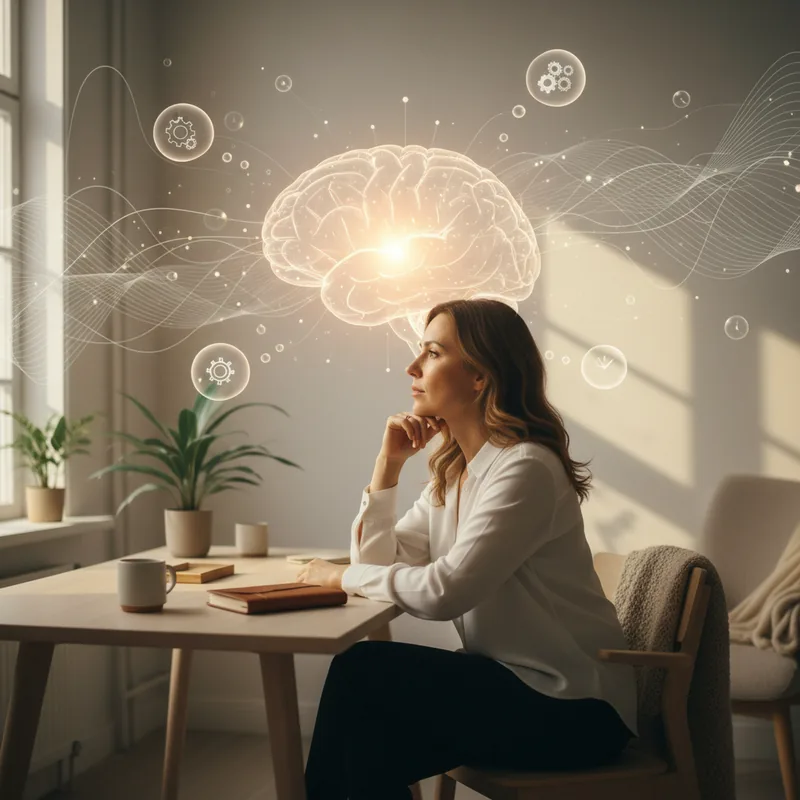
Perhaps you've always felt a little out of sync with conventional wisdom. Maybe the standard advice for productivity, social interaction, or even learning just doesn't quite click for you. For too long, society has operated under a narrow definition of what constitutes a 'normal' mind, inadvertently leaving countless brilliant individuals feeling misunderstood or inadequate. But here's the truth: your unique way of thinking isn't a flaw to be fixed; it's a fundamental part of human diversity. Understanding neurodiversity what it means is the first step to unlocking its incredible power and building a world that truly values every mind.
At its core, neurodiversity describes the natural variations in human brain function that affect how we process information, learn, and interact with the world. It's a philosophy that champions these differences as natural expressions of humanity's rich variety, rather than viewing them as deficits or disorders. This perspective celebrates the unique ways our brains are wired, recognizing them as sources of strength and innovation.
The term itself was coined in 1997 by sociologist Judy Singer, who is autistic, emerging from the autism rights movement. While initially focused on autism, the concept has since broadened to encompass a wide array of cognitive profiles, including ADHD, dyslexia, dyspraxia, Tourette's syndrome, and OCD. This expansive view challenges traditional notions of 'normal' and paves the way for a more inclusive and accepting society where every mind is not just tolerated, but truly valued (Singer, 1997).
Beyond "Normal": Embracing Neurodiversity
For decades, society has largely operated under the assumption of a 'neurotypical' default. This isn't just about brain function; it's about how we've built our systems, from education to employment, often without considering the vast spectrum of human cognition. But here's the thing: thinking differently isn't a deviation; it's a dimension of human experience.
Neurodiversity encompasses two main categories: neurotypical and neurodivergent. Think of it like handedness: most people are right-handed (neurotypical), but a significant portion is left-handed (neurodivergent). Neither is 'wrong,' just different, and each comes with its own set of strengths and challenges in a world often designed for the majority.
The Neurotypical Experience
To be neurotypical means your brain processes information and functions in ways generally considered standard or 'typical' by society. For many, this means navigating the world without constantly having to adapt their fundamental cognitive processes to fit prevailing norms. As a result, neurotypical individuals often don't consciously think about their brain function because it aligns with how most people operate. It's the unspoken default, much like heteronormativity assumes being straight is the default, making other identities seem 'other.'
The Neurodivergent Experience
In contrast, neurodivergent individuals are acutely aware that their brains function differently. This awareness often comes from external cues - being told they learn differently, behave differently, or perceive the world in unique ways. Conditions like autism, ADHD, dyslexia, dyscalculia, OCD, and Tourette's syndrome are examples of neurodivergence, each bringing a distinct cognitive profile.
Historically, these differences were often labeled as disorders or problems requiring 'fixing.' But the neurodiversity movement champions a radical shift: celebrating these brains rather than trying to force them into a neurotypical mold. Advocacy efforts, for example, increasingly push for alternative support methods for autistic individuals, moving away from practices like Applied Behavioral Analysis (ABA) that aim to modify behaviors to appear more neurotypical (Graber & Graber, 2023).
It's crucial to recognize that these differences aren't just challenges; they are often sources of remarkable strengths. Neurodivergent traits can include heightened perception, exceptional pattern recognition, intense focus, strong systems thinking, and enhanced creativity. Imagine a team facing a complex problem: a neurotypical approach might follow a linear path, while a neurodivergent mind might see an entirely novel solution, connecting seemingly disparate ideas in a flash (Armstrong, 2011).
Unlocking Potential: The Impact of Neuro-Inclusive Environments
The benefits of understanding neurodiversity extend far beyond neurodivergent individuals themselves. When society embraces cognitive diversity, everyone gains. It shifts our collective mindset from 'right' and 'wrong' ways of functioning to an appreciation of the rich tapestry of human thought.
Think about it in practical terms: in workplaces and educational settings, this means moving beyond a one-size-fits-all approach. It's about creating environments that accommodate diverse needs and actively leverage the unique strengths each neurodivergent person brings. This might look like:
- Allowing individuals the flexibility to accomplish tasks in ways that best suit their cognitive style, rather than rigidly enforcing a single method.
- Educating employees and students about neurodiversity to foster empathy and reduce stigma.
- Cultivating an atmosphere of genuine inclusion and acceptance, where differences are seen as assets.
- Providing practical accommodations, such as noise-blocking headphones for someone easily overstimulated by sound, or flexible work schedules for those with fluctuating energy levels.
- Implementing inclusive hiring and teaching practices that focus on skills and potential, not just traditional interview performance or standardized test scores.
The rewards can be significant. Consider the success of programs like JPMorgan Chase's Autism at Work, where neurodivergent employees were found to be up to 140% more productive than their neurotypical counterparts in certain roles, making far fewer mistakes (Financial Times, 2020). Or imagine a software development team where an autistic programmer excels at identifying obscure bugs and optimizing complex code due to their exceptional attention to detail and pattern recognition skills - a task that might frustrate others.
In education, a neuro-inclusive approach could mean offering flexible learning spaces where students can choose environments that best support their focus, whether that's a quiet corner, a standing desk, or a collaborative group setting. This allows a student with ADHD, for instance, to thrive by managing their sensory input and movement needs, rather than being penalized for not conforming to a rigid classroom setup.
A Future Reimagined: Advocacy and Social Evolution
While the concept of neurodiversity has been around for decades, its momentum is still building. The more we collectively grasp neurodiversity what it means, the more profoundly we can reshape our behaviors and systems for the future.
Shifting Advocacy
One of the most visible impacts of this understanding is the dramatic shift in advocacy for neurodivergent populations. The move away from practices like ABA, which many consider an attempt to 'cure' autism by modifying behavior, is a prime example. Organizations like the National Council on Independent Living (NCIL) have condemned ABA as an abusive practice, advocating instead for approaches that embrace and work with neurological differences (Mathur et al., 2024).
This shift has birthed a vibrant network of neurodiversity leaders and educators dedicated to helping society understand and support neurodivergent individuals, rather than attempting to 'fix' them. It's about empowering people to thrive as they are, not as someone else thinks they should be.
Education and Employment Redefined
The changing narrative around educating neurodivergent people is also profound. Instead of focusing on remediation, there's a growing emphasis on identifying and nurturing unique strengths. This knowledge that neurodiversity can lead to powerful, specialized skills has sparked a significant shift in employment, with neurodivergent individuals becoming increasingly sought after.
The Harvard Business Review, for example, has made a compelling case for employers to actively hire more neurodivergent talent, calling neurodivergence a "competitive advantage." Imagine a marketing team struggling with creative block. Introducing a neurodivergent team member who approaches problems from an entirely different logical framework could be the catalyst for groundbreaking ideas, leading to innovative campaigns that resonate with wider audiences.
Catalyzing Social Change
Of course, the stigma and hardships faced by neurodivergent people haven't vanished overnight. Yet, the cultural understanding of neurodiversity provides a powerful framework to fundamentally change how we think about and treat one another. It's about progress, not perfection.
Think back to not so long ago when left-handed students were often forced to write with their right hands, leading to long-term impacts (Marcori et al., 2019). Today, left-handedness is universally accepted as a natural difference, not a disorder. We allow children to learn and express themselves in the way that feels most natural. Similarly, as we continue to make strides in understanding and embracing neurodiversity, we will foster a more compassionate and effective society where all individuals are empowered to learn, work, and behave in ways that best suit their unique selves.
Embracing Every Mind: Key Takeaways
Neurodiversity is a profound and natural aspect of the human experience, encompassing all the myriad ways people think, process information, and interact with the world. It acknowledges that cognitive differences like autism, ADHD, and dyslexia are simply variations, not problems to be 'fixed.' This inclusive approach to understanding the human mind encourages us to celebrate different ways of thinking and being.
By deepening our understanding of neurodiversity what it means, we can actively dismantle stigma, recognize the immense value in providing tailored resources and accommodations, and ultimately build a society where every single mind is seen as a unique asset. It's not just about tolerance; it's about genuine appreciation for the full spectrum of human potential.