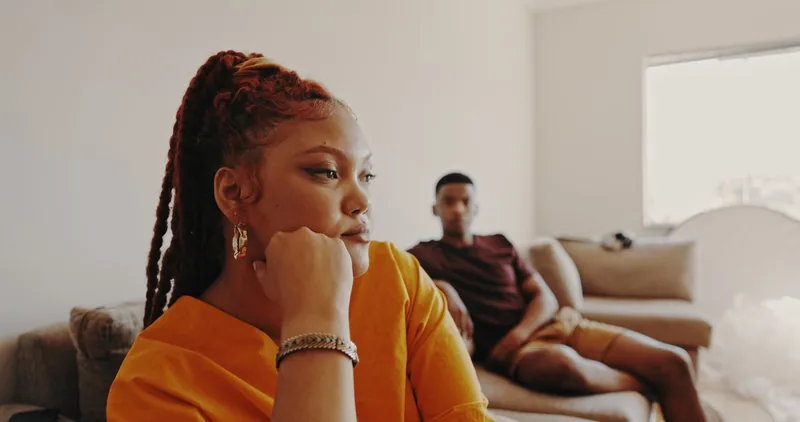
Have you ever found yourself observing a social gathering, perfectly content in your own thoughts, while your partner effortlessly works the room, chatting with everyone they meet? You might wonder, wait, am I the black cat in this dynamic? This common scenario highlights a fascinating relationship trope that's gained traction online: the 'black cat' and 'golden retriever' personalities. It describes a pairing where one partner tends to be more introverted and mysterious, while the other is an outgoing, eager-to-please extrovert. Understanding this dynamic can illuminate how seemingly opposite personalities not only coexist but can also thrive together, creating a unique balance that strengthens their bond.
Deciphering the 'Black Cat' and 'Golden Retriever' Dynamic
The 'black cat girlfriend' theory, popularized on platforms like TikTok, offers a playful yet insightful lens through which to view relationship dynamics. At its core, it's about two distinct personality types finding harmony. Think of it as a yin and yang, where complementary opposites bring out the best in each other. A relationship expert describes black cats as typically more introverted and mysterious, while their golden retriever counterparts are known for being extroverted and friendly.
This metaphor extends beyond romantic partnerships, appearing in friendships and even professional settings. Consider the friend who always initiates group plans and ensures everyone feels included--that's your golden retriever. Then there's the friend who might take a while to respond to messages, perhaps only showing up when you're already there, embodying the black cat persona. It's a spectrum, not a rigid label, but the core distinction lies in how individuals approach social interaction, trust, and emotional expression.
Unmasking the Black Cat Traits
So, how do you know if you're the black cat in your own story? Individuals who identify with this archetype often share a set of distinct characteristics. They tend to be:
- Introverted: Finding energy in solitude and quiet reflection.
- Guarded: Taking time to open up and form deep connections.
- Mysterious: Often perceived as enigmatic or deep thinkers.
- Calm and Intentional: Preferring thoughtful communication over spontaneous chatter.
- Loyal and Protective: Once trust is earned, their devotion runs deep.
- Perceived as Intimidating: Their quiet confidence can sometimes be mistaken for aloofness.
A clinical psychologist notes that while black cat personalities may initially appear reserved, they become more open, talkative, and deeply connected once they truly know and trust their partner. They're not unfriendly; they simply operate on a different social clock, valuing depth over breadth in their interactions. This is a crucial distinction, especially if you're asking yourself, wait, am I black cat in how I approach new relationships?
The Sunny Disposition of the Golden Retriever
On the flip side, the golden retriever personality radiates warmth and approachability. These individuals are typically:
- Extroverted: Energized by social interaction and external stimulation.
- Warm and Outgoing: Easily making friends and connections.
- Friendly and Social: Actively seeking out opportunities to engage with others.
- Eager to Please: Often going out of their way to make others happy.
- Trusting: Generally more open and quick to commit.
- Talkative: Expressing thoughts and feelings readily and openly.
While these traits might seem like polar opposites, they often create a compelling dynamic. The golden retriever's natural inclination to connect can gently draw out the black cat, while the black cat's grounded nature can offer a calming anchor to the golden retriever's boundless energy. The question then becomes, how do these seemingly disparate styles actually work in practice?
Navigating the Benefits and Challenges
This contrasting dynamic isn't just a quirky observation; it comes with tangible benefits and unique challenges. The tension between connection and retreat that often characterizes these pairings can foster a vibrant energy, promoting growth and mutual understanding within the relationship.
The Unseen Advantages of Opposites
When partners possess different strengths, they can truly enrich each other's lives. For instance, the golden retriever might encourage the black cat to step outside their comfort zone and experience the joy of broader social engagement. Conversely, the black cat can teach the golden retriever the value of quiet reflection, deep listening, and holding space for others' feelings. This mutual learning fosters a strong connection built on respect for individual differences.
Consider a couple where one partner, the golden retriever, loves hosting game nights every weekend, while the black cat prefers a quiet evening with a book. The golden retriever learns to appreciate a calm night in, perhaps discovering new ways to connect one-on-one. Meanwhile, the black cat might find unexpected enjoyment in a lively social gathering, thanks to their partner's encouragement. This novelty and continuous discovery often lead to deeper satisfaction in the relationship.
Overcoming the Hurdles
Of course, where there are differences, there can be friction. Challenges arise when communication styles clash or when partners struggle to compromise on their distinct needs for socialization and personal space. A common point of contention can be how each person processes and expresses thoughts.
One partner might naturally think out loud, exploring ideas as they speak, while the other takes time to internalize and formulate their thoughts before sharing them. This disparity can lead to misunderstandings, where a spontaneous comment from the golden retriever might be perceived as unconsidered or even dismissive by the more intentional black cat. For example, in a work setting, a golden retriever colleague might jump into brainstorming with half-formed ideas, while a black cat colleague observes quietly, only offering a fully fleshed-out solution much later. The key is recognizing that neither approach is inherently wrong; they are simply different.
These dynamics can also become challenging if one partner feels their needs are consistently overlooked. If you find yourself thinking, wait, am I black cat to the point of being misunderstood, it's a sign to revisit communication strategies. It's about finding a balance where both partners feel heard and valued, rather than one always adapting to the other's preferred mode of interaction.
Cultivating Harmony in Contrasting Relationships
The good news is that understanding these personality differences is the first step toward building a more resilient and harmonious relationship. It begins with clear, empathetic communication and a commitment to respecting each other's boundaries.
It's perfectly acceptable to encourage your partner to try new things or consider different perspectives. However, it's equally vital to listen intently when they express discomfort or a need to retreat into their comfort zone. This isn't about changing who someone fundamentally is, but rather about expanding horizons together. For example, a golden retriever partner might suggest a new hiking trail, while the black cat partner might counter with a quiet picnic in a familiar park. Finding a middle ground, like a shorter, less crowded trail followed by a relaxing picnic, respects both needs.
One critical aspect is recognizing that relationship dynamics are rarely static. People evolve through different life experiences, career changes, and major life events. A couple that lasts understands the importance of adapting to each other through these shifts, rather than expecting roles to remain fixed. The relationship you have today might look different five years from now, and that's a sign of growth, not a problem (Beukeboom et al., 2012).
The real question is, how do you ensure these differences don't become a source of ongoing conflict? It boils down to empathy and effort. Never assume your partner knows what you're thinking, and don't expect them to be a mind reader. Proactively communicate your needs, feelings, and boundaries. When issues arise, approach them as a team, working together to find solutions that honor both your individual personalities. After all, a healthy relationship isn't about being identical; it's about celebrating and integrating your unique selves.
Critiques and Nuances of the Dynamic
While the black cat and golden retriever metaphor can be helpful, it's crucial to acknowledge its limitations. Like any trend or stereotype, these labels don't paint the full, complex picture of human relationships. There's a risk that such dynamics could inadvertently justify unhealthy patterns, where one partner is consistently dismissive or emotionally distant, and the other is constantly seeking validation.
Some critics view this dynamic as creating an inherent hierarchy, with the 'black cat' in a perceived position of power and the 'golden retriever' in a subordinate role. This interpretation misses the point that healthy relationships thrive on equality and mutual respect, not dominance. It's important to remember that people are multifaceted. There will be days when the usually outgoing golden retriever craves solitude, and the reserved black cat might surprise everyone by being the life of the party.
The goal isn't to rigidly categorize yourselves but to use these metaphors as starting points for self-reflection and conversation. If you're asking, wait, am I black cat in a way that feels disempowering, it's a signal to dive deeper into how your unique traits are truly playing out. Ultimately, the most enduring relationships are those where partners continually communicate, adapt, and work as a team to support each other's evolving needs, far beyond any viral trend.