Imagine a world where your technology anticipates your needs, subtly assisting without demanding your attention. Where your devices feel less like gadgets and more like an extension of yourself. That's the promise of AI-powered wearables, and if the latest rumors suggest Apple and Meta are right, this future isn't far off. We're talking about a shift from screen-centric interaction to an ambient, intuitive experience. But are these tech titans truly ready to deliver on such a grand vision, and more importantly, do we, the consumers, actually want it?
The Next Frontier of Personal Tech
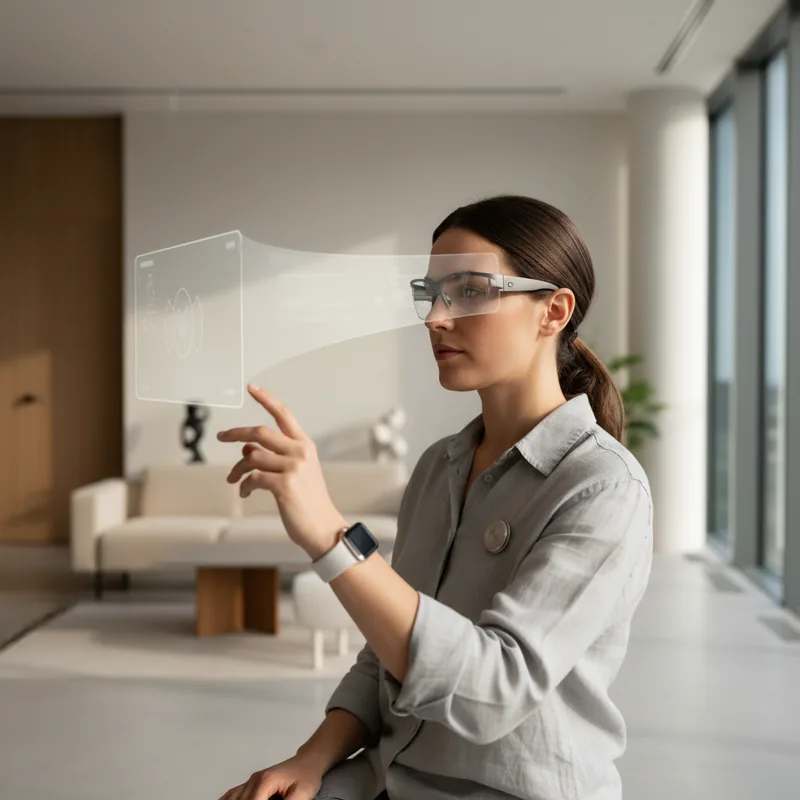
Meta, known for its ambitious ventures into virtual and augmented reality, appears to be doubling down on a connected ecosystem. Reports from The Information suggest the next iteration of Meta's smart glasses, currently known as "Display," could be paired with a sophisticated smartwatch (The Information, 2023). This isn't just any fitness tracker; codenamed "Malibu 2," this watch is envisioned to replace the often-discussed neural band, acting as a primary controller for the glasses. Picture this: subtle wrist movements could navigate augmented reality interfaces, control media, or even interact with virtual objects, making your hands free for real-world tasks. Think about effortlessly adjusting a recipe projected onto your countertop with a flick of your wrist, or silently dismissing a notification while in a meeting. If these reports hold true, a Meta Display smart glasses and smartwatch combo could hit the market as early as 2026, offering a compelling alternative to existing wearables.
The strategic move to integrate a smartwatch makes perfect sense. Why create a dedicated wrist-controller when you can bake in all the functionality of a smart wearable? This integrated approach could be Meta's play to entice users away from other dominant smartwatches, particularly those from a certain fruit-named competitor. The potential here is for a truly cohesive user experience, where the glasses provide the visual interface and the watch handles the subtle, intuitive inputs.
Speaking of that fruit-named competitor, rumors suggest Apple and Meta are on a collision course in the AI wearable space, though with distinct strategies. According to Bloomberg, Apple is reportedly pushing hard to release its own sophisticated suite of AI-powered devices (Bloomberg, 2024). While smart glasses are on their radar for an early 2027 release - reportedly display-less but with superior camera and build quality - Apple's rumored innovations extend further. Imagine an AI-powered pendant, designed to be clipped to your shirt or worn as a necklace. This isn't just a fashion statement; equipped with cameras, it could provide context-aware assistance, perhaps translating conversations in real-time during a trip abroad or offering gentle reminders based on your environment (Tech Insights, 2024). Then there are the AirPods, set for expanded AI capabilities. Beyond advanced noise cancellation, perhaps they'll offer real-time coaching during a workout, analyzing your form and vital signs, or even summarize a lecture you're listening to passively. These devices, much like the Vision Pro, are designed to work seamlessly within the iPhone ecosystem, creating a powerful, interconnected personal AI network.
The key difference in Apple's rumored approach, compared to Meta's, seems to be a focus on augmenting the iPhone experience rather than replacing it entirely. Their camera-based tech, similar to what powers the Vision Pro headset, hints at a future where AI understands and reacts to your physical world, not just your digital one. These rumors suggest Apple Meta are each carving unique paths to the future of ambient computing.
None of these ambitious plans are officially confirmed, of course. Apple CEO Tim Cook has only vaguely hinted at "categories of products" enabled by AI, but the direction is clear. Both Meta and Apple seem convinced that consumers are ready for a collection of connected, AI-driven wearables. Each company is making a monumental bet on how we'll interact with technology next. Meta aims to replace the phone with an in-glasses display and biometric controls, building a new, immersive paradigm. Apple, conversely, appears to be enhancing the iPhone experience, weaving AI into a tapestry of devices that offer subtle, intelligent assistance, creating a familiar yet profoundly smarter interaction model.
Here's the real question, and it's one that both companies have grappled with before: Are people truly excited enough by the prospect of always-available AI and deeply integrated devices to adopt them widely? We've seen both Meta and Apple invest heavily in virtual reality, and while their devices are technically impressive, neither has truly captured the mainstream market as perhaps they'd hoped (Future Tech Review, 2023). The success of these rumored AI wearables hinges on more than just technological prowess; it depends on whether they solve genuine problems in our daily lives without creating new ones. The market's response will determine if these bold plays pay off, or if these rumors suggest Apple Meta are once again ahead of their time.