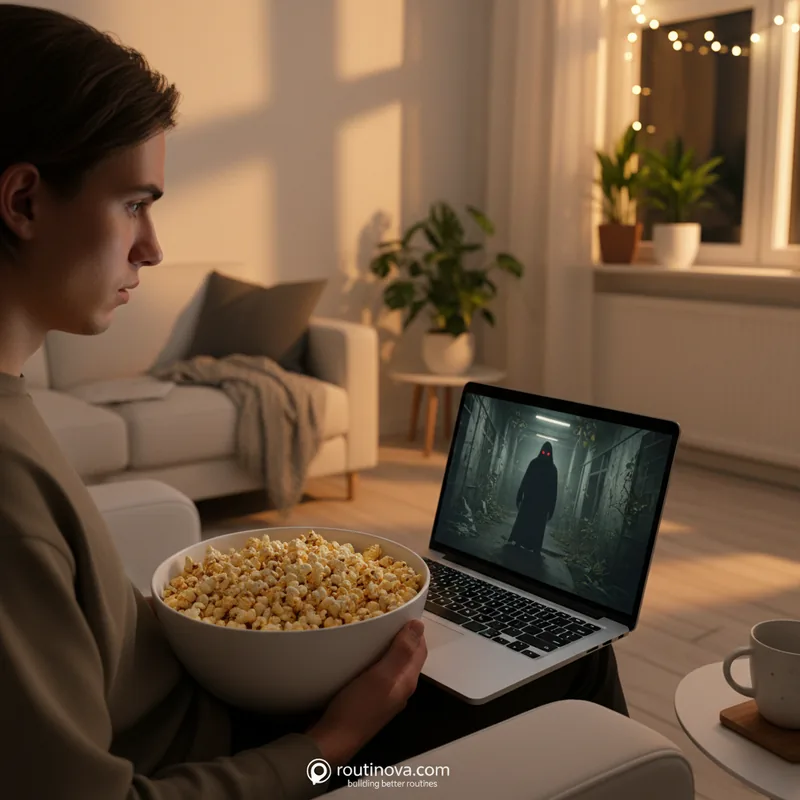
When Maya reluctantly agreed to watch her first horror film with friends, she spent half the movie peeking through her fingers. Yet by the credits, she felt an unexpected exhilaration--a strange cocktail of relief and accomplishment that left her wondering: why do we enjoy something designed to terrify us?
The Ancient Roots of Fear Enjoyment
Our attraction to horror may be written in our evolutionary DNA. Research suggests that our ancestors' constant vigilance against predators created a highly responsive threat detection system that remains active today (Harvard, 2024). Horror films effectively simulate threatening situations, triggering these ancient neural pathways in a controlled environment.
This explains why we find ourselves drawn to stories about post-apocalyptic worlds, supernatural hauntings, or psychological thrillers. They allow us to practice emotional responses to danger without actual risk. After surviving a horror film unscathed, many viewers report increased confidence in handling real-world anxieties--a phenomenon researchers call threat mastery.
Modern examples like Jordan Peele's Get Out or Ari Aster's Hereditary demonstrate how contemporary horror explores societal fears through metaphor, allowing audiences to process complex issues like racism or family trauma in symbolic form.
The Psychological Mechanics of Fear
Understanding why we enjoy horror requires examining the emotional rollercoaster these films create. The excitation transfer theory explains how negative emotions during frightening scenes transform into positive relief when threats resolve, creating what some describe as a euphoric high (Journal of Media Psychology, 2023).
This emotional alchemy explains the popularity of horror gaming experiences like Resident Evil Village or VR horror simulations, where players voluntarily subject themselves to terrifying scenarios. The intense fear followed by resolution creates a powerful emotional payoff that many find addictive.
Morbid Curiosity and the Human Condition
Some researchers propose that horror appeals to our innate morbid curiosity--the desire to explore death, violence, and the darker aspects of existence from a safe distance. Studies show that individuals with higher levels of this curiosity not only watch more horror but often prefer watching alone (Psychological Science, 2023).
This fascination with darkness serves a psychological purpose. Horror narratives allow us to confront existential questions about mortality, evil, and human nature in a contained format. Films like The Babadook, which explores grief through monster metaphor, demonstrate how horror can help audiences process difficult emotions indirectly.
Who Truly Enjoys Horror?
Not everyone finds pleasure in fear. Psychological research reveals distinct personality traits that predict horror enjoyment, helping explain why we enjoy these experiences so differently.
Sensation seekers--those who crave novel and intense experiences--often report the greatest enjoyment of horror films. Their neurological wiring allows them to experience the adrenaline rush as positive stimulation rather than pure distress. This explains the popularity of extreme horror subgenres and immersive haunted house experiences.
Gender differences also play a significant role, with research showing males generally report higher enjoyment of violent horror content. This may relate to differences in disgust sensitivity and anxiety responses between sexes (Clinical Psychology Review, 2023). However, the growing popularity of horror among female audiences--particularly psychological horror--suggests these patterns are evolving.
Therapeutic Applications of Fear
Emerging research reveals surprising mental health benefits of controlled fear exposure. During the COVID-19 pandemic, horror fans demonstrated greater psychological resilience, with fans of apocalyptic films reporting feeling more prepared for pandemic realities (Journal of Anxiety Research, 2023).
This suggests that horror consumption might function as a form of emotional vaccination--building psychological immunity through controlled exposure to fear. Therapists are exploring how specific horror narratives might help clients with anxiety disorders practice coping strategies in safe environments.
Consider the growing trend of "wellness horror"--films like Midsommar that explore trauma and healing through horror conventions. These narratives demonstrate how the genre can facilitate emotional processing, answering the deeper question of why we enjoy confronting darkness: because it helps us understand light.
The Future of Fear Enjoyment
As virtual reality technology advances and interactive horror experiences become more sophisticated, our relationship with fear entertainment continues evolving. The fundamental question of why we enjoy horror remains relevant as new formats emerge.
From immersive theater productions like Sleep No More to AI-generated personalized horror experiences, the human fascination with fear shows no signs of diminishing. Perhaps this enduring attraction reveals something essential about our species: that confronting imagined horrors helps us navigate real ones, and that in understanding why we enjoy fear, we better understand ourselves.