- Understand the core principles of ultimate guide: challenging harmful stereotypes
- Apply practical strategies from Ultimate Guide: Challenging Harmful Stereotypes About Latin Americans
- Practice consistently for optimal results
- Track your progress and adjust as needed
- Integrate insights into daily routines
In an increasingly interconnected world, understanding and dismantling harmful stereotypes about diverse communities is not just a matter of social justice—it’s essential for fostering genuine connection and personal growth. As we move into 2025, a critical examination of the pervasive misconceptions surrounding Latin American individuals remains paramount. These damaging narratives, often rooted in historical biases and cultural misunderstandings, contribute to discrimination, impact mental well-being, and limit opportunities for millions. This article aims to illuminate six common, harmful stereotypes about Latin Americans, explore their real-world consequences, and provide actionable insights into challenging them, ultimately promoting a more inclusive and equitable society.
Understanding the Impact of Harmful Stereotypes
As societies continue their vital reckoning with racial and social injustice, a concerted effort to examine and refute harmful stereotypes about minority groups, including Latin Americans, is more crucial than ever. These ingrained assumptions often lead to widespread discrimination, impacting the mental and emotional well-being of Latinx individuals. Yolanda Renteria, LPC, emphasizes that “stereotypes are harmful because people tend to see them as the truth,” which inevitably escalates criticism, hostility, hate crimes, exclusion, and systemic racism (Harvard, 2024).
The repercussions extend beyond individual interactions, permeating societal structures and opportunities for advancement. Latinx people are often forced into a state of constant hypervigilance when interacting with members of larger, dominant groups. This continuous stress can lead to chronic health issues, anxiety, and depression, hindering their ability to thrive personally and professionally (Harvard, 2024). Recognizing and actively challenging these prejudiced views is the first step towards creating truly inclusive communities where everyone feels seen, valued, and respected.
Debunking the Myth of Homogenous Latin American Origins
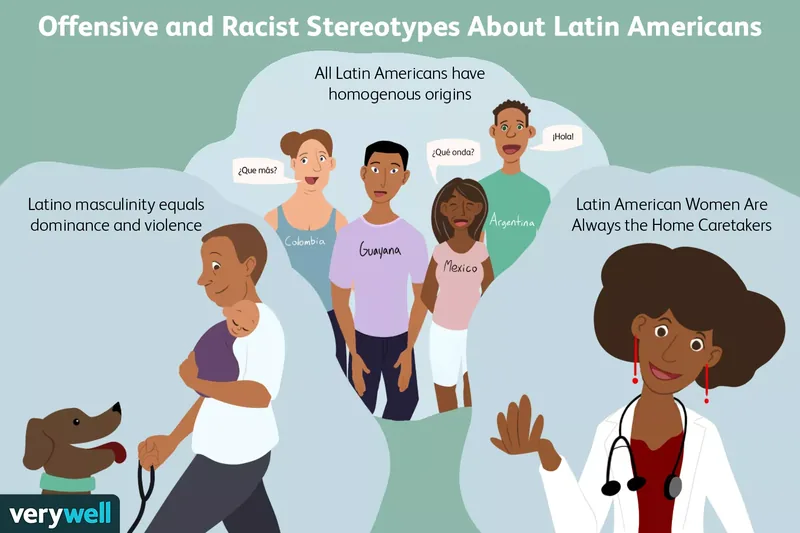
One of the most pervasive and harmful stereotypes about Latin Americans is the notion that they all share a single, uniform origin. This couldn’t be further from the truth. Latin America is a vast and incredibly diverse region, encompassing 33 distinct countries spread across South America, Central America, and the Caribbean islands. Each nation boasts its own unique history, cultural traditions, linguistic nuances, and indigenous heritage, much like the varied tapestry of European countries.
For example, while many individuals from Mexico and Central America predominantly speak Spanish, the heritage of someone from Brazil, where Portuguese is the official language, is vastly different. Similarly, the cultural practices of an individual from the Andean regions of South America will differ significantly from those in the Caribbean. This is why it’s essential to always ask individuals how they prefer to be identified, rather than making assumptions or applying a blanket label like “Mexican” to everyone of Latin American descent (Harvard, 2024). Emilia Benton, a respected writer and editor, highlights that “recognizing people’s unique cultures, just like we do for people of European descent, helps people feel seen and feel proud of their heritage and ethnic origin.” Embracing this rich diversity is fundamental to dismantling these damaging misconceptions and fostering genuine cultural appreciation.
Immigration and Employment: Challenging the “Job Stealer” Narrative
The stereotype that Latin American immigrants are “out to steal American jobs” is a deeply rooted and harmful misconception that frequently fuels discrimination and unfair assumptions about immigration status. This narrative often casts immigrants, whether documented or undocumented, as economic threats rather than valuable contributors. However, extensive research consistently refutes this prejudiced view, demonstrating that higher rates of immigration do not exacerbate unemployment rates; in fact, the opposite tends to be true.
Studies indicate that immigration can actually lower unemployment, even for native-born citizens, while simultaneously positively impacting pricing stability and public finances (Harvard, 2024). Immigrants frequently fill labor gaps, particularly in sectors that native-born workers may avoid, and contribute significantly to entrepreneurship, starting businesses at higher rates and creating jobs for others. Yolanda Renteria, LPC, notes that “maintaining the false belief that immigrants are stealing people’s jobs usually makes people in the larger group feel threatened and act hostile towards immigrants,” leading to a profound sense of exclusion for marginalized groups. This damaging narrative not only ignores the economic benefits immigrants bring but also dehumanizes individuals who are often seeking safety, opportunity, and a better life. Recognizing these contributions is vital for dispelling one of the most persistent and harmful stereotypes about Latin Americans.
Redefining Latino Masculinity Beyond “Machismo”
The concept of “machismo” is frequently misconstrued, leading to the harmful stereotype that Latino masculinity inherently equates to dominance and violence. Machismo, at its core, refers to a set of cultural beliefs emphasizing male strength, honor, emotional reserve, and confidence. Like many gender roles across various cultures, these traits can manifest in both positive and negative ways depending on context and individual interpretation. While extreme interpretations can indeed be associated with sexist attitudes, emotional repression, and even aggression, it is a gross oversimplification to apply this negative connotation universally.
Many Latino men are actively challenging and evolving beyond rigid, traditional gender roles, embracing a more flexible and nuanced definition of masculinity. This modern perspective often highlights positive attributes such as chivalry, bravery, deep familial loyalty, and a strong sense of responsibility towards their communities (Harvard, 2024). Moreover, the emphasis on emotional stoicism can inadvertently contribute to mental health challenges, as men may feel pressured to suppress vulnerability. As we look towards 2025, there is a growing movement to redefine Latino masculinity to include emotional intelligence, empathy, and active participation in childcare, showcasing a rich tapestry of identities that defies simplistic and damaging misconceptions.
Latin American Women: Beyond the Homemaker Stereotype
Another prevalent and harmful stereotype about Latin Americans, specifically women, is the assumption that they are primarily confined to the role of home caretakers, opting out of traditional employment. This notion incorrectly paints Latin American women as uniformly domestic and disengaged from the broader workforce, a portrayal that is both inaccurate and limiting. The reality is quite different; Latinas are an integral and growing part of the American labor force, contributing significantly across all sectors.
According to the U.S. Bureau of Labor Statistics, over two-thirds of Latinas aged 25 to 54 are active members of the civilian labor force (Harvard, 2024). There are countless high-achieving Latin American women making profound impacts in diverse fields, from law and science to entrepreneurship, arts, and athletics. Perpetuating these negative assumptions not only diminishes their accomplishments but also actively hinders the aspirations of younger generations. It’s also crucial to acknowledge that while Latinas are highly engaged in the workforce, they often face additional barriers. They are vastly underrepresented in fields historically dominated by White individuals and are less likely to be assigned leadership positions (Harvard, 2024). For instance, only a small percentage of higher education faculty identify as Latina, and they hold significantly fewer managerial roles compared to their White counterparts. Challenging these damaging misconceptions is vital to recognizing and supporting the full potential of Latin American women.
Family Size and Perceptions: Dispelling Harmful Assumptions
The harmful stereotype that “all Latin American families have multiple children” is a deeply problematic generalization that feeds into broader, often racist, assumptions about Latinas being “promiscuous” or destined for teenage motherhood. This prejudiced view not only misrepresents the diverse realities of Latin American families but also carries significant social stigma. In truth, family size varies little across different ethnic groups in the United States, debunking the idea of a uniquely large Latin American family structure.
Research from organizations like the Pew Research Center indicates that the average family size among mothers in their early 40s across Hispanic, Black, White, and Asian ethnicities ranges between 2.2 and 2.6 children on average (Harvard, 2024). Furthermore, the mean age for giving birth to a first child among mothers of Central or South American ethnicity is 26.5, with those of Mexican descent at 23.7, which aligns closely with national averages and discredits the “teenage mother” narrative (Harvard, 2024). Beyond statistics, it’s essential to recognize the vast diversity of family structures within the Latin American community, including nuclear families, extended families, single-parent households, LGBTQ+ families, and chosen families. This stereotype also overlooks the complex factors influencing family planning, from socioeconomic conditions to personal choices and access to reproductive healthcare. Dispelling these unfair generalizations is crucial for respecting individual autonomy and cultural diversity.
Language and Identity: Addressing the “Unwilling to Learn English” Myth
One of the most persistent and harmful stereotypes about Latin Americans is the false assertion that they are unwilling to learn English. This misconception often manifests in daily interactions, where individuals assume Latin Americans don’t understand them, or worse, mock their attempts to communicate in limited English. This narrative frequently overlooks a significant double standard: only a small fraction of native-born Americans can speak a second language proficiently (Harvard, 2024). The reality is that many Latin Americans are bilingual or actively engaged in learning English, often out of necessity and a desire to integrate, while simultaneously preserving their native tongue.
This damaging misconception is further perpetuated by systemic issues, particularly within the education system, where a lack of funding and support for English language learning programs can impede students’ progress (Harvard, 2024). Such environments can inadvertently create barriers for students who speak English as a second language. Furthermore, disparaging someone’s accent or speaking ability, as often seen in popular culture, profoundly impacts their confidence and willingness to practice. Yolanda Renteria, LPC, highlights that “in the United States, there is still a problem with Spanish from Latinx communities being seen as the less desirable language and accent,” which instills shame and inadequacy. Embracing linguistic diversity and valuing bilingualism not only enriches society but also empowers individuals, fostering greater comfort and proficiency in English.
Strategies for Challenging Harmful Stereotypes
Actively challenging harmful stereotypes about Latin Americans requires a conscious effort from individuals and institutions alike. The first step is education: learning about the immense diversity within Latin America, including its myriad cultures, languages, and histories, moves beyond simplistic generalizations. Seek out reliable sources, engage with Latinx voices, and listen to lived experiences. Secondly, practice mindful language; avoid using blanket terms or making assumptions about someone’s origin, immigration status, or cultural practices. Always ask individuals how they prefer to be identified, demonstrating respect for their unique identity.
Furthermore, advocate for representation and inclusion in media, education, and leadership roles. When Latin American individuals are authentically portrayed and given platforms, it naturally dispels negative assumptions and showcases the true richness of their contributions. Support policies that promote equitable opportunities and challenge discriminatory practices. Finally, confront stereotypes directly but constructively when you encounter them in conversations or public discourse. Politely correct misinformation, share accurate facts, and highlight the positive impact Latin Americans have on society. By consistently applying these strategies, we can collectively work towards dismantling these damaging misconceptions and cultivating a more understanding, respectful, and equitable world for all.