Feeling a knot in your stomach at the thought of approaching someone new? You’re not alone. Many people find initiating dialogue intimidating, whether it’s at a networking event, a casual gathering, or even just a new social setting. Yet, knowing how to start a conversation is a foundational social skill that unlocks countless opportunities for connection, personal growth, and professional advancement. This guide provides ultimate tips for starting conversations, helping you transform awkward silences into engaging exchanges and build meaningful relationships.
Mastering the art of conversation beginnings is crucial for navigating modern social landscapes, from in-person meetings to digital interactions. It empowers you to feel more comfortable and confident, turning potential anxieties into chances for genuine connection. By preparing effectively, avoiding common pitfalls, and employing simple yet powerful conversation starter tips, you can significantly enhance your communication prowess. Let’s explore proven strategies to improve your ability to initiate conversations and forge stronger bonds.
1. Laying the Groundwork: Preparing for Engaging Dialogue
For many, the idea of walking into a room full of strangers can be a daunting prospect, especially if you identify as introverted, shy, or prone to social anxiety. The good news is that much of this apprehension can be alleviated through strategic preparation. By taking a few proactive steps before you even utter your first word, you can significantly boost your confidence and set the stage for a successful interaction. This groundwork is one of the most effective tips for starting conversations confidently.
One excellent technique to ease pre-conversation jitters is mental rehearsal. Take a moment to mentally review potential topics you might discuss, or even practice a few opening lines with a trusted friend. This isn’t about memorizing a script, but rather familiarizing yourself with the flow of conversation and building a sense of readiness. Being prepared reduces the cognitive load during the actual interaction, allowing you to be more present and responsive.
Cultivate a Positive Mindset
Approaching any social interaction with a positive attitude is paramount. Instead of dwelling on potential mistakes or awkward silences, focus on the opportunity to connect and learn from someone new. Worrying excessively about your next statement can distract you from the current conversation, hindering your ability to engage effectively. A relaxed, positive demeanor signals openness and approachability.
If you find yourself feeling tense or nervous, a simple deep breath can work wonders. This physiological technique helps to calm your nervous system, allowing you to feel more at ease. When you are relaxed, the conversation is more likely to flow naturally, making the experience more enjoyable for both parties. Remember, confidence often stems from preparation and a calm, collected state of mind.
Utilize Welcoming Body Language
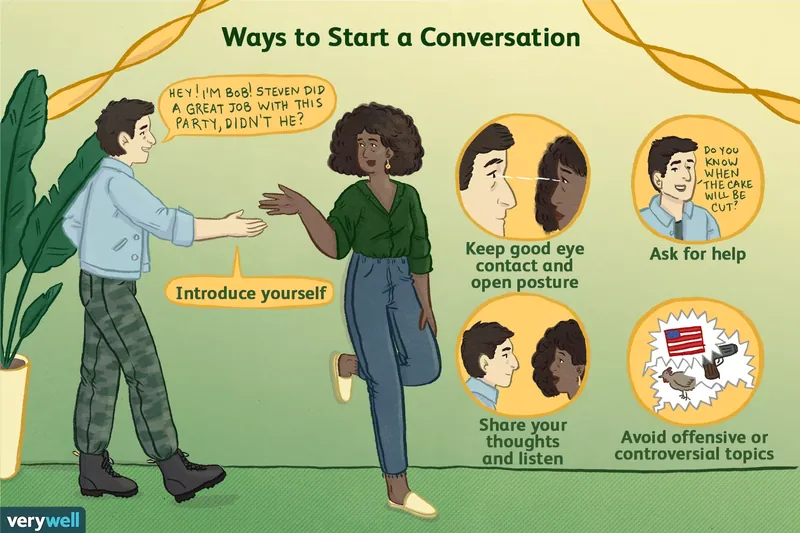
Your nonverbal cues speak volumes before you even say a word. An open posture, a genuine smile, and appropriate eye contact are powerful tools for conveying interest and friendliness. These signals invite others to engage with you, making it easier to initiate a conversation. Slouching or avoiding eye contact, conversely, can create an impression of disinterest or aloofness.
An open posture involves keeping your arms relaxed and your body uncrossed, which communicates approachability. Good eye contact means looking at the person’s eyes naturally, intermittently glancing away to avoid staring. A relaxed, authentic smile can instantly put others at ease and make you seem more inviting. These small but significant actions are key tips for starting conversations on the right foot. (Harvard, 2024)
2. Mastering the Opening: Simple Strategies for Initiating Dialogue
Once you’ve set the mental and physical stage, the next step is to actually break the ice. You don’t need a groundbreaking statement or a profound observation to start a good conversation. In fact, some of the most effective conversation starter tips are surprisingly simple and rely on common ground or a subtle request for assistance. The goal is to create an easy entry point that allows both parties to feel comfortable.
Simple icebreaker comments or questions are invaluable tools for initiating dialogue. They provide a low-pressure way to connect, offering a shared reference point that can quickly bridge the gap between strangers. These unassuming beginnings often pave the way for more personal and meaningful exchanges, proving that even trivial topics can lead to deeper connections. This section focuses on practical strategies for how to start a good conversation with ease.
Introduce Yourself Directly
One of the most straightforward and often overlooked ways to begin a conversation is simply to introduce yourself. This direct approach is a fundamental social grace that immediately establishes a connection. After offering your name, give the other person the chance to introduce themselves. This initial exchange serves as a natural icebreaker, setting a polite and welcoming tone for further interaction.
Following introductions, ask a simple, open-ended question or make a brief, relevant observation. For instance, “Hi, I’m Alex. Great to meet you. Are you enjoying the event?” or “Hello, my name is Jamie. I love your scarf; where did you find it?” These simple prompts help to inspire further discussion and show genuine interest.
Leverage Simple Observations
Commenting on shared surroundings or a common experience is a classic and effective conversation starter. While it might seem cliché to talk about the weather, the food, or the event itself, these topics work precisely because they are universally relatable and non-threatening. They provide immediate common ground, making it easy for anyone to respond.
For example, “The weather has been lovely today, hasn’t it?” or “This food is absolutely delicious; have you tried the dessert?” These innocuous statements create an opening without requiring deep thought or personal disclosure. From these simple beginnings, conversations can naturally evolve to personal preferences, backgrounds, hobbies, and eventually, more profound topics that forge stronger social bonds. (Mehl et al., 2010)
Ask for Simple Assistance
Asking a question is an excellent way to start a conversation, especially when it involves a request for simple help. This approach not only gives you a clear reason to engage someone but also provides them with an opportunity to be helpful, which can foster a positive initial interaction. The key is to keep the request minimal and easily actionable, avoiding anything that would impose a significant burden.
For example, you might ask, “Excuse me, do you happen to know what time the keynote speaker starts?” or “I seem to have misplaced my agenda; do you know where I could find another one?” These questions are low-stakes and provide a clear path for a response. Once they offer assistance, it naturally creates a reciprocal social dynamic, giving you a perfect segue to express gratitude, introduce yourself, and then ask more about them. This reciprocal exchange is one of the most underrated conversation starter tips.
3. Cultivating Positive Interactions: What to Say (and Avoid)
The content of your initial conversation plays a significant role in determining its trajectory and the impression you leave. While some people might rely on controversial or negative topics in familiar settings, these are generally considered conversation killers when meeting new individuals. To foster positive and engaging interactions, it’s crucial to select topics that are universally welcoming and avoid those that could create discomfort or conflict. This strategic approach is one of the most valuable tips for starting conversations effectively.
Starting on an upbeat note sets a pleasant tone and makes others more receptive to continuing the discussion. People are naturally drawn to positive energy, and a cheerful beginning can instantly put them at ease. Conversely, launching into complaints or negative observations can quickly shut down a potential conversation.
Keep the Conversation Positive
Always strive to begin your conversations on an optimistic note. Regardless of the situation, you can almost always find something positive to comment on. This could be the event, the atmosphere, the food, or even a simple observation about the day. A positive opening demonstrates that you are an agreeable person who pays attention to their surroundings.
Consider these examples:
- “That was a really insightful presentation, wasn’t it?”
- “Whoever organized this event did a fantastic job with the décor!”
- “Your performance was excellent; I felt truly inspired.”
- “It’s a bit chilly today, but the forecast promises sunshine tomorrow!”
These positive remarks not only make you seem approachable but also encourage others to respond in kind, fostering a more engaging and enjoyable interaction. People tend to respond better to positivity, making them more inclined to continue talking with you.
Beware of Conversation Killers
While it might be tempting to share strong opinions or grievances, certain topics are best avoided when initiating conversations with new acquaintances. Anything offensive, overly controversial, or deeply personal should generally be off-limits. These include politics, religion, highly personal complaints, gossip, or inappropriate jokes. Such subjects can quickly create an uncomfortable atmosphere or alienate the other person, effectively killing the conversation before it even begins.
The goal is to find common ground, not to spark a debate or delve into sensitive areas. There will be a time and place for expressing strong opinions or engaging in deeper discussions, but it’s essential to gauge the other person’s receptiveness and the social context first. Sticking to innocuous comments is often your best bet for a smooth and pleasant opening. (Kleinke et al., 1986)
Digital Communication Etiquette
The same principles for starting conversations apply to text messages and online interactions in 2025. Begin simply, ask open-ended questions that require more than a “yes” or “no” answer, and maintain a positive tone. Show genuine interest in the other person’s responses, just as you would in an in-person conversation. For instance, instead of “Hey,” try “Hi, I was just thinking about [shared experience/interest] and wanted to see how you’re doing!”
4. Sustaining the Spark: Listening and Balancing the Exchange
Starting a conversation is only half the battle; keeping it going is equally important. A truly engaging dialogue isn’t a monologue but a dynamic exchange where both parties feel heard and valued. This requires a conscious effort to listen attentively and to strike a balance between asking questions, sharing your own thoughts, and expressing genuine interest. These elements are crucial tips for starting conversations that lead to lasting connections.
Effective listening is perhaps the most powerful tool in your conversational arsenal. When you genuinely listen, you not only gather information about the other person but also demonstrate respect and empathy. People are naturally drawn to those who make them feel understood, and this attentiveness can fuel the conversation for much longer than any clever opening line.
Listen Actively and Express Interest
It can feel challenging to talk to someone when you perceive a lack of common ground. In such situations, encourage the other person to talk about their own interests, work, or areas of expertise. People generally enjoy discussing topics they are passionate about, and your genuine interest can serve as excellent fuel for a great conversation. Active listening means paying full attention, not just waiting for your turn to speak. (Jahromi et al., 2016)
Ask follow-up questions that show you’ve absorbed what they’ve said. For instance, if they mention a hobby, ask, “That sounds fascinating, what first got you into [hobby]?” or “What’s the most challenging part of that?” This not only keeps the conversation flowing but also helps you learn more about them, potentially uncovering shared interests you didn’t know existed. Expressing genuine curiosity is one of the best tips for starting conversations that evolve into deeper interactions.
Strike a Conversational Balance
A good conversation is not dominated by one person. It involves a healthy mixture of asking questions, listening intently to the answers, and sharing relevant information about yourself. Think of it as a tennis match where you both hit the ball back and forth, rather than one person serving endlessly. This balanced approach ensures that both participants feel engaged and valued.
A typical conversation flow might look like this:
- Ask a question: “Did you enjoy the keynote speaker’s presentation?”
- Listen to the answer: “Yes, it was fantastic! I learned so much about AI integration.”
- Disclose your thoughts: “I agree completely. I’ve already got some ideas on how to incorporate those tips into my team’s workflow.”
- Continue the cycle: You might then ask another related question, or your conversation partner might ask you a question based on your disclosure.
Using open-ended questions, which cannot be answered with a simple “yes” or “no,” is vital for maintaining this balance. Instead of “Was the meeting good?”, ask “What were your key takeaways from the meeting?” This encourages more detailed responses and keeps the dialogue flowing naturally. This balance is key to mastering conversation beginnings.
5. Practice Makes Perfect: Building Your Conversational Confidence
Learning how to start a conversation is an indispensable skill that underpins almost all social connections, both personal and professional. While it can feel daunting initially, especially for those grappling with shyness or social anxiety, consistent practice is the ultimate key to becoming more comfortable and proficient. Think of every social interaction as a valuable practice session, an opportunity to refine your conversational skills and build your confidence. This final section provides encouragement and actionable advice for continuous improvement, solidifying these tips for starting conversations.
The more frequently you initiate discussions with others, the stronger your conversational abilities will become. Each attempt, whether perceived as successful or not, offers valuable lessons and helps to desensitize you to the initial discomfort. Over time, you’ll develop a natural rhythm and intuition for social interactions, making the process feel less like a chore and more like an enjoyable exchange.
Embrace the Learning Process
Don’t be afraid to make mistakes. Everyone has awkward conversational moments; they are a natural part of social interaction. The important thing is to learn from them and not let them deter you from future attempts. Focus on small improvements rather than striving for perfection in every interaction. Perhaps one day you focus on making better eye contact, the next on asking more open-ended questions.
Remember that forging strong social connections is not just about politeness; it’s critical for overall well-being. Research consistently highlights the profound benefits of social relationships, linking them to a stronger immune system, increased longevity, reduced anxiety levels, greater empathy, and enhanced self-esteem. (Umberson & Montez, 2010) By actively learning and applying these tips for starting conversations, you are investing directly in your physical and mental health.
Three Golden Rules for Better Conversations
To summarize, three simple rules can guide you toward having more effective and enjoyable conversations:
- Listen attentively and avoid interrupting: Show respect by giving the other person your full attention and allowing them to complete their thoughts.
- Ask thoughtful questions: Use open-ended questions to encourage deeper responses and keep the dialogue flowing.
- Maintain a positive tone: Focus on upbeat topics and avoid negativity to create a welcoming and engaging atmosphere.
By consistently applying these principles and embracing every interaction as a chance to grow, you will become adept at initiating dialogue and building the meaningful social connections that are so vital for a fulfilling life.