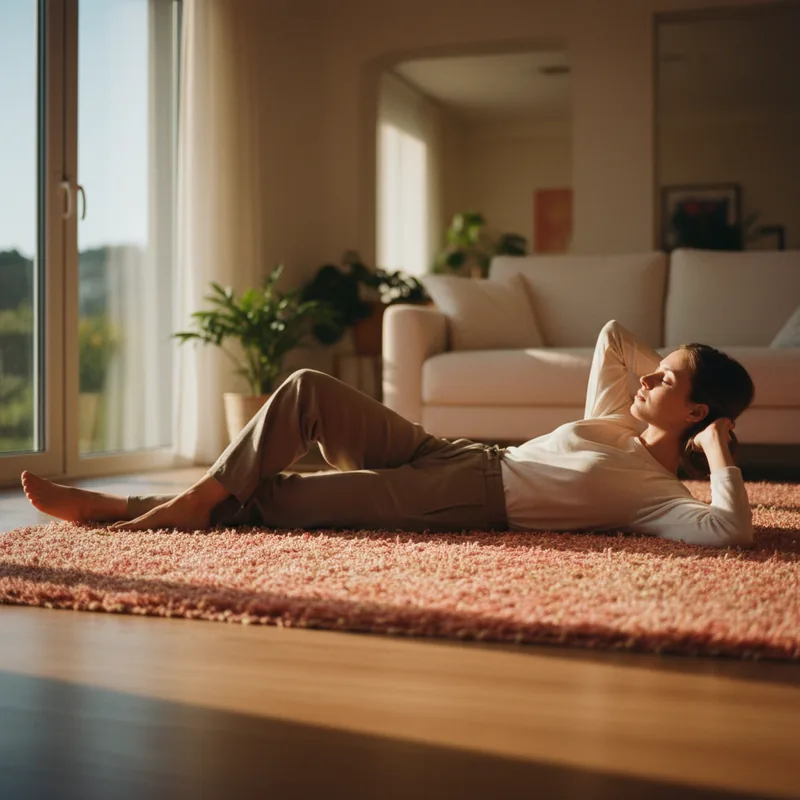
In a world that constantly demands more, faster, and better, the idea of simply lying on the floor might sound like a radical act of rebellion. Yet, this deceptively simple practice, dubbed 'floor time' on TikTok, is gaining immense popularity for a profound reason: it works. If you've ever felt the relentless hum of modern life leave you depleted, searching for a genuine reset button, then you understand the quiet desperation for true rest. Forget the elaborate routines and expensive gadgets; sometimes, the most powerful path to peace is found right where you are, on the ground beneath your feet. This isn't just about taking a break; it's about intentionally reconnecting with your body, calming a wired nervous system, and rediscovering a sense of grounded tranquility. There are powerful ways TikTok’s 'floor time' can significantly support your mental health and overall well-being.
The Unexpected Power of Doing Nothing: What is 'Floor Time'?
At its core, 'floor time' is exactly what it sounds like: intentionally taking time to lie on the floor, often in a relaxed, unstructured position. Think of it as a deliberate pause in your day, a moment to simply exist without agenda. TikTok users, from students to professionals, share countless videos praising this practice as an effortless way to decompress, unwind after a demanding workday, or simply slow down when the world feels overwhelmingly stimulating. Many describe a nostalgic connection, recalling childhood days spent daydreaming on the carpet, gazing at the ceiling—a natural, instinctual form of relaxation that our adult lives often forget to make space for.
This trend has resonated deeply as a counter-narrative to our hyper-productive, always-on culture. Unlike many wellness practices that require effort, discipline, or specific equipment—like journaling, advanced yoga poses, or cold plunges—floor time asks nothing of you except stillness. It’s a radical embrace of non-doing, offering a much-needed antidote to the pressure to constantly optimize ourselves. It’s a quiet rebellion against the tyranny of the to-do list.
The practice shares a striking resemblance to savasana, the final resting pose in yoga. Yara Kamal, a yoga teacher and founder of Scoria, explains that savasana is crucial for the body and mind to fully absorb the benefits of a yoga session. “Savasana is very important to help the muscles relax, recover, and to create a moment for deep rest,” Kamal notes. “It creates space for the body to prepare for meditation and encourages mindfulness, both on and off the mat.” While floor time might not always involve formal meditation, the intentional stillness fosters a mindful state, allowing for a unique sense of peace and a measurable reduction in symptoms of depression, even in clinical settings (Tamilpulavendran & Danasu, 2021).
Rewiring Your Well-being: How 'Floor Time' Transforms You
Despite its simplicity, the act of lying on the floor offers a surprisingly robust array of psychological and physical benefits. These are some of the most impactful ways TikTok’s 'floor time' can elevate your daily experience.
Stress Relief and Nervous System Reset
One of the most immediate and profound benefits of floor time is its ability to tap into your body's relaxation response. Kamal highlights how this practice activates the parasympathetic nervous system, effectively shifting you out of the draining "fight-or-flight" mode and into a state of rest and repair (Tindle & Tadi, 2025). Imagine coming home after a draining video call, your shoulders hunched, your jaw tight—lying on the floor for even a few minutes can signal to your brain that you are safe, helping to lower cortisol levels, slow your heart rate, and release accumulated tension. Research consistently shows that mindfulness-based practices, even informal ones like floor time, significantly improve symptoms of depression, anxiety, and general stress (Galante et al., 2021).
A Powerful Grounding Experience
In our often-disembodied lives, floor time offers a powerful grounding effect. Kamal emphasizes, “When we lay our full body on the floor, we naturally become aware of the points making contact with it or the body. This awareness deepens our connection to the breath, body, and present moment.” This isn't abstract; it's the sensation of the cool floor against your back, the solid support beneath you, the quiet hum of the room, bringing you firmly into the present. This physical connection helps anchor you, especially when your mind is racing or you feel overwhelmed by too many inputs. Many TikTok users describe it as a physical "reset button" for their emotions, helping them feel more connected to their surroundings after a particularly chaotic day.
Posture and Spinal Health Reboot
Our modern lives are often spent hunched over devices, slouched in chairs, or lounging on soft furniture that offers little spinal support. Floor time provides a vital counterpoint, encouraging better posture and natural spinal alignment. Kamal explains that on a firm surface, "gravity is pulling everything down equally, allowing the body to realalign and reset imbalances caused by daily posture and movement." Think of the profound release you feel after hours at a desk, finally stretching out on a hard surface. This spinal decompression can be incredibly therapeutic, alleviating lower back tension and, with consistent practice, improving your overall posture. It's a simple yet effective way to give your spine a much-needed break from the constant pull of gravity and poor ergonomics that define much of our day.
Soothing Aches and Pains
Sometimes, your body simply cries out for a moment of repose. Floor time, particularly when combined with gentle movements, can be a balm for tired, tense, and overworked muscles. While on the floor, you might intuitively stretch or incorporate a few simple yoga poses. Allison Benzaken, a 500-hour certified yoga instructor at Ninja Yoga, suggests accessible poses like Cat-Cow, Happy Baby, Legs Up The Wall, or Supine Bound Angle (Butterfly) Pose. These gentle stretches, performed with the support of the earth beneath you, can release deep-seated tension in areas like the hips, shoulders, and lower back. It's about listening to your body; if a pose feels painful, gently ease out of it and find what feels good.
The Gift of Guilt-Free Rest
Perhaps one of the most revolutionary ways TikTok’s 'floor time' benefits us is by normalizing and encouraging rest without the usual accompanying guilt. So many of us struggle to truly relax, plagued by the pressure to be productive or the mental chatter that accompanies downtime. Floor time TikToks offer a collective sigh of relief, reminding viewers that taking a break doesn't need structure, a purpose, or even a specific outcome. It can simply be about existing, about allowing yourself to be still, without judgment or the need to "earn" your rest. It’s a powerful validation that simply resting is productive in itself, especially after a particularly demanding week of juggling work, family, and personal commitments, when your mental battery is completely drained.
Your Moment, Your Rules: When and How to Embrace the Floor
There's no single "right" time or method for floor time; its beauty lies in its adaptability. You can weave it into your day whenever you feel the urge to pause and recalibrate. Consider it a spontaneous act of self-care, whether it’s a quick five-minute reset or a longer, more immersive experience. Understanding these simple ways TikTok’s 'floor time' can be integrated into your day opens up new possibilities for proactive self-care. Here are some moments when it might prove particularly beneficial:
- After a demanding workday, to shed the day's stress.
- Before bed, to signal to your body that it's time to unwind.
- When anxiety or nervousness starts to bubble up, offering immediate grounding.
- In the middle of a creative block or experiencing brain fog, to clear your mind.
- To cope with sensory overload or an intense bout of overthinking.
- Post-exercise, to allow muscles to relax and recover.
- When you just need a moment of quiet solitude, away from screens and demands. For instance, after putting the kids to bed and before tackling evening chores, taking 10 minutes for yourself on the floor can make a huge difference.
A Simple Guide to Your Floor Time Practice
Ready to experience the magic? Here’s a straightforward approach to integrating floor time into your routine:
- Find Your Spot: Choose a firm yet comfortable surface. A carpeted floor, a yoga mat, or a soft rug works perfectly. Ensure it's a space where you won't be disturbed.
- Lie Down Naturally: Position yourself however feels most natural and comfortable. This could be on your back with arms relaxed at your sides, in a gentle fetal position, or any other posture that invites ease.
- Deep Breathing: Focus on your breath. Inhale slowly through your nose, letting your belly rise, and exhale gently through your mouth, releasing tension. Allow each breath to deepen your relaxation.
- Soften Your Gaze: Close your eyes or soften your gaze towards the ceiling. Allow your eyes to rest without focusing on anything specific, letting your visual input diminish.
- Stay as Long as You Need: Benzaken emphasizes there’s no ideal duration. Five minutes can be impactful; thirty minutes can be deeply restorative. Listen to your body's signals for when it's had enough.
- Transition Slowly: When you’re ready to get up, do so deliberately. Roll to your side first, then use your arms to gently push yourself up. Notice any shifts in your physical or mental state before resuming your activities.
Enhance Your Floor Time Experience
For an even deeper dive into relaxation, consider these additions:
- Drape a weighted blanket over you for a sense of comforting pressure, which can calm the nervous system.
- Combine it with a guided mindfulness exercise or body scan, allowing you to tune into subtle sensations.
- Play calming instrumental music, ambient nature sounds, or even white noise to block out distractions.
- Incorporate a specific breathing technique, such as diaphragmatic breathing or the 4-7-8 breathing method (Benzaken), to further regulate your nervous system.
Making It Yours: Tailoring Your Floor Time for Maximum Comfort
The beauty of floor time is its universal appeal, but comfort is paramount for true relaxation. As Benzaken wisely states, “One cannot find deep relaxation if a part of the body is uncomfortable.” She encourages students to make any adjustments necessary, advocating for the generous use of props. “I’m a big fan of using blocks, bolsters, and blankets in class and especially during savasana,” she shares. Here are practical modifications to ensure your floor time is a sanctuary, not a struggle:
- If lying on your back is uncomfortable: Experiment with lying on your side, perhaps with a cushion between your knees for spinal alignment.
- For lower back soreness: Bend your knees, keeping your feet flat on the ground and hip-distance apart. Kamal and Benzaken suggest placing a prop—like a bolster, a rolled towel, or a folded blanket—underneath your knees for added support, which helps flatten the lumbar curve.
- If the floor feels too hard: Use a thicker yoga mat, a plush blanket, or even a thin mattress topper under your body. A small cushion under your head and neck can also make a big difference in comfort.
- If breathing feels restricted: Elevate your torso slightly by propping up your upper back and head with cushions or a wedge pillow. This can open the chest and make breathing easier.
- To minimize distractions: An eye mask can help block out light and signal deeper rest. Benzaken often recommends this for students. Alternatively, try noise-canceling headphones with soft music or white noise to create a personal cocoon of calm.
- For balance or mobility concerns: Take your time getting down and back up. “To get up slowly, try rolling onto your side first and using your arm to press yourself up,” Kamal advises. This controlled movement minimizes dizziness or strain, especially for those with low blood pressure or joint issues.
“Start slow and don’t shy away from using support,” Kamal advises. “Pay attention to any discomfort—if something feels painful, listen to your body and come out of it.” Remember, the goal of floor time is ease and relaxation, not pushing through discomfort. These thoughtful ways TikTok’s 'floor time' can be adapted ensure it's accessible and beneficial for everyone, regardless of physical limitations.