Have you ever paused to consider how your morning coffee tastes so rich, how you remember your first day of school, or how you instinctively pull your hand from a hot surface? These everyday miracles are orchestrated by the sophisticated structure and function of your central nervous system.
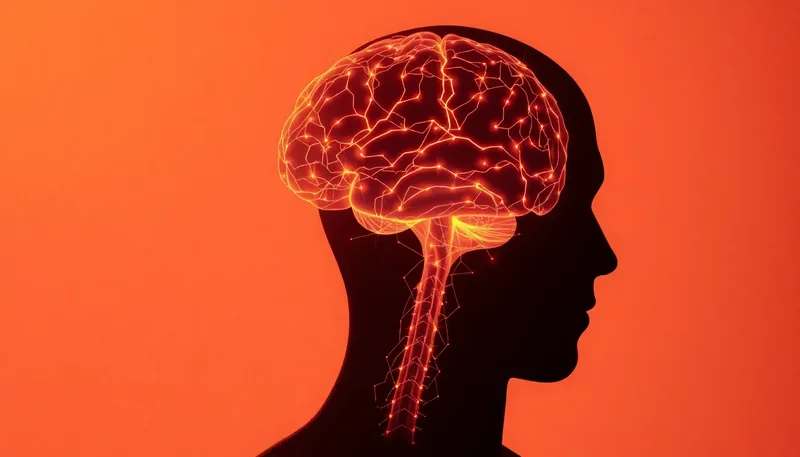
The central nervous system (CNS), comprising your brain and spinal cord, serves as your body's command center. It processes sensory information, generates thoughts and emotions, and coordinates physical responses. Understanding its architecture reveals why certain habits form, how memories persist, and what happens when this delicate system faces challenges.
The Command Center Architecture
Your CNS operates through three primary components working in concert: the brain, spinal cord, and billions of specialized cells called neurons. This triad forms a communication network more complex than any human-made system. The structure and function of central processing begins with sensory input--everything you see, hear, touch, taste, and smell--traveling to your brain for interpretation.
Consider your morning routine: the aroma of coffee activates olfactory neurons, sending signals to your brain's temporal lobe. Your visual cortex processes the steam rising from the cup, while your motor cortex coordinates the precise movements needed to bring it to your lips. This seamless integration demonstrates the elegant structure and function of central nervous coordination.
Research indicates that the CNS processes information at speeds up to 268 miles per hour along neural pathways (Harvard, 2024). This incredible velocity explains why you can react almost instantly to unexpected events, like catching a falling glass before consciously realizing it's slipping.
Brain: The Master Conductor
Your brain's physical structure directly determines its functional capabilities. The cerebrum's wrinkled surface, with its hills (gyri) and valleys (sulci), maximizes surface area within the limited space of your skull. This folding allows for approximately 16 billion neurons in the cerebral cortex alone.
Each brain region specializes in particular functions while maintaining constant communication with other areas. The frontal lobes manage decision-making and personality--when you resist scrolling through social media to focus on work, you're exercising prefrontal cortex control. The occipital lobes process visual information, transforming light patterns into recognizable images.
Contrary to popular "left-brain/right-brain" myths, both hemispheres collaborate continuously. Creative endeavors like painting engage networks across your entire brain, not just the right hemisphere. Recent studies show that learning a new language activates regions in both hemispheres simultaneously (Mayo Clinic, 2023).
Spinal Cord: The Information Highway
Running approximately 18 inches through your vertebral column, the spinal cord serves as the primary communication pathway between your brain and body. Thirty-one pairs of spinal nerves branch out like express lanes, carrying motor commands downward and sensory information upward.
The spinal cord demonstrates remarkable efficiency through reflex arcs. When you touch something painfully hot, sensory neurons transmit signals to your spinal cord, which immediately sends motor commands to withdraw your hand--all before your brain consciously registers the pain. This protective reflex showcases the decentralized intelligence within the CNS structure.
An often-overlooked example of spinal cord function occurs during complex movements like dancing. As you learn choreography, your spinal cord gradually takes over basic movement patterns, freeing your brain to focus on timing, expression, and interaction with partners.
Neurons: The Messengers
Neurons form the fundamental units of nervous system communication, with an estimated 86 billion in the brain alone. These specialized cells feature dendrites that receive signals, cell bodies that process information, and axons that transmit messages to other neurons.
Three neuron types create a continuous information loop: afferent neurons carry sensory data toward the CNS, efferent neurons transmit motor commands away from it, and interneurons facilitate communication between them. This arrangement creates the feedback loops essential for learning and adaptation.
Every time you practice a skill--whether playing guitar or perfecting a tennis serve--you're strengthening synaptic connections between neurons. This neuroplasticity demonstrates how the structure and function of central processing adapts throughout your lifetime, not just during childhood development.
Protective Mechanisms
Given its vital importance, your CNS enjoys multiple layers of protection. The bony armor of your skull and vertebrae provides the first defense against physical trauma. Within this casing, three meningeal membranes--dura mater, arachnoid mater, and pia mater--create additional barriers.
Cerebrospinal fluid cushions the entire CNS, serving as both shock absorber and nutrient delivery system. This clear liquid circulates through ventricles in your brain and around your spinal cord, maintaining optimal chemical balance for neural signaling.
The blood-brain barrier represents another sophisticated protection system. This selective membrane allows essential nutrients like glucose to enter while blocking many toxins and pathogens. However, this same selectivity makes treating CNS disorders particularly challenging, as many medications cannot cross this barrier.
When the System Faces Challenges
Despite its robust protections, the CNS remains vulnerable to various conditions that disrupt its delicate balance. Degenerative diseases like Alzheimer's progressively damage neural networks, often beginning in memory centers before spreading to other regions. Stroke occurs when blood flow interruption deprives brain areas of oxygen, with effects depending on the location and duration of the blockage.
Traumatic injuries can sever neural pathways, sometimes resulting in paralysis when communication between brain and body parts becomes disrupted. Interestingly, the CNS's limited regeneration capacity--unlike peripheral nerves--explains why spinal cord injuries often cause permanent damage.
Emerging research offers hope through neuroplasticity-focused therapies. Techniques that encourage remaining neurons to form new connections show promise for recovery after strokes or traumatic brain injuries (Johns Hopkins, 2024). Even in healthy individuals, activities like meditation and complex learning can strengthen neural networks against age-related decline.
Optimizing Your Central Nervous System
Understanding the structure and function of central processing empowers you to support your CNS through daily choices. Quality sleep facilitates glymphatic system activity, clearing metabolic waste that accumulates during waking hours. Regular exercise increases blood flow and promotes neurogenesis--the creation of new neurons in certain brain regions.
Nutrition significantly impacts CNS health. Omega-3 fatty acids support cell membrane integrity, while antioxidants combat oxidative stress that damages neurons. Hydration maintains cerebrospinal fluid volume and composition, ensuring optimal cushioning and nutrient delivery.
Mental stimulation serves as exercise for your neural networks. Learning new skills, solving puzzles, and engaging in creative pursuits challenge your CNS to form and strengthen connections. This cognitive reserve may delay or mitigate symptoms of neurodegenerative conditions.
Finally, stress management proves crucial since chronic stress hormones can damage hippocampal neurons involved in memory formation. Mindfulness practices not only reduce stress but actually increase gray matter density in prefrontal regions associated with emotional regulation.
Your central nervous system represents the most complex structure in the known universe, with capabilities far surpassing any artificial intelligence. By appreciating its intricate architecture and supporting its function through lifestyle choices, you honor the biological masterpiece that makes every human experience possible.