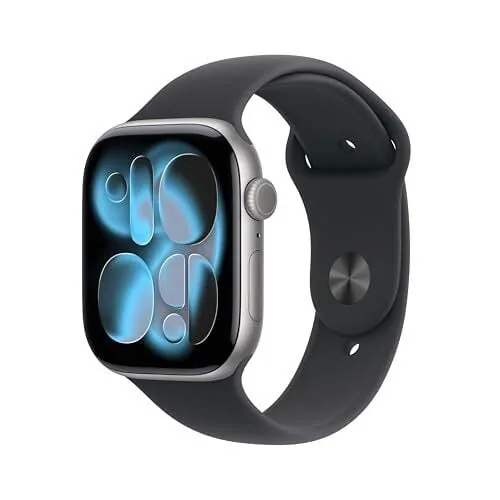
Everything you've been told about sleep stages might be a little fuzzy, especially if you've glanced at your Apple Watch and seen a category called "core sleep." It's a term that pops up next to REM and deep sleep, but unlike its more familiar counterparts, its meaning can feel elusive. If you've searched for answers, you might have found definitions that don't quite align with what your wearable is telling you. So, what's the deal? Let's untangle this, starting with the most important question: here's what 'core sleep' really means according to Apple.
Your Apple Watch's "Core Sleep" is Light Sleep
When you check your Apple Watch's sleep data, the label "core sleep" is essentially Apple's way of referring to light sleep. Scientists typically categorize this as stages N1 and N2 of non-REM sleep. It's crucial to understand that this isn't a deeper form of sleep, nor is it directly related to REM sleep. The watch infers these stages primarily through your movement patterns, a process that's impressive but not as precise as a clinical sleep study using an electroencephalogram (EEG) (Harvard, 2024).
Apple chose the term "core" to sidestep potential misunderstandings of the word "light." They worried that calling it "light sleep" might lead users to believe it's less important. However, stage N2, which makes up a significant portion of your night's rest--often over 50 percent--is a normal and vital part of sleep physiology, featuring important brain activity like sleep spindles and K-complexes. By calling it "core," Apple aimed to highlight its fundamental importance without implying it's less critical than deep sleep (Mayo Clinic, 2023).
Think of it this way: your Apple Watch is trying to map your sleep onto a simplified model that includes Awake, Light ("core") Sleep, Deep Sleep, and REM Sleep. The "core" category for Apple encompasses the early stages of non-REM sleep (N1 and N2), while "deep sleep" corresponds to stage N3. This classification was validated during testing by comparing the watch's readings to EEG data; a match between the watch's "core" and an EEG's stage 2 was considered a success.
The key takeaway: For your Apple Watch, "core sleep" is synonymous with light sleep (N1-N2).
The Science of Sleep Stages: Where Does "Core" Fit In?
Before Apple introduced its terminology, sleep science had a well-established model based on brain wave activity. Understanding these stages provides context for Apple's choices. We cycle through these stages multiple times a night, with each cycle lasting roughly 90 minutes.
Non-REM Stage 1 (N1)
This is the transitional phase between wakefulness and sleep, typically lasting only a few minutes. Your breathing slows, your muscles begin to relax, and your brain waves start to shift from their waking patterns. This is the lightest stage of sleep, and your Apple Watch categorizes this as part of its "core sleep".
Non-REM Stage 2 (N2)
Often considered the bulk of light sleep, N2 makes up about 45-55% of your total sleep time. During this stage, your brain activity slows down further, punctuated by brief bursts of rapid activity known as sleep spindles and distinct brainwave patterns called K-complexes. These are thought to be crucial for memory consolidation. If you grind your teeth in your sleep (bruxism), it most commonly occurs during this stage. This is the primary stage that Apple's "core sleep" metric represents.
Non-REM Stage 3 (N3)
This is your deep sleep, also known as slow-wave sleep due to the very slow brain waves recorded during this phase. It accounts for about 20-25% of your sleep. Waking someone from N3 is difficult, and they often feel groggy afterward. Deep sleep is vital for physical restoration, including muscle repair, growth, and immune system strengthening. As we age, the amount of time spent in N3 sleep tends to decrease.
REM Sleep
REM stands for Rapid Eye Movement. During this stage, your brain activity becomes much more similar to when you're awake, but your body is largely paralyzed to prevent you from acting out your dreams. This is when most vivid dreaming occurs. REM sleep is essential for cognitive functions like learning, memory processing, and emotional regulation. It typically becomes longer in duration in the later sleep cycles of the night.
How Much "Core Sleep" Do You Actually Need?
Using Apple's definition where "core sleep" is light sleep (N1-N2), it's entirely normal to spend a substantial portion of your night in this stage. A typical breakdown for eight hours of sleep might look something like this:
- N1 (Very Light Sleep): Approximately 5% (around 24 minutes)
- N2 (Light/"Core" Sleep): Approximately 45-55% (around 3.5-4.5 hours)
- N3 (Deep Sleep): Approximately 20-25% (around 1.5-2 hours)
- REM Sleep: Approximately 20-25% (around 1.5-2 hours)
So, if your Apple Watch reports a significant amount of "core sleep," it's likely reflecting a healthy amount of light sleep, which is exactly what you want.
Improving Your Sleep, Including "Core" Sleep
If you're concerned about your "core sleep" numbers, remember that wearables, while useful for tracking overall sleep duration and detecting wakefulness, aren't perfectly accurate at distinguishing between sleep stages. Algorithms can sometimes miscategorize sleep, so don't stress over minor fluctuations. The best approach to improving any sleep stage, including your "core" or light sleep, is to focus on improving your overall sleep quality and duration.
Here are some foundational habits that benefit all aspects of your sleep:
- Establish a Relaxing Bedtime Routine: Dedicate at least 30 minutes before bed to winding down. This could involve reading a book, gentle stretching, or listening to calming music.
- Maintain a Consistent Wake-Up Time: Even on weekends, try to wake up around the same time to regulate your body's internal clock.
- Minimize Screen Time Before Bed: The blue light emitted from phones, tablets, and computers can interfere with melatonin production, making it harder to fall asleep.
- Optimize Your Sleep Environment: Ensure your bedroom is dark, quiet, and cool. Consider blackout curtains or earplugs if needed.
- Watch Your Intake: Avoid caffeine and alcohol in the hours leading up to bedtime, as they can disrupt sleep architecture.
By focusing on these fundamentals, you'll naturally enhance the quality and quantity of all your sleep stages, regardless of how your wearable labels them.
The Confusing World of Other "Core Sleep" Definitions
The reason Apple's use of "core sleep" can be so confusing is that the term has been applied in several other ways within sleep science and popular culture, often meaning something entirely different--sometimes even referring to deep sleep.
Horne's "Core" vs. "Optional" Sleep
In the 1980s, sleep scientist James Horne proposed a theory where the first few sleep cycles of the night, perhaps the first five hours, constituted "core" sleep--the essential sleep needed for basic functioning. The remaining sleep was termed "optional" sleep, beneficial but less critical if missed. This distinction highlights the importance of getting sufficient sleep early in the night (Horne, 1988).
"Core" as Deep Sleep
You'll also encounter definitions where "core sleep" refers to everything *but* light sleep, essentially meaning the deeper stages (N3) and sometimes even REM sleep. For example, one study comparing sleep deprivation effects used Horne's definition of core sleep to mean the primary, obligatory sleep stages. This contrasts sharply with Apple's usage, where "core" means light sleep.
Polyphasic Sleep's "Core"
For those practicing polyphasic sleep--an approach involving multiple short naps throughout the day instead of one long sleep period--the term "core sleep" is used more literally. It refers to the longest sleep period within their polyphasic schedule, which might still be a relatively short nap compared to monophasic sleep. This is a straightforward, albeit niche, application of the term.
The internet's interpretation can be a jumbled mess, with some articles conflating these different definitions. Google's AI overviews have sometimes produced nonsensical blends of these meanings. However, when you're looking at your Apple Watch data, remember here's what 'core sleep' is designed to represent: the foundational light sleep stages.
Ultimately, while the term "core sleep" has a varied history, for Apple Watch users, it's a simple proxy for light sleep. Focus on overall healthy sleep habits, and your body will thank you.