Three years ago, Sarah was scrolling through fitness feeds, feeling the familiar pang of frustration. Every other post seemed to assume a male anatomy, a male strength baseline, or a male approach to movement. Then came the 'women's pushup' hack: turn your hands slightly outward. It promised to cater to female anatomy, to solve the mystery of why pushups felt so hard. Sarah tried it, but the answer wasn't in a tweaked hand position. It was in understanding what truly works for *her* body.
The Pushup Problem for Women
It’s a common lament: fitness advice often feels like it’s written for a generic male body. For women, this can be particularly disheartening when tackling fundamental exercises like the pushup. You push, you strain, you feel like you’re not progressing. Enter the latest social media trend: a specific hand placement for pushups, marketed as a solution tailored for women’s anatomy. But is this hack truly about anatomy, or something else entirely?
I’ve spent enough time in various fitness circles to develop a healthy skepticism about products and advice exclusively targeted at women. The reality is, our bodies are incredibly diverse. Strength, proportions, and even how we respond to training vary wildly from person to person. Many supposed gender-specific differences in fitness are often better explained by factors like overall body size, muscle mass distribution, or how long someone has been training, rather than gender itself. Ultimately, I find I have more in common with individuals—regardless of gender—who share my body type, training history, or goals, than with any generalized concept of 'womankind'.
Given this, I approached the 'women's pushup' hack with trepidation. While experimenting with different variations is always a good idea, the core question remained: is there a fundamental anatomical difference that necessitates a unique hand position for women to perform pushups optimally?
Unpacking the 'Carrying Angle' Myth
This particular pushup modification often surfaces with the explanation that women should angle their hands slightly outward, typically cited around 45 degrees. The reasoning? It supposedly accounts for differences in the “carrying angle,” a measurement of the elbow’s alignment relative to the forearm. It’s an explanation that sounds scientific, but does it hold up?
Upon closer inspection, the connection between the carrying angle and this specific pushup hack often feels tenuous. While some proponents suggest this altered hand position is due to anatomical differences, others acknowledge it relates more to shoulder rotation, a factor not inherently tied to gender. The claim is that forcing women into a 'standard' pushup template, which might be based on male averages, can lead to injury and reduced training morale. But the logical leap from carrying angle to a required hand adjustment for pushups is where things start to unravel.
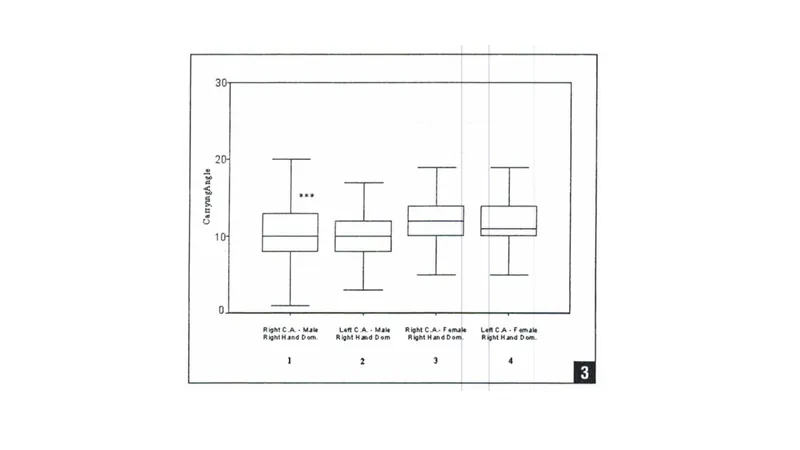
The carrying angle itself is a real anatomical measurement: it's the slight outward angle your forearm forms with your upper arm when your arms are at your sides and palms face forward. On average, this angle tends to be slightly greater in women than in men. Historically, it was hypothesized this angle helped women’s forearms avoid touching their hips while carrying items. However, research suggests this isn't the primary reason; we naturally hold our arms away from our bodies (abduction) to prevent contact (Skwarecki, 2024). More importantly, studies indicate that the carrying angle is more closely related to overall height than to sex (Skwarecki, 2024). Taller individuals, on average, have a smaller carrying angle, and since men tend to be taller than women on average, this explains the observed difference.
Furthermore, when you adopt a pushup position, your palms are facing down. In this pronated position, the carrying angle significantly decreases, often becoming negligible. The anatomical nuance that might exist when your arms are at your sides largely disappears when you’re pushing your body weight off the ground. The data also shows a substantial overlap in carrying angles between men and women; it’s not a clear-cut distinction where all men fall into one range and all women into another (Skwarecki, 2024). This wide overlap means that a 'standard' pushup position, if based on averages, would exclude many individuals of both sexes.
What Truly Matters for Your Pushups
So, if the carrying angle isn't the defining factor, what should guide your pushup form? The answer, as many experienced trainers will tell you, is personalization. The most effective hand placement for pushups is the one that feels most comfortable, stable, and allows you to generate the most power for you.
Diana Jordan, a physical therapist and weightlifting coach, emphasizes that numerous anatomical variations play a role. These include chest and shoulder width, the relative lengths of your upper arm and forearm, the balance between your pectoral and triceps strength, and your shoulder’s mobility versus stability. Trying to dictate a single pushup variation based on a generalized sex-based anatomical average, especially when there's considerable overlap and other factors at play, seems misguided (Jordan, personal communication, 2024).
I've tried the outward hand angle myself. For me, it felt awkward and less powerful. My own body responds best to a slight inward rotation of the hands, fingers pointing more forward. This is why I won't be adopting the so-called 'women's pushup' technique. It simply doesn't align with my biomechanics or my strength output.
Consider this analogy: when teaching squats, a good coach wouldn't mandate a single foot position for everyone. They’d encourage experimenting with wider stances, narrower stances, feet angled out, feet straight ahead, and finding what allows for the best depth, stability, and comfort. The same principle applies to pushups. There are countless variations—diamond pushups, wide-grip, close-grip, incline, decline—each engaging muscles slightly differently and suiting different body types and goals. Locking into one prescribed method ignores this valuable diversity.
Beyond Gendered Hacks for Real Progress
The proliferation of 'women's' exercise hacks, including the pushup variation, often oversimplifies complex biomechanics into a one-size-fits-all solution. This approach can be patronizing, implying that women’s bodies are so fundamentally different that they can't benefit from general strength training principles. While it's true that much of the historical research in exercise science has focused on male subjects, and that women may benefit from training modifications related to hormonal cycles (Mayo Clinic, 2023), this doesn't invalidate the core principles of progressive overload and proper form.
The danger with these gendered hacks is that they can replace sound biomechanical understanding with pseudoscience or vague appeals to intuition. Instead of focusing on minor tweaks to exercise technique, true progress for a wider range of individuals lies in acknowledging and embracing the vast spectrum of human anatomy and finding what works best for each person. Jordan notes that directives like 'you should only do pushups this way' can inadvertently perpetuate an idea of female fragility, creating more barriers to entry rather than encouraging participation (Jordan, personal communication, 2024).
Ultimately, this brings me back to why I won't be adopting the 'women's pushup' modification. It’s not about rejecting advice designed for women; it’s about rejecting advice that imposes a rigid, gender-based template where none is scientifically warranted. My focus, and what I encourage you to adopt, is a principle of self-discovery in movement. Experiment with different hand positions, listen to your body, and prioritize what feels strong, stable, and effective for your unique physiology. That’s the real key to unlocking your strength potential, why I won't be seeking out gendered shortcuts.