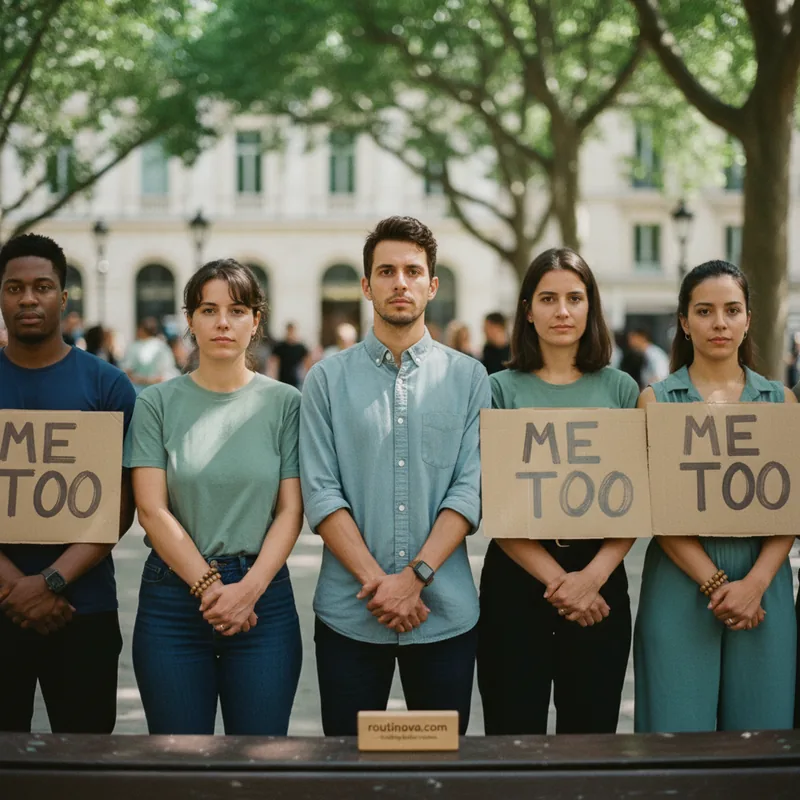
Imagine a world where 81% of women and 43% of men report experiencing sexual harassment or assault (Stop Street Harassment, 2018). That's not just a statistic; it's a silent epidemic touching nearly every community, workplace, and home. For many, the hashtag #MeToo became a beacon, a collective gasp, and a rallying cry all at once. This is why #MeToo matters: it shattered a pervasive silence, giving voice to millions and fundamentally reshaping our understanding of sexual violence and accountability.
It's easy to see the hashtag on social media and think it's just another trend. But the truth is, the #MeToo movement has ignited a global conversation, sparking significant changes--both social and legal--that continue to unfold. It has allowed survivors to feel supported, seen, and heard, while simultaneously initiating a crucial worldwide dialogue about widespread harassment, assault, and the systemic changes still desperately needed.
The Unseen Origins of a Global Movement
Before it exploded across social media in 2017, the phrase "Me Too" had a powerful, quieter beginning. Tarana Burke, a dedicated advocate for women in New York, first coined it in 2006. Her aim was simple yet profound: to empower women who had endured sexual violence, letting them know they were not alone. She wanted to create a sense of shared experience, a collective understanding that transcended individual trauma.
Burke's unwavering commitment earned her recognition, including being named Time magazine's Person of the Year in 2017. Today, she continues her vital work as a senior director at Girls for Gender Equity in Brooklyn, speaking nationwide about the power of empathy and solidarity.
The movement gained unprecedented momentum in 2017 when the New York Times published explosive allegations of sexual harassment against producer Harvey Weinstein. Actors Ashley Judd and Rose McGowan bravely spoke out, igniting a firestorm. Soon after, actor Alyssa Milano embraced the #MeToo hashtag across her social media, unaware of its deeper origins. She simply saw it as a powerful way to create awareness, find support, and build a community of survivors. What happened next was unprecedented.
The Stark Reality: Prevalence and Vulnerability
The issue of sexual aggression isn't just widespread; it's pervasive. While the 81% of women and 43% of men statistic from 2018 is staggering (University of California, 2018), it only scratches the surface. The true scope of harassment and assault is often hidden, particularly for marginalized communities.
Think about this: research consistently shows that transgender individuals, Native American women, college students, members of the military, and people of color face disproportionately higher risks of sexual assault (RAINN, 2023). Women, across all demographics, continue to be at a significantly higher risk than men. These aren't just numbers; they represent countless lives impacted, futures altered, and trust shattered.
The aftermath of harassment and assault can be devastating. Survivors often grapple with severe mental health challenges, including PTSD, depression, anxiety, and an increased risk of substance use or suicidal ideation (Maniglio, 2009). This is why #MeToo's call for awareness and support is so critical: it's about acknowledging a profound public health crisis.
Beyond the Hashtag: Tangible Impact and Evolution
Milano's tweet wasn't just a ripple; it was a tsunami. Twitter saw the hashtag posted almost a million times within two days, and Facebook users shared 12 million posts in less than 24 hours. Years later, the conversation continues, a testament to the movement's enduring power and the ongoing need for dialogue.
For those who had tirelessly worked with survivors for years, this explosion of public attention was a turning point. Finally, the issues they championed were gaining traction, moving from local grassroots efforts to a global stage. The silence, once so deafening, was irrevocably broken. Many are now openly and passionately discussing topics once deemed taboo.
The #MeToo movement has prompted sweeping changes, including:
- Affirmation and Community: Survivors found solidarity, realizing they were not alone and building a stronger, more vocal community.
- Shifting Social Norms: Public opinion has dramatically shifted, challenging long-held beliefs that enabled abuse and increasing compassion for survivors.
- Legal and Policy Reforms: New laws and policies have been enacted, such as California's SB 820, which bans non-disclosure agreements in sexual harassment and assault cases, preventing powerful individuals from buying survivors' silence (California Legislature, 2018).
- Accountability for the Powerful: Many prominent figures across entertainment, sports (like the Larry Nassar case, which exposed systemic abuse in gymnastics), and politics have faced consequences through legal action and public condemnation.
- Resource Creation: Initiatives like the Time's Up Legal Defense Fund have emerged, providing crucial legal representation to thousands of survivors, often pro bono.
This is why #MeToo continues to be a force for change, proving that collective voices can dismantle entrenched power structures and demand justice.
The Unfinished Work: Challenges and the Road Ahead
Despite significant progress, the journey is far from over. Survivors still face immense hurdles, including victim-blaming and the very real threat of retaliation for speaking up. There's a persistent need for education on how perpetrators groom victims, manipulate situations, and often evade justice.
Consider the polarizing case of actor Bill Cosby's 2021 release from prison. His conviction, initially seen as a landmark victory for the movement, was overturned on a technicality, highlighting the fragility of justice and the complex legal battles survivors often endure. It served as a stark reminder that even with ample evidence, systemic obstacles can still allow perpetrators to walk free.
The conversation around consent, power dynamics, and bystander intervention needs to deepen. We must continue to challenge the cultural narratives that perpetuate sexual violence and ensure that formal anti-harassment policies are not just written, but rigorously enforced.
Keeping the Conversation Alive
Today, the phrase #MeToo remains a powerful sign of solidarity. Tweets, Facebook posts, and Instagram stories featuring the hashtag appear daily, a constant testament to the movement's success in fostering awareness and building an invaluable community of support. This is why #MeToo isn't just a moment; it's an ongoing movement.
From advocating for stronger federal laws to ensuring real safety for survivors who speak up, much work remains. While society may never be completely rid of sexual harassment and assault, sustained efforts can continue to uncover these crimes, encourage reporting without retribution, and bring perpetrators to justice. The fight for a safer, more equitable world is a marathon, not a sprint, and the #MeToo movement reminds us that every step forward counts.