Imagine a gentle touch, a sense of profound calm washing over you, and the belief that a universal life force is being guided to restore balance within your body. This is the essence of Reiki, a Japanese energy healing practice that has gained traction as a complementary therapy for stress reduction and overall well-being. But beyond the tranquil descriptions, what actually happens during a Reiki session, and is there scientific backing to its purported benefits?
What Exactly Is Reiki?
Reiki, a term derived from the Japanese words 'rei' (universal spirit) and 'ki' (life force energy), is a holistic healing technique developed in the early 20th century by Mikao Usui. The core principle is that a vital energy flows through all living things, and imbalances or blockages in this energy can lead to physical, mental, and emotional distress. A Reiki practitioner acts as a conduit, channeling this universal energy to clear blockages and promote a state of balance and healing within the recipient.
This practice is rooted in the belief that the universe is imbued with a sacred energy that sustains life. When this energy flows freely, individuals experience optimal health and well-being. Conversely, disruptions in this flow, often referred to as byoki or energetic stagnation, can manifest as illness or discomfort. The aim of Reiki is to gently remove these blockages, allowing the natural life force energy to flow unimpeded.
How a Reiki Session Unfolds
A typical Reiki session is designed to be a deeply relaxing experience. It usually lasts between 45 to 90 minutes, with the exact duration depending on the practitioner's approach and the client's specific needs. Before the session begins, the practitioner will often discuss the client's goals, intentions, and any areas of concern, ensuring a personalized approach.
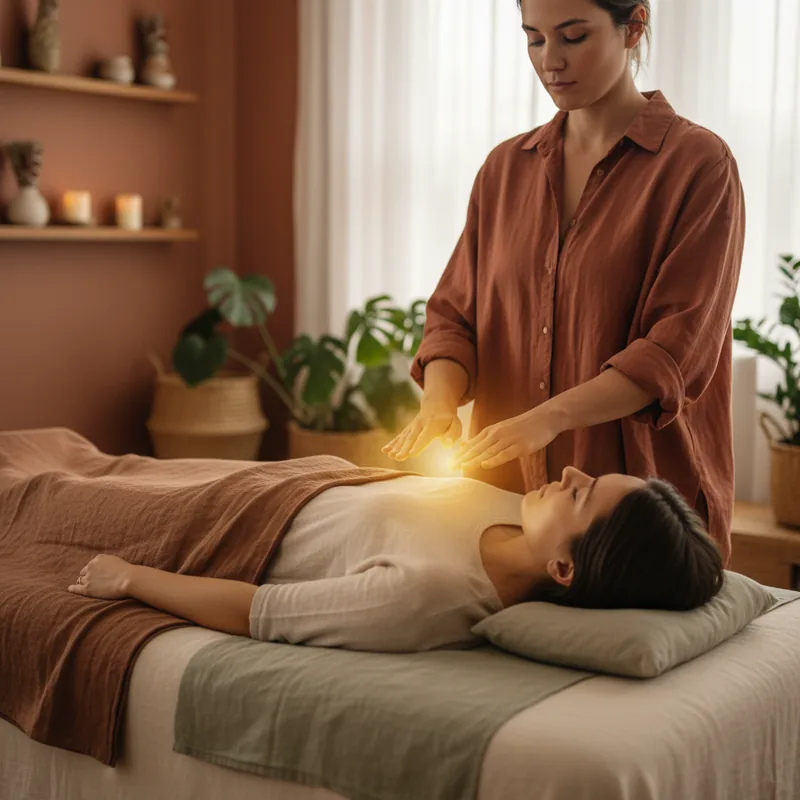
Clients remain fully clothed throughout the session, often lying comfortably on a massage table. Blankets and bolsters are provided for added comfort. The practitioner may offer the option for their hands to be placed directly on the body or hover just above it. Some practitioners begin by using a pendulum to assess the client's chakras, or energy centers, to identify areas that might require more attention.
Many practitioners incorporate gentle breathwork and guided meditation at the start of the session. This helps the client relax deeply, often guiding them into the parasympathetic nervous system--the body's state of rest and digest. The practitioner then moves through specific hand positions, typically following the body's energy pathways from head to toe, allowing the universal energy to flow.
For instance, a practitioner might place their hands lightly on the client's forehead to address mental clarity, then move to the chest area to encourage emotional release, and continue down the body. Throughout this process, the practitioner acts as a neutral channel, facilitating the energy's movement without imparting their personal energy. After the hands-on portion concludes, the client is often guided back to full awareness with gentle breathwork prompts. Finally, the practitioner and client typically sit down to discuss the experience, allowing the client to share any insights or sensations they encountered.
Talyn Fiore, a Reiki Master, often integrates additional modalities into her sessions, such as breathwork, tapping techniques, sound frequencies, and inner child work. This holistic approach aims to address a broader spectrum of energetic and emotional patterns, enhancing the overall healing experience. For example, during a session focused on anxiety, Fiore might use gentle tapping to release stored tension while simultaneously channeling Reiki energy to promote calm.
Potential Benefits of Reiki
While scientific research into Reiki is ongoing, many individuals report experiencing a range of positive effects, both physical and emotional. These benefits often stem from the deep state of relaxation induced by the practice.
Promotes Deep Relaxation
One of the most immediate and commonly reported benefits of Reiki is profound relaxation. By shifting the body from the sympathetic 'fight-or-flight' response to the parasympathetic 'rest-and-digest' state, Reiki can help counteract the chronic stress that impacts modern life. A study published in Alternative and Complementary Therapies indicated that participants who received Reiki experienced greater physical relaxation compared to those who listened to calming music or a meditation tape (Witte & Dundes, 2001).
May Boost Mood and Confidence
Reiki is believed to help reframe negative emotional states, such as doubt and fear, replacing them with feelings of self-acceptance, peace, and clarity. This shift can foster a greater sense of self-esteem and confidence. Research in Evidence-Based Complementary and Alternative Medicine noted that participants receiving Reiki showed progressive improvements in overall mood, particularly those experiencing anxiety and depression (Bowden et al., 2011).
Potential Impact on Blood Pressure
Some studies suggest Reiki may have a positive effect on physiological markers. A study in Acta Paulista de Enfermagem found that patients with hypertension who received a Reiki session experienced a reduction in blood pressure, suggesting it could be a complementary tool for managing blood pressure (Salles et al., 2014).
Enhances Intuition and Creativity
Practitioners often describe Reiki as a way to reconnect individuals with their inner wisdom and intuition. By quieting the mental chatter, Reiki can allow for a clearer perspective and foster a sense of intuitive knowing. This state of relaxed awareness can also open pathways for creativity, as the mind is less preoccupied with survival and more open to new ideas and experiences.
Support During Medical Procedures
Preliminary research has explored Reiki's role as a complementary therapy for patients undergoing medical treatments. A pilot study in Holistic Nursing Practice indicated that patients undergoing knee replacement surgery who received Reiki experienced reductions in pain, anxiety, and physiological stress markers like blood pressure and breathing rate (Baldwin et al., 2017).
Beyond these reported benefits, individuals have turned to Reiki for support with conditions such as insomnia, headaches, chronic inflammation, and digestive issues. Like many holistic practices, the benefits of Reiki are often cumulative, with regular sessions potentially yielding more profound and lasting effects. However, some individuals find significant relief from even a single session, especially when addressing a specific concern.
Is Reiki Safe?
Generally, Reiki is considered a safe and gentle complementary practice for most individuals, including pregnant women and children. Its non-invasive nature means it poses minimal risk when used alongside conventional medical care. However, it is crucial to emphasize that Reiki should not replace standard medical treatment, especially for serious illnesses or emergencies.
While data on Reiki's effects is still developing, any individual with a significant health concern should always consult their physician. If you are undergoing Reiki and experience any new or worsening symptoms, immediate medical advice is recommended.
Who Should Exercise Caution?
Certain individuals may need to approach Reiki with caution or avoid it:
- Individuals with severe psychiatric disorders or a history of psychosis should consult their healthcare provider, as Reiki could potentially amplify certain symptoms.
- Those with pacemakers or other implanted medical devices should discuss Reiki with their doctor, as its effects on such devices are not fully understood.
- People with severe burns or open wounds should avoid direct hand contact on the affected areas during a session.
Reiki is best viewed as an adjunct therapy, a supportive practice that complements, rather than substitutes, conventional medical interventions. For instance, someone managing chronic pain might use Reiki alongside physical therapy and prescribed medication, not as a sole treatment.
The Importance of Communication
Open communication between the client and practitioner is vital for a successful Reiki session. Discussing your goals, any anxieties, and what you hope to gain from the experience helps build trust. This trust facilitates the energetic exchange, allowing the Reiki energy to flow more effectively. A trained practitioner will always seek your explicit consent before beginning any hands-on work.
Common Misconceptions About Reiki
Due to its spiritual roots, Reiki is sometimes misunderstood as a religion or even a form of magic. However, it is best understood as an energy therapy, akin to how massage is a therapy for physical muscles. The practitioner does not use their own personal energy but rather serves as a channel for universal life force energy.
Another common question concerns the efficacy of distance Reiki compared to in-person sessions. Many practitioners, and recipients, report that distance Reiki can be just as effective. The intention to heal and receive energy transcends physical proximity. However, some prefer in-person sessions for the dedicated, uninterrupted space and the direct energetic connection experienced.
For example, a person living in a remote area might find distance Reiki sessions invaluable for accessing this form of healing, while someone seeking a more immersive experience might opt for an in-person appointment. The choice often depends on individual preference and practical considerations.
A Simple Reiki Exercise for Beginners
You can begin to cultivate your own sense of energetic well-being with a simple daily practice. Start by placing your hands gently over your heart each morning before getting out of bed. Take a few deep breaths and visualize a warm, loving light flowing from your hands into your heart space, filling you with love and peace for the day ahead. This simple act can help set a positive and centered tone for your day.