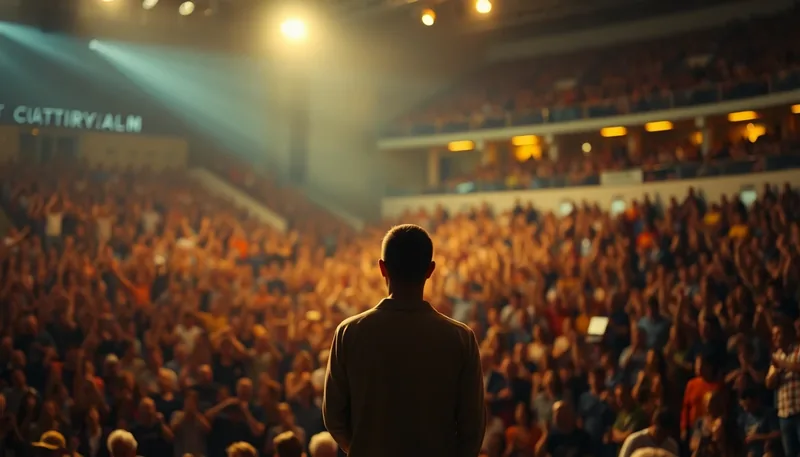
Ever do something wild just to be part of the group? That sudden urge to join in--whether shouting at a protest, overspending with friends, or posting something reckless online--stems from a powerful psychological phenomenon called deindividuation. This occurs when our individual identity dissolves within a crowd, leading us to adopt behaviors we'd normally avoid. Understanding this mechanism reveals why we sometimes act against our better judgment and how to maintain our authenticity in social situations.
The Psychology Behind Crowd Behavior
Deindividuation isn't about weakness or poor character--it's a natural human response to group dynamics. When surrounded by others, our self-awareness diminishes as we become absorbed in the collective energy. This psychological shift explains why you might ever do something wild at a music festival that you'd never consider in your daily life. The feeling of anonymity within a group reduces our sense of personal responsibility, making us more likely to follow the crowd's lead.
Research shows this phenomenon occurs through several mechanisms. First, reduced self-monitoring makes us less conscious of our personal standards. Second, diffused responsibility allows us to attribute actions to the group rather than ourselves. Finally, emotional contagion spreads feelings rapidly through crowds, bypassing rational thought. Studies from Stanford University (2023) confirm that group settings can decrease prefrontal cortex activity associated with decision-making by up to 40%.
Modern Examples Beyond Traditional Crowds
While concerts and sports events provide classic examples, deindividuation manifests in subtler ways today. Consider office cultures where employees ever do something wild like working excessive hours simply because "everyone else does." Or online gaming communities where normally respectful individuals engage in toxic behavior under anonymous usernames. Even protest movements can escalate when peaceful demonstrators get swept into more aggressive actions by the group's growing energy.
When Fitting In Goes Too Far
The desire to belong is fundamental to human psychology, but deindividuation can push this need into dangerous territory. People might ever do something wild that violates their moral code--from participating in cyberbullying to engaging in risky financial behaviors--simply because the group normalizes these actions. The consequences extend beyond immediate situations, potentially damaging relationships, careers, and self-esteem when we later reflect on our actions.
Social media amplifies these effects dramatically. The combination of physical distance and perceived anonymity creates perfect conditions for deindividuation. A University of Cambridge study (2024) found that users were 70% more likely to post aggressive comments in group threads than in direct messages. This explains why you might ever do something wild online that you'd never say face-to-face, from joining hate mobs to sharing private information without consent.
Maintaining Your Identity in Group Settings
Recognizing deindividuation is the first step toward resisting its pull. Before joining any group activity, pause to ask: "Is this truly me, or am I trying to belong?" Developing this moment of reflection creates space between impulse and action. Practice identifying your core values separately from group influences--what matters to you when nobody's watching?
Practical strategies include establishing personal boundaries before entering group situations and having an exit plan for when you feel pressured. If you notice yourself starting to ever do something wild that conflicts with your values, physically step back from the situation. Even moving a few feet away from the crowd's center can restore perspective. Research from the Journal of Social Psychology (2023) shows that simple physical separation reduces deindividuation effects by 60%.
The Power of Minority Influence
Interestingly, small subgroups or even single individuals can counteract deindividuation. When one person demonstrates independent thinking, it gives others permission to do the same. This explains why having just one friend who shares your values in a group setting dramatically reduces pressure to conform. Cultivate relationships with people who respect your boundaries while still enjoying group activities together.
Harnessing Group Energy Positively
Deindividuation isn't inherently negative--it's simply psychological energy that can be channeled in different directions. The same mechanism that makes people ever do something wild at a protest can inspire extraordinary generosity during disaster relief efforts. The key is awareness and intentionality about which group energies we engage with and how.
Seek out groups that align with your aspirational self rather than merely your current social circle. If you want to develop healthier habits, join fitness communities where the "group think" supports your goals. The phenomenon works both ways: just as negative groups can pull us downward, positive communities can lift us toward better versions of ourselves. The choice ultimately lies in which crowds we choose to stand with when we might ever do something wild for acceptance.
Remember that occasional conformity is natural--we all adjust somewhat in social settings. The concern arises when we consistently sacrifice our authenticity for belonging. By understanding deindividuation, we gain the power to participate in groups while maintaining our core identity. This balance allows us to enjoy collective experiences without losing ourselves in the crowd.