Have you found yourself in a fog, where colors seem muted and joy feels distant? If you suspect depression might be stealing your light, the crucial first step is knowing who to turn to. Deciding whether to see your family doctor, a psychiatrist, or a therapist can feel overwhelming, but understanding your options is the key to unlocking effective treatment and reclaiming your well-being. This guide will help you navigate that decision, ensuring you get the right support at the right time.
When to See Your General Doctor First
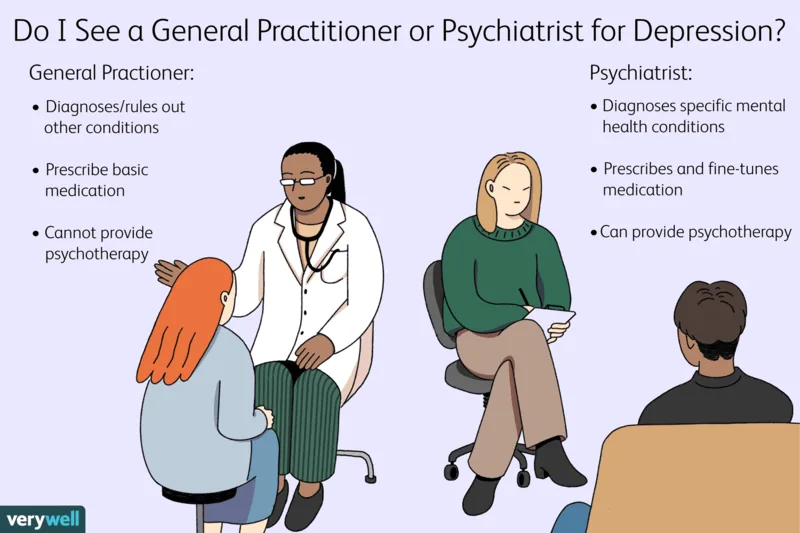
If the persistent sadness, loss of interest, or fatigue of depression has settled in, your primary care physician or family doctor is often the most logical starting point. They can conduct a thorough physical examination and ask about your health history to rule out any underlying medical conditions that might be mimicking depression. Sometimes, symptoms we attribute to mental health struggles can actually stem from physical issues.
Think about it this way: a vitamin D deficiency, thyroid imbalance, or hormonal changes can all manifest as depressive symptoms. Even certain medications you might be taking for other conditions could have mood-related side effects. Your doctor is equipped to screen for these possibilities, ensuring that a treatable physical cause isn't being overlooked. This initial assessment is vital before focusing solely on mental health interventions.
A common scenario is when someone experiences unexplained fatigue and irritability. While it might feel like depression, a simple blood test ordered by your doctor could reveal a thyroid issue that, once treated, resolves the symptoms entirely. This is precisely why starting with your doctor is so important - they can act as the first line of defense, ensuring you should you see doctor, for physical ailments before diving into mental health specialists.
Doctor vs. Mental Health Specialist: Who Does What?
Once medical causes are ruled out, the path forward often involves mental health professionals. While your family doctor can offer initial support and potentially prescribe antidepressants, they typically don't provide the specialized care needed for complex mental health conditions. This is where a deeper understanding of different roles comes into play.
A psychiatrist is a medical doctor (MD) with specialized training in diagnosing and treating mental health disorders. They are uniquely qualified to manage medication for conditions like depression, including prescribing antidepressants and fine-tuning dosages to minimize side effects and maximize effectiveness. While some psychiatrists also offer psychotherapy, their primary strength lies in the medical management of mental illness.
On the other hand, psychologists, licensed clinical social workers (LCSW), and licensed mental health counselors (LMHC) are experts in therapy. They use various psychological techniques to help you explore your thoughts, feelings, and behaviors, develop coping strategies, and work through underlying issues contributing to depression. Generally, these professionals cannot prescribe medication.
A helpful analogy: think of your family doctor as a skilled general contractor who can assess the whole house. A psychiatrist is like the specialized electrician who understands the complex wiring (brain chemistry and medication), while a therapist is like the interior designer who helps you reconfigure the living space (your thoughts and behaviors) to be more functional and comfortable.
Why a Psychiatrist Might Be Your First Choice
While it's common to think of therapy first, there are compelling reasons why seeing a psychiatrist early on can be highly beneficial, especially if you're experiencing significant symptoms. If your depression is severe, or if you suspect a complex underlying condition, a psychiatrist's medical expertise is invaluable.
Consider this: if depression is rooted in a chemical imbalance, talk therapy alone, while helpful for coping, might not fully address the core issue. A psychiatrist can assess the need for medication and manage it effectively. They are trained to differentiate between conditions that may appear similar, such as bipolar disorder or ADHD, which can manifest with depressive symptoms but require very different treatment approaches than standard depression.
For instance, someone experiencing extreme mood swings alongside deep sadness might initially believe they have depression. However, a psychiatrist can identify signs of bipolar disorder, where antidepressant medication alone could potentially trigger a manic episode. Their ability to diagnose accurately and manage psychotropic medications makes them a critical resource.
The decision on should you see doctor, for your specific needs often hinges on the severity and complexity of your symptoms. If your primary doctor suggests it, or if you feel your symptoms are profound and impacting your daily life significantly, consulting a psychiatrist can provide a more direct route to appropriate medical treatment.
The Path to Healing and Support
Ultimately, the journey to feeling better involves seeking help and finding the right support system. Depression is a treatable illness, not a sign of personal failure. Whether you start with your family doctor, a psychiatrist, or a therapist, the most important step is taking action.
If your doctor recommends therapy, they might refer you to a psychologist, counselor, or social worker. These professionals offer crucial support through various therapeutic modalities like Cognitive Behavioral Therapy (CBT), which helps you identify and change negative thought patterns. For example, learning to challenge catastrophic thinking when you receive constructive criticism at work can be a powerful tool taught in therapy.
Remember, your treatment plan might involve a combination of approaches. Medication managed by a psychiatrist can stabilize your mood, while therapy with a psychologist or counselor helps you build resilience and address root causes. This integrated approach often yields the best outcomes.
If you or someone you know is struggling, reaching out is a sign of strength. The Substance Abuse and Mental Health Services Administration (SAMHSA) National Helpline at 1-800-662-4357 offers confidential support and can connect you with local treatment facilities. Understanding should you see doctor, or a specialist is the first step on a path to recovery and renewed well-being. So, when asking should you see doctor, remember that starting with your GP is often wise, but don't hesitate to seek specialized mental health care when needed.