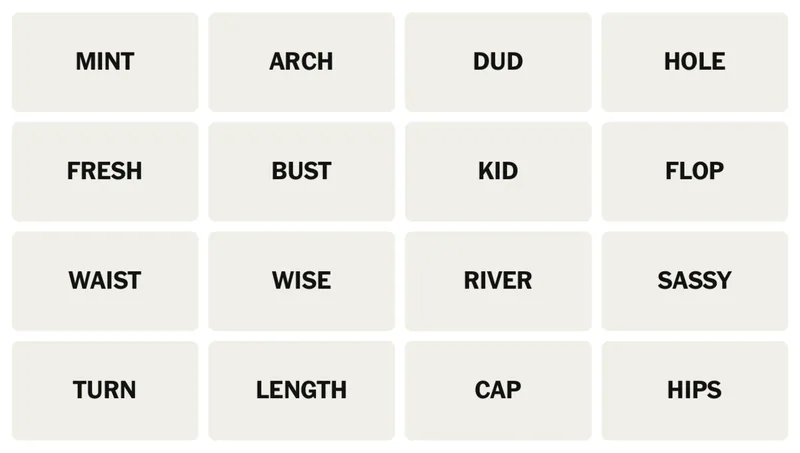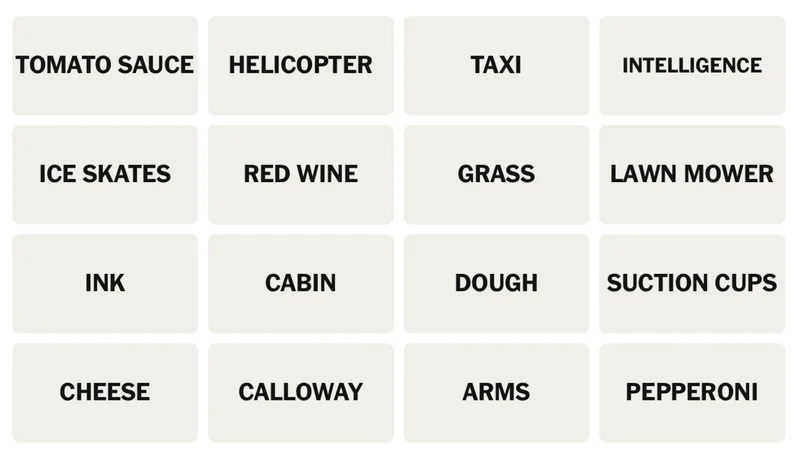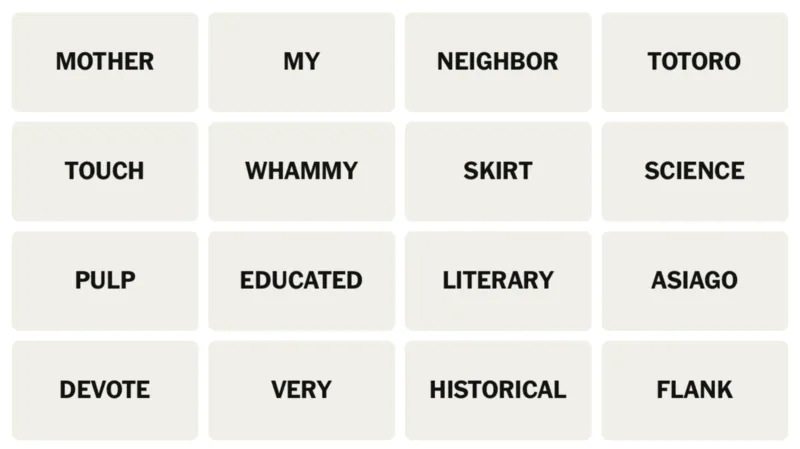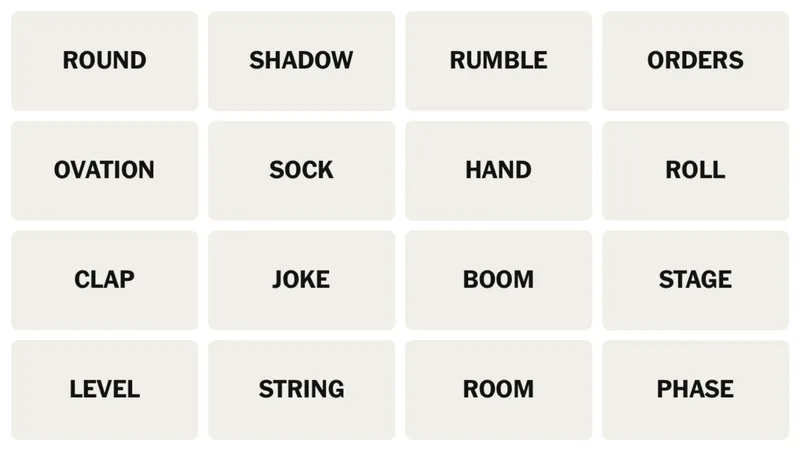
The faint glow of the laptop screen illuminated the dozen or so words scattered across the digital board. Each one seemed innocent enough on its own, but together? They formed a puzzle that felt both familiar and maddeningly elusive. You’ve stared at these 16 words before, haven’t you? That moment when a potential connection clicks, only to be dashed by a misplaced word, or worse, the dreaded fourth mistake. You’re here for today's NYT Connections hints, and maybe, just maybe, a little nudge towards that satisfying green checkmark.
Cracking the Code: Today's NYT Connections Hints
Wednesday, April 29, 2026, brings us puzzle #1,053, and like every good Connections game, it’s designed to make you think. Whether you're a seasoned player or just diving in, the goal is the same: find the four distinct groups of four words. Today's NYT Connections hints are here to guide you, offering a gentle push in the right direction without giving everything away immediately. We'll break down the categories, offer some subtle clues, and eventually reveal the solutions, explaining the clever wordplay along the way.
The beauty of Connections lies in its deceptive simplicity. Words that seem unrelated at first glance often share a hidden bond, revealed through common phrases, shared meanings, or even playful puns. It’s a test of vocabulary, lateral thinking, and sometimes, just a little bit of luck.
The Blueprint: Category Types Revealed
Before we dive into the specific words, understanding the *types* of categories can be a powerful first step. These are spoiler-free descriptions of what to expect:
- Yellow Category: Often the most straightforward, this group usually consists of similar nouns.
- Green Category: Look for verbs here – actions that share a common theme or outcome.
- Blue Category: This category typically involves related modifiers or adjectives that describe something in a similar way.
- Purple Category: The trickiest of the bunch, this often requires completing a common phrase or filling in a blank.
These distinctions are your initial roadmap. Keep them in mind as you examine the words on the board.
Gentle Nudges: Hints for Today's Groups
Ready for a little more direction? Here are some subtle hints that might spark an idea, without revealing the full themes:
- Yellow Category Hint: Think about progression. In many games or structured activities, the initial stages are often referred to by words in this group.
- Green Category Hint: Imagine a powerful natural event. What sounds might you associate with it?
- Blue Category Hint: Consider characters known for their distinct forms of manipulation or performance. Think classic tales or even simple toys.
- Purple Category Hint: This one plays on common expressions. What word might complete phrases like “standing ____” when referring to a type of performance or expectation?
Take your time with these. Sometimes, a single word in a hint can unlock an entire category.
The Reveal: Unpacking Today's NYT Connections
Alright, the moment of truth is approaching. If you’ve tried your best and are ready for the answers, or if you just want to see how it all fits together, scroll down slowly. We’ll start with a few clarifications on potentially tricky words before presenting the full solution.
A Note on Tricky Words:
- CLAP might seem like it belongs with hand-related words, but its true connection lies elsewhere.
- BOOM often follows a visual event before the sound arrives.
- ROOM can relate to space, but in this context, it signifies availability within a confined setting.
These little details are often where the game designers hide the most satisfying connections.
The Four Categories Decoded
Here are the themes and the words that belong to each group for today's NYT Connections puzzle:
Yellow Category: STEP IN A PROCESS
Words: LEVEL, PHASE, ROUND, STAGE
Green Category: SOUND LIKE THUNDER
Words: BOOM, CLAP, ROLL, RUMBLE
Blue Category: KINDS OF PUPPETS
Words: HAND, SHADOW, SOCK, STRING
Purple Category: STANDING ___
Words: JOKE, ORDERS, OVATION, ROOM
A Look Back: The Solving Process
How did we arrive at these groupings? Let’s trace the thought process:
Initially, words like ROUND and LEVEL might suggest stages or progression. When STAGE and PHASE also appear, the connection becomes clearer – these are all steps within a larger process, forming the Yellow category.
The Green category, SOUND LIKE THUNDER, becomes apparent when you group BOOM, CLAP, ROLL, and RUMBLE. These are all onomatopoeic words associated with loud, percussive sounds, much like a thunderstorm.
The Blue category, KINDS OF PUPPETS, is a classic Connections grouping. HAND (as in hand puppet), SHADOW (shadow puppet), SOCK (sock puppet), and STRING (string puppet) are all direct references to different types of puppetry.
Finally, the Purple category, STANDING ___, requires completing common phrases. A STANDING JOKE is an ongoing jest, STANDING ORDERS are established instructions, a STANDING OVATION is a prolonged applause, and a STANDING ROOM refers to space where people must stand. This often feels like the most challenging group because it relies on idiomatic expressions.
The final puzzle arrangement looks like this:
🟦🟦🟦🟦
🟨🟨🟨🟨
🟩🟩🟩🟩
🟪🟪🟪🟪
Tips for Mastering Connections
Playing Connections is as much about strategy as it is about vocabulary. Here are a few tips to improve your game:
Beware of Overlapping Words: The game is designed to trick you. A word might fit multiple potential categories. For example, a word like “ball” could fit with “sports equipment” or “round objects.” Don't commit to a group until you're sure all four words exclusively belong together. This is a common pitfall for those seeking today's NYT Connections hints.
Identify the Outliers: If you’re stuck, try to find words that seem completely unrelated to any obvious theme. These outliers can sometimes be the key to unlocking a less obvious category, like a specific type of painter or a niche collection. For instance, if a word like “Close” appears, consider if it might refer to the artist Louise Bourgeois’s connection to the painter Paul Klee, rather than just the act of shutting something.
Use the Hints Wisely: Our daily hints are designed to provide just enough guidance. Start with the category types, then the subtle clues. If you’re still stuck, the revealed categories and words can help you understand the logic, which you can then apply to future games. Remember, learning how to approach today's NYT Connections hints is part of the fun.
Don't Rush Submissions: You have four mistakes allowed. Use them strategically. If a group feels right, but doesn't get accepted, re-evaluate. Was there a subtle wordplay you missed? Did a word belong to a different, more obscure category? The New York Times (2024) emphasizes that patience is key.
Connections is a delightful mental exercise. It sharpens your mind and offers a satisfying sense of accomplishment when you finally piece it all together. Check back tomorrow for more today's NYT Connections hints and answers!