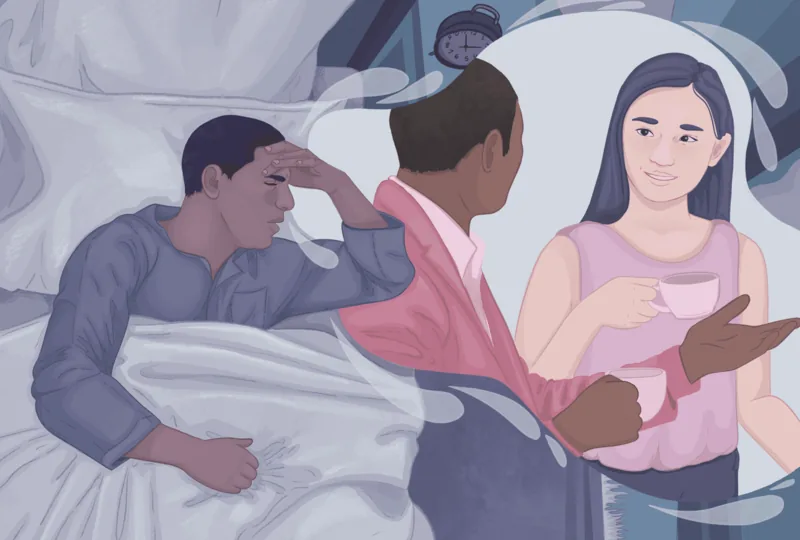
Have you ever found yourself constantly on edge, reacting intensely to minor frustrations or perceived slights? Perhaps you’ve been told you’re “too sensitive” or “overreactive.” If you are highly emotionally responsive to daily stressors, you might be experiencing what experts call 'survival mode'—a deeply ingrained state where your nervous system perceives everyday situations as threats, even when no real danger exists. This isn't a sign of weakness; it's often a lingering echo from past experiences that taught your body to be perpetually vigilant.
As Michele Rosenthal wisely states, Survival mode is supposed to be a phase that helps save your life. It is not meant to be how you live.
Many of us carry emotional bruises or scars from childhood. Growing up, perhaps you felt neglected or misunderstood, not due to intentional malice, but simply circumstances. These formative experiences can leave us feeling unworthy or not good enough, setting the stage for emotional reactivity later in life. For instance, a child constantly told to 'toughen up' when crying might learn to suppress emotions, only for them to resurface years later in overwhelming ways (Harvard, 2024).
The impact of living in this state can be profound, manifesting not only emotionally but physically. Suppressed feelings can erupt like a volcano, leading to chronic physical ailments such as allergies, body aches, and skin rashes, pushing individuals to a complete breakdown. Your body, in its wisdom, often tries to communicate these deep-seated issues long before your conscious mind recognizes them.
The Unseen Roots of Emotional Reactivity
Childhood experiences, even seemingly minor ones, can program our nervous systems to operate in a constant state of alert. If you are highly emotionally sensitive, it often stems from a mind and body that perceive almost everything as a potential threat. Your system, designed to keep you safe, automatically shifts into fight, flight, or freeze responses. This means your mind becomes hypervigilant, constantly scanning for cues in others' moods or reactions, making true relaxation elusive and leading to chronic exhaustion.
Our bodies are fundamentally designed to tackle immediate threats and then return to a state of calm. However, when our minds struggle to process, regulate, or tolerate intense emotions, they can become stuck in an 'always on guard' mode. This protective mechanism, intended for safety, can ironically turn against us. The constant alarm bells ringing internally can lead to pervasive anxiety, making it difficult to differentiate between genuine danger and everyday challenges.
The insidious nature of this state is that it often becomes our 'normal.' We adapt to living with this internal tension, sometimes even subconsciously seeking out situations or relationships that trigger our emotional reactivity. This pattern, while uncomfortable, becomes a familiar tailspin, keeping us emotionally charged and preventing us from finding genuine peace. For example, consistently choosing partners who bring drama into your life, despite consciously desiring stability, is a common manifestation of this pattern (Mayo Clinic, 2023).
Pathways to Rewiring Your Response
Breaking free from survival mode requires courage and consistent effort, but rewiring your mind and body for optimal function and a more fulfilling life is entirely possible. While everyone's journey is unique, here are several strategies that can help you begin to shift your emotional landscape.
1. Cultivate Inner Resilience
When in survival mode, our minds often construct worst-case scenarios, believing these mental forecasts somehow protect us. The crucial step to releasing this fear-based need for control is accepting that not everything is within our power. Worrying, however intense, cannot guarantee immunity from pain. Instead, focus on what you can influence and consciously choose empowering thoughts. Remind yourself that even if outcomes aren't what you planned, you possess the inner resources to handle it, and you will ultimately be safe. For instance, before a big presentation, instead of fixating on potential mistakes, affirm, 'I am prepared, and I can handle any questions that come my way.'
2. Reframe Your Narrative Through Awareness
Regularly question the origin of your feelings: Are your thoughts creating your emotions, or vice versa? You might be surprised to discover how often your mind crafts interpretations that dictate your emotional state. Consider a scenario where a friend doesn't immediately reply to a text. If you automatically create a story that they're upset or avoiding you, you'll likely feel anxiety or hurt. However, if you consider they might simply be busy, your emotional response will be entirely different. Practicing this awareness helps you avoid panic over assumptions that are not factual, especially if you are highly emotionally affected by social interactions.
3. Listen to Your Body
Your body offers subtle, yet powerful, clues about your emotional state. Make it a habit to check in with your physical sensations. Is there tension in your shoulders or jaw? Is your heart racing? Acknowledging these physical signs, like a knot in your stomach before a difficult conversation, can alert you to a perceived threat before your mind fully processes it. This awareness empowers you to proactively calm your nervous system. Simple practices like deep diaphragmatic breathing, spending time in nature, or engaging with a beloved pet can effectively soothe your stress response.
4. Practice Radical Self-Compassion
The journey of rewiring deeply ingrained patterns is not linear. There will be setbacks, and that's okay. It is essential to treat yourself with the same kindness and understanding you would offer a dear friend. Recognize that you have done your absolute best to navigate life and survive with the tools you had. Now, with newfound awareness, the goal shifts from merely surviving to consciously choosing to thrive. This gentle, yet firm, self-compassion is a cornerstone of lasting emotional healing and helps when you are highly emotionally vulnerable.