If you've ever watched a child's frustration escalate into a meltdown, or seen confusion harden into defiance, you know the critical moment when listening--or the lack of it--can change everything. True listening is not passive hearing; it's an active, shaping force in a child's psychological development. Research confirms that intentional listening builds the internal architecture children need to process distress, develop empathy, and cultivate self-regulation (Harvard, 2024). This article explores the most effective ways to listen to a child, transforming everyday interactions into foundations for emotional safety and resilience.
The Psychology of Listening
Listening to a child serves as emotional scaffolding. It provides a safe landing space for big feelings, helping transform raw emotion into manageable thought. Children don't become difficult because they experience distress; they struggle when that distress has nowhere to go. When an adult listens with presence, they communicate that emotions are valid, manageable, and worthy of attention. This fundamental message shapes how a child learns to handle their inner world.
Consider a common scenario: a child comes home upset after a playground conflict. One way to listen to them effectively is to first acknowledge the feeling without immediately jumping to solutions. "That sounds really frustrating when your friend wouldn't share the swing," creates containment. This approach, supported by developmental psychology, helps organize chaotic emotion into coherent experience (Mayo Clinic, 2023). Each listening interaction builds internal rules about expression, safety, and connection.
Core Principles of Transformative Listening
Slowing the Internal Tempo
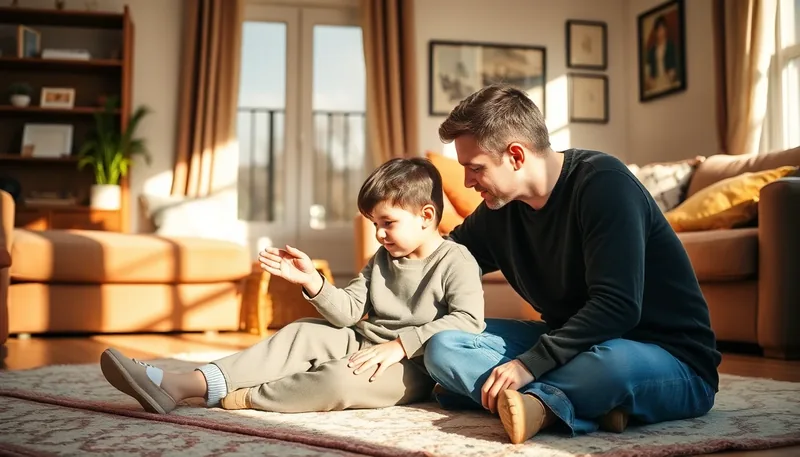
Children in distress experience emotional acceleration--thoughts race, impulses feel urgent. When an adult listens without matching that urgency, they help regulate the child's nervous system. This isn't about clever verbal techniques; it's physiological co-regulation. Your calm presence teaches that intense feelings can be held without immediate action. For example, when a child is frantic about a lost toy, sitting quietly with them before searching models that panic isn't necessary for problem-solving.
Creating Narrative from Emotion
Children feel experiences before they can narrate them. Listening invites emotion to become story rather than pressure. When adults allow space for free expression--without interrupting to correct or reassure--emotions shift from raw sensation to organized meaning. This reduces the need for behavioral outbursts. A child afraid of bedtime monsters isn't seeking logical explanation; they're asking for their fear to be witnessed and contained through your listening presence.
The Power of Contained Silence
Silence serves different functions depending on how it's held. When accompanied by eye contact and patient presence, silence contains emotion. It signals that nothing catastrophic happens when words take time. This differs fundamentally from dismissive or anxious silence. Contained silence supports integration; it teaches that inner experience doesn't need to be rushed or acted out. In practice, this might mean waiting through a long pause after asking "What happened?" instead of filling the space with guesses.
Advanced Listening Techniques
Beyond basic attention, sophisticated ways to listen to children involve intentional restraint and boundary-setting. One crucial technique is listening without collapsing into premature reassurance. When a child shares anxiety about a test, responding with "You'll do fine!" closes exploration. Tolerating their discomfort long enough to listen fully teaches that distress is survivable--a lesson that builds emotional endurance and reduces future reliance on aggression or withdrawal.
Another advanced approach involves listening during neutral moments虜not just crises. Regular check-ins during calm times--"How was your day?" asked with genuine curiosity--build emotional trust before distress arises. This establishes listening as a relational constant rather than emergency response. Children who feel consistently heard have less need to escalate behavior to be noticed.
Consider sibling rivalry: instead of immediately adjudicating who started it, one powerful way to listen to both children involves hearing each perspective fully before discussing solutions. This teaches that understanding precedes resolution, and that multiple truths can coexist. The process itself--being heard--often de-escalates the conflict more effectively than any imposed solution.
Listening Without Absorption
Effective listening requires containment, not merging. Adults who absorb a child's emotion lose their regulatory capacity. Showing children that feelings can be held without overwhelming the relationship teaches crucial boundaries within empathy. This modeling helps children learn that intensity doesn't equal danger--a skill essential for later interpersonal restraint. When a child is furious about screen time limits, your calm listening demonstrates that their anger won't destroy the connection between you.
The Long-Term Impact
The ultimate function of listening is internalization. Children who are listened to learn how to listen to themselves. This inner dialogue becomes their primary tool for navigating challenges, replacing impulsive reactions with reflective responses. Research indicates that children who experience consistent, attuned listening develop stronger prefrontal cortex connections--the brain region responsible for impulse control and decision-making (Harvard, 2024).
Dangerous minds aren't defined by the presence of difficult emotions, but by what happens to emotion when it lacks structure. When listening is absent, pain seeks expression through action. When listening is present, pain becomes thought, language, and conscious choice. Homes that prioritize these ways to listen to their children don't eliminate suffering--they teach what to do with it. They cultivate minds capable of restraint, empathy, and moral reasoning, building psychological immunity against future harm.