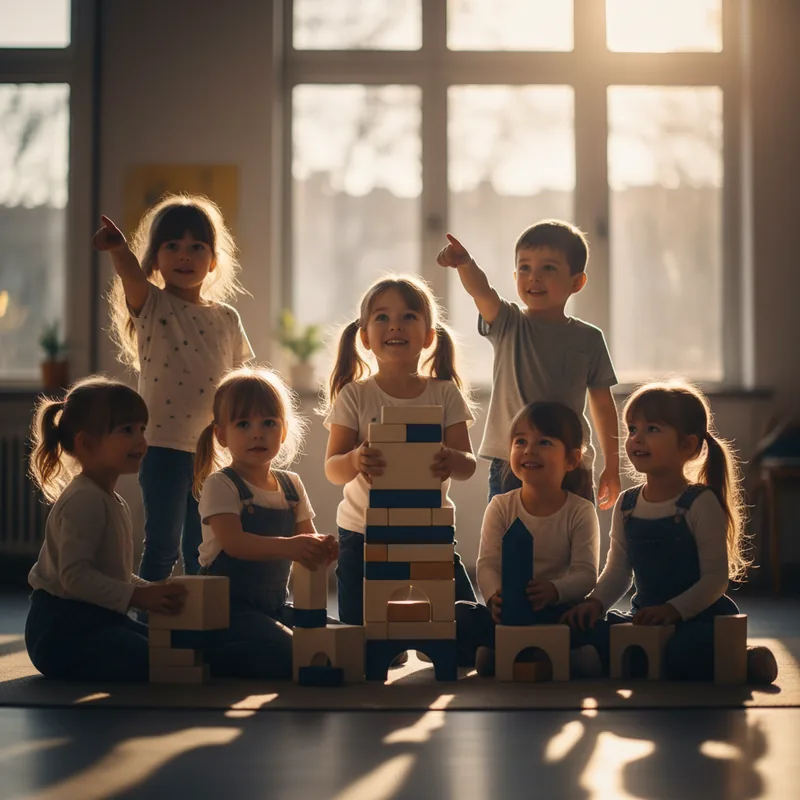
Have you ever watched a child navigate a new challenge, their brow furrowed in concentration, or seen them beam with pride after a small victory? It's in these moments we glimpse the incredible journey of development. But what truly shapes how a child grows, learns, and interacts with the world around them? Understanding children's psychology means delving into the intricate interplay of internal traits and the external environments they inhabit.
The Foundation: What is Child Psychology?
Child psychology, often viewed as a branch of developmental psychology, is the scientific study of how children grow and change. It examines the physical, cognitive, emotional, and social transformations from the prenatal period through adolescence. For centuries, children were often seen as miniature adults, but modern understanding recognizes childhood as a unique and critical phase. Experts now acknowledge that a child's journey is profoundly influenced by a complex web of factors, including their cultural background, social circles, and economic circumstances - the very contexts and influences that define their experiences.
This field aims to not only understand typical development but also to identify and address potential challenges. By grasping the milestones and the myriad forces at play, parents, educators, and caregivers are better equipped to support a child's healthy growth and foster resilience. It's about building a scaffolding of understanding that allows every child to reach their full potential.
The Building Blocks: Core Developmental Areas
Child psychology looks at development through several interconnected lenses. These aren't isolated events but rather interwoven threads that create the tapestry of a child's evolving self.
Physical development lays the groundwork. As children grow taller, stronger, and more coordinated, their ability to explore and interact with their environment expands dramatically. Think of a toddler mastering walking; this newfound mobility opens up a world of possibilities for learning and discovery.
Cognitive development is the realm of thinking, learning, and problem-solving. From Piaget's foundational stages, we understand that children construct knowledge through experience, moving from concrete understanding to more abstract reasoning. This is evident when a child learns to grasp abstract concepts like fairness or begins to understand cause and effect beyond simple observation.
Emotional development is about understanding and managing feelings. Early secure attachments with caregivers are crucial, providing a safe base from which children learn self-awareness and emotional regulation. As they mature, they develop empathy, learn to navigate complex social emotions, and begin to form their own sense of identity, especially during the turbulent teenage years.
Social development charts a child's journey from dependence on family to forming wider connections. Initial interactions with parents and siblings evolve into friendships and peer relationships. Children learn vital skills like cooperation, sharing, and conflict resolution, which are essential for belonging and thriving within their communities.
The Wider World: Contexts and Influences
While we often focus on genetics or a child's innate personality, the external world plays an equally significant role. The environments children grow up in provide the essential contexts and influences that shape their development in profound ways. It's here that the nuanced aspects of children's psychology: contexts influences truly come into play.
The cultural context provides a blueprint of shared values, beliefs, and traditions. This influences everything from how children are disciplined and educated to the expectations placed upon them regarding independence and social roles. For instance, in some cultures, communal child-rearing is the norm, fostering a strong sense of collective responsibility from a young age.
The social context encompasses the immediate relationships and institutions that surround a child. This includes the family unit, the school environment, and peer groups. A supportive and stable family life can buffer against stress, while positive peer relationships foster social competence. Conversely, unstable family dynamics or bullying at school can create significant emotional hurdles.
The socioeconomic context, or social class, also exerts a powerful influence. Factors like parental education, income, and occupation impact access to resources such as quality healthcare, nutrition, and educational opportunities. A child from a high-SES background might have access to enriching extracurricular activities and advanced tutoring, while a child from a low-SES background might face barriers to these same opportunities, highlighting the critical role of socioeconomic status in children's psychology: contexts influences.
It's crucial to remember that these contexts don't operate in isolation; they constantly interact. A child facing socioeconomic challenges might find immense support and resilience through strong cultural traditions and nurturing social relationships. Understanding this intricate dance between internal development and external forces is key to supporting children's well-being.
The study of children's psychology: contexts influences is vast, encompassing everything from prenatal development and genetics to language acquisition and personality formation. Child psychologists work to understand these dynamics, aiming to help children navigate challenges and flourish. For example, they might research how different parenting styles impact a child's self-esteem or develop interventions to help children manage anxiety related to school pressures. It's a field dedicated to ensuring every child has the opportunity to develop into a healthy, well-adjusted adult.
Ultimately, a deep appreciation for the multifaceted nature of children's psychology: contexts influences allows us to create environments where children can truly thrive, equipped with the tools they need for a fulfilling life.