The digital world moves at lightning speed, and keeping up with the latest slang and viral trends can feel like trying to catch smoke. One minute it's a new way to cook eggs, the next it's a cryptic phrase signaling doom. If you've ever found yourself scrolling through TikTok, utterly bewildered by what the younger generation is talking about, you're not alone. This is your essential out-of-touch adults' guide to navigating the often-baffling landscape of youth culture.
Frambled Eggs: The Breakfast of Champions (or Just Confused)?
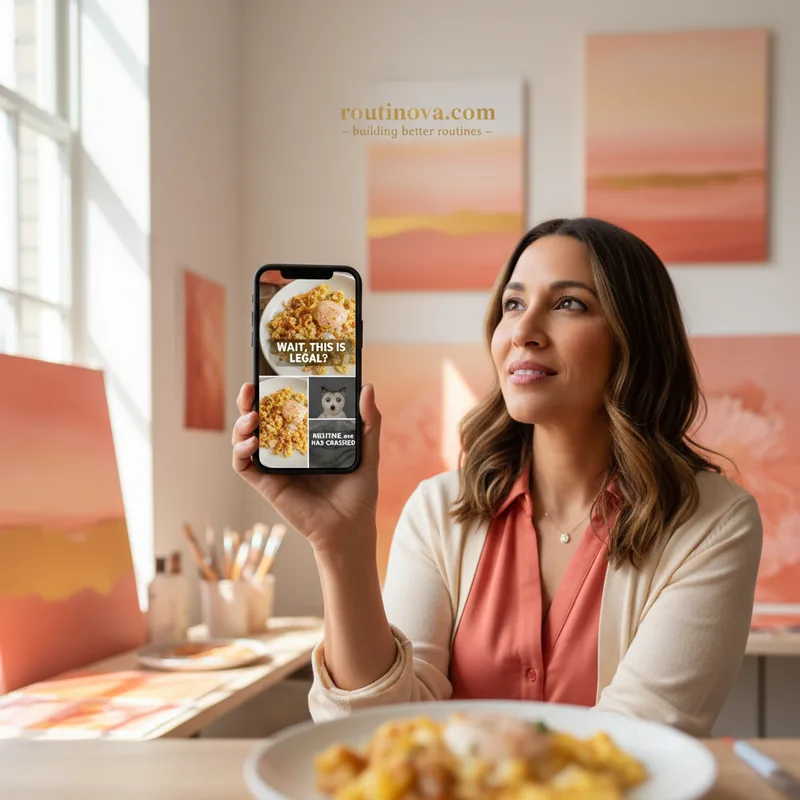
Let's start with breakfast. The latest culinary innovation to sweep through TikTok is something called "frambled eggs." It's a clever portmanteau, blending "fried" and "scrambled," and it's surprisingly simple yet ingenious. The core idea is to partially scramble an egg while keeping the yolk intact, creating a unique texture that's both creamy and custardy.
The trend appears to have been popularized by TikTok user @bussyrelate. While some commenters are already calling it a "sunny scramble," suggesting it might be an older, lesser-known technique, its recent surge in popularity has everyone else trying it out. Think of it as the perfect middle ground: not fully runny like a fried egg, but not completely mixed like a traditional scramble.
Judging by the videos, there are a couple of ways to achieve the frambled effect. Some opt for scrambling the egg whites while leaving the yolk whole, then gently combining them in the pan. Others go for a more integrated approach, carefully scrambling one egg within the pan alongside an untouched yolk. You can even separate your whites and yolks beforehand for a more controlled outcome, though the in-pan scramble seems to be the preferred, more spontaneous method. It's a small change, but it's a perfect example of how simple tweaks can become viral sensations, a key element in understanding today's out-of-touch adults' guide to what's trending.
'The Saxophones Are Getting Louder': A Meme for Impending Doom
Beyond the kitchen, the internet has also gifted us with evocative new ways to describe feelings. While not as widespread as some other memes, the phrase "the saxophones are getting louder" has gained traction as a potent descriptor for that chilling sensation of impending disaster. It's a phrase that perfectly captures a moment when you just *know* something bad is about to happen.
The origin of this unsettling phrase traces back to a specific scene in the 1991 film *Boyz n the Hood*. In a pivotal, tragic moment, the piercing sound of saxophones crescendos just before a character meets his demise. This cinematic cue has been repurposed online to signify any situation where a sense of dread or inevitable misfortune hangs heavy in the air.
The meme often starts with a short video clip, but its application has broadened considerably. Imagine the feeling when you realize your brother, who has a severe nut allergy, has just taken a bite of the dessert you made, which you now recall contains pistachios. Or that moment in the hospital when the nurses suddenly start moving with urgent, hushed speed. Even a seemingly innocent pool party can take a dark turn when the distinct sound of gunshots echoes in the distance. These are the moments when, for many, "the saxophones are getting louder." It's a powerful, if grim, addition to our modern lexicon, and crucial for any out-of-touch adults' guide to cultural nuances.
Consider another example: you're excitedly telling a story to friends, only to realize halfway through that you've forgotten a crucial, embarrassing detail that will completely change the narrative's outcome. The digital equivalent of those blaring saxophones is palpable.
'Your AI Slop Bores Me': Humans vs. Robots Online
As artificial intelligence continues its rapid integration into our lives, a fascinating new web game, "Your AI Slop Bores Me," offers a refreshing counterpoint. Instead of interacting with AI chatbots, this game cuts out the artificial and connects you with anonymous humans. You can ask questions or request creative outputs, and the responses you receive are distinctly, refreshingly human.
The game flips the script, too. You can choose to *be* the AI, answering queries posed by other players. The results starkly highlight the difference between genuine human creativity and the often-generic output of AI. You won't get the stilted, predictable answers you might expect from a typical AI assistant. Instead, you encounter personality, humor, and unexpected insights.
This game is a brilliant commentary on the current AI landscape. It reminds us that while AI can mimic understanding, it lacks the lived experience, emotional depth, and sheer unpredictability that defines human interaction. It's a playful yet profound exploration of what makes us, us, in an increasingly automated world. This is a must-know for anyone trying to stay updated, forming part of a comprehensive out-of-touch adults' guide to internet culture.
For instance, asking an AI to describe the feeling of nostalgia might yield a textbook definition. Asking a human might result in a vivid anecdote about a childhood toy or a specific scent that triggers a flood of memories (Smithsonian Magazine, 2023).
The 'Staples Baddie': An Office Supply Store Goes Viral
For many, the office supply store Staples conjures images of beige aisles and the faint scent of toner--hardly a hub of viral excitement. But for a growing segment of young TikTok users, Staples has become unexpectedly cool. The catalyst for this transformation? TikTok user Kaeden Rowland, affectionately dubbed the "Staples Baddie."
Rowland, who is a Staples employee, began posting videos showcasing the surprisingly creative things one can do within the store. From designing custom mugs and personalized signature stamps to creating unique stickers and orchestrating mass mailings, Rowland's content revealed a hidden world of customization and creativity available at your local Staples. The videos quickly gained millions of views, turning a mundane retail space into a trendy destination.
This surge in popularity, however, has created a divide. While Staples Corporate might be pleased, some employees are finding their jobs significantly disrupted. One employee, who goes by "Aran" on TikTok, posted a viral response video lamenting the influx of customers. "Staples was not a busy store," Aran explained, describing a once-quiet environment now overwhelmed by enthusiastic fans of the "Staples Baddie." This sudden increase in foot traffic, driven by viral fame, has turned a previously relaxed job into a chaotic one for some, highlighting the unpredictable impact of social media trends on real-world businesses (CNN, 2024).
Adding another layer of complexity, Aran's own online presence has raised questions about authenticity. While initially presented as a disgruntled Staples employee, further investigation revealed claims of working at Spirit Halloween, AMC, and even being a medical student, suggesting Aran might not be a genuine Staples worker. Regardless of Aran's employment status, the sentiment resonates with many retail workers who feel that viral content often presents an idealized, unrealistic picture of their jobs, overshadowing the daily grind, customer service challenges, and low pay (People.com, 2024).
This phenomenon raises interesting questions about authenticity in online content and its real-world consequences. It also serves as a stark reminder that even the most mundane places can become cultural hotspots thanks to the internet's ever-shifting currents. Understanding these dynamics is essential for anyone trying to keep pace, making it a vital topic in our ongoing out-of-touch adults' guide to internet culture.