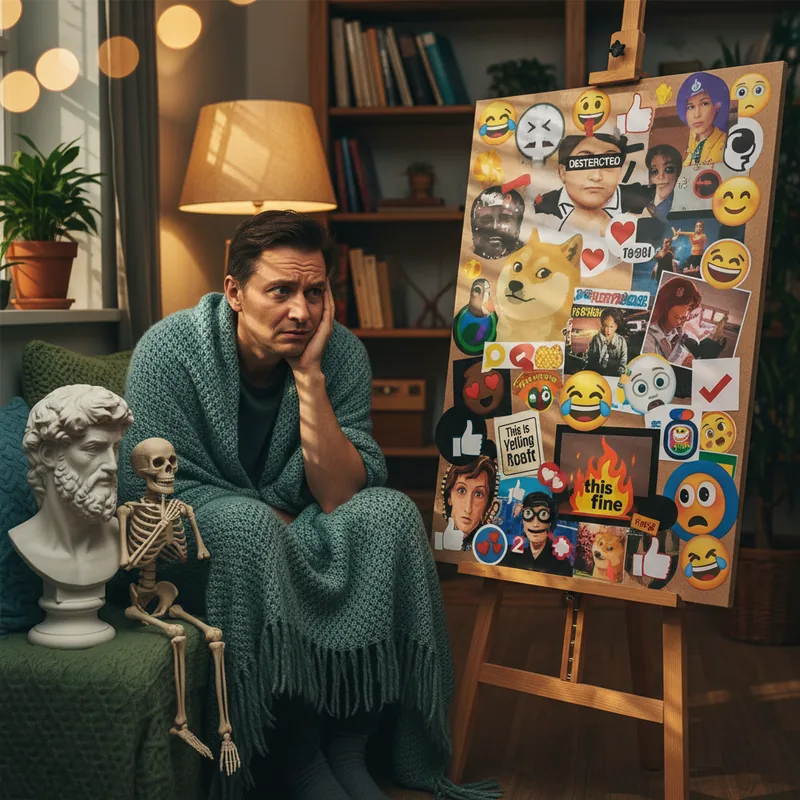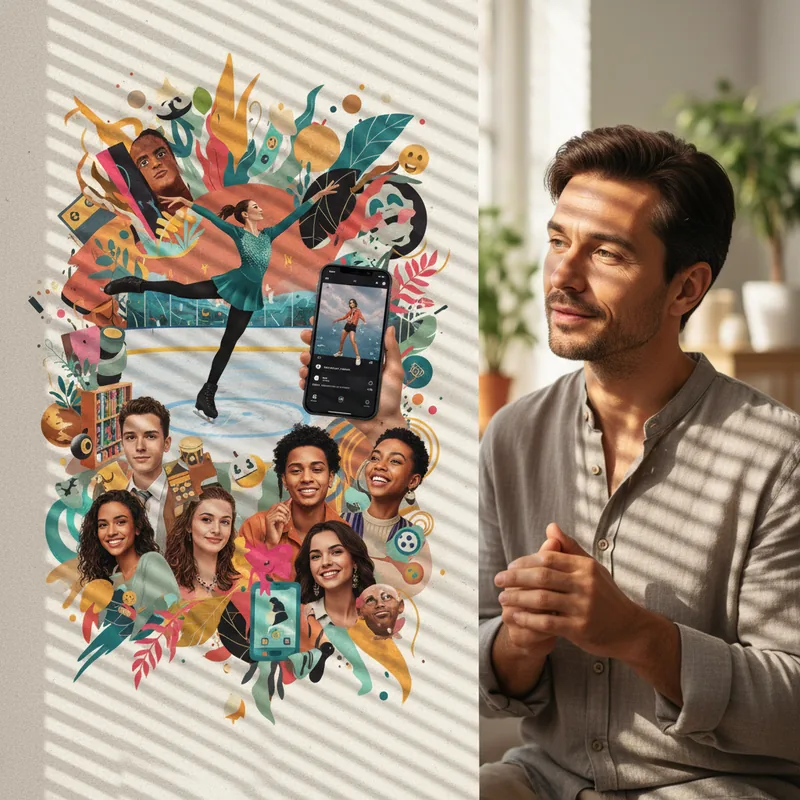
Ever feel like you need a secret decoder ring just to understand what's happening online? One minute, everyone's talking about an Olympic skater, the next it's a bizarre fashion aesthetic, and then a fast-food CEO's awkward bite breaks the internet. If phrases like "goonbait" and "RegencyCore" sound like they're from another planet, you're exactly where you need to be. This is your out-of-touch adults' guide to navigating the perplexing, often hilarious, and sometimes unsettling currents of modern youth culture, helping you make sense of the digital zeitgeist.
Decoding Digital Slang: The Alysa Liu Phenomenon
The internet has a knack for twisting innocent moments into something entirely unexpected. Take the term "goonbait," a recent addition to Gen Z and Gen A slang. At its core, "gooning" refers to prolonged, non-orgasmic masturbation, often aimed at achieving an altered state. "Goonbait," then, is any media perceived to inspire this act. It's a term that highlights the increasingly sexualized lens through which certain corners of the internet view public figures, particularly women (Digital Culture Review, 2023).
Olympic gold medalist figure skater Alysa Liu recently found herself at the center of this bizarre trend. A widely shared photo showed Liu looking at her medal with a hungry expression, prompting some online users to label it "goonbait." What these users missed, however, was a long-standing Olympic tradition. Since at least 1992, athletes like Greco-Roman wrestling champion Péter Farkas have playfully bitten their medals--a nod to the practice of testing gold's softness. Liu's photo was clearly a humorous continuation of this tradition, not an invitation for sexualization.
But here's where it gets tricky: the internet's reaction wasn't confined to misinterpretation. The digital world often blurs the lines between public persona and private life, leading to concerning real-world intrusions. Just recently, Liu shared on Instagram about being chased and overwhelmed by a crowd at an airport, highlighting a disturbing pattern of fans encroaching on personal space.
This phenomenon isn't isolated to athletes. Consider the recent trend where harmless photos of female Twitch streamers playing video games were screenshotted and shared in certain forums, completely out of context, to fuel similar objectification. Or how a viral dance trend on TikTok featuring a young female creator was quickly co-opted and sexualized by older users, shifting its original innocent intent. These examples underscore a persistent issue: the ease with which online communities can transform innocuous content into something predatory.
Escape into Elegance: Exploring RegencyCore
Shifting gears from digital slang to aesthetic trends, we encounter RegencyCore. This fashion and design movement offers a stark contrast to the often-gritty realities of online culture, providing an escape into opulent fantasy. Born from the immense popularity of Netflix's Bridgerton, RegencyCore draws inspiration from the early 19th-century British Regency era, infusing its classic elegance with modern fantasy elements like soft pastel hues and shimmering gold accents (Fashion Institute, 2024).
What started as a visual aesthetic has blossomed into a full-fledged lifestyle. TikTok is brimming with how-to guides for RegencyCore home decorating, while tea parties, complete with ornate settings, are enjoying a resurgence. Enthusiasts are embracing corsets and opera gloves, and even reviving archaic hobbies like tablescaping and the art of letter writing, complete with quill pens and sealing wax. It's a delightful blend of historical reverence and whimsical escapism.
This isn't the only "core" aesthetic captivating younger generations. Think about Cottagecore, which celebrates idealized rural life with floral dresses and baking, or Dark Academia, focusing on classic literature, ancient architecture, and a scholarly vibe. Even Barbiecore, with its vibrant pink palette and playful glamour, shows how niche aesthetics provide a sense of identity and community in a complex world. For the out-of-touch adults' guide to understanding modern aesthetics, RegencyCore is a prime example of how digital trends can manifest in tangible, beautiful ways.
The Viral Bite: When Corporate Meets Cringe Culture
Finally, we delve into the realm of viral marketing--or perhaps, accidental viral marketing. Last week, McDonald's CEO Chris Kempczinski became an unwitting internet sensation after posting a video promoting the company's new "Big Arch" hamburger. His awkward, almost performative tasting of the burger quickly became the stuff of memes, raising more questions than it answered.
Kempczinski declared, "I love this product," and "I don't even know how to attack it," before taking what many dubbed the "tiniest bite ever taken of a hamburger." The video, complete with an oddly placed cut after the bite, left viewers wondering if he even swallowed it. The internet quickly concluded: "Is Chris Kempczinski actually an alien?"
The video exploded, racking up millions of views and sparking a wave of parody. Other fast-food CEOs jumped into the fray, seemingly eager to prove their own "regular guy" credentials. Burger King's President Tom Curtis offered a more robust bite, while Wendy's President Pete Suerken went a step further, grilling a Baconator before taking a huge, satisfying chomp--though posting it on LinkedIn added its own layer of corporate weirdness. Jack in the Box and A&W Canada also produced parodies, further cementing the McDonald's CEO's place in viral history.
This entire spectacle leads to a fascinating question for the out-of-touch adults' guide to marketing: was this awkwardness intentional? While some argue it was a brilliant, if unconventional, marketing ploy--generating an estimated $18.4 million in brand value from over 70 million views (Marketing Analytics Review, 2023)--it seems unlikely. Kempczinski's Instagram is replete with similarly stiff tasting videos, suggesting a genuine lack of on-camera charisma rather than a calculated strategy. McDonald's brand typically shies away from ironic self-deprecation, a tactic more aligned with competitors like Wendy's. It's more probable that this was a genuine gaffe that accidentally struck viral gold.
These viral moments, from misunderstood Olympic traditions to awkward corporate endorsements, are more than just fleeting internet trends. They offer a window into the evolving dynamics of public perception, digital communication, and the often-unpredictable nature of online fame. Understanding these phenomena isn't about becoming "cool"; it's about grasping the subtle shifts that define contemporary culture and, perhaps, feeling a little less out of touch, making this the essential out-of-touch adults' guide to the modern digital landscape.