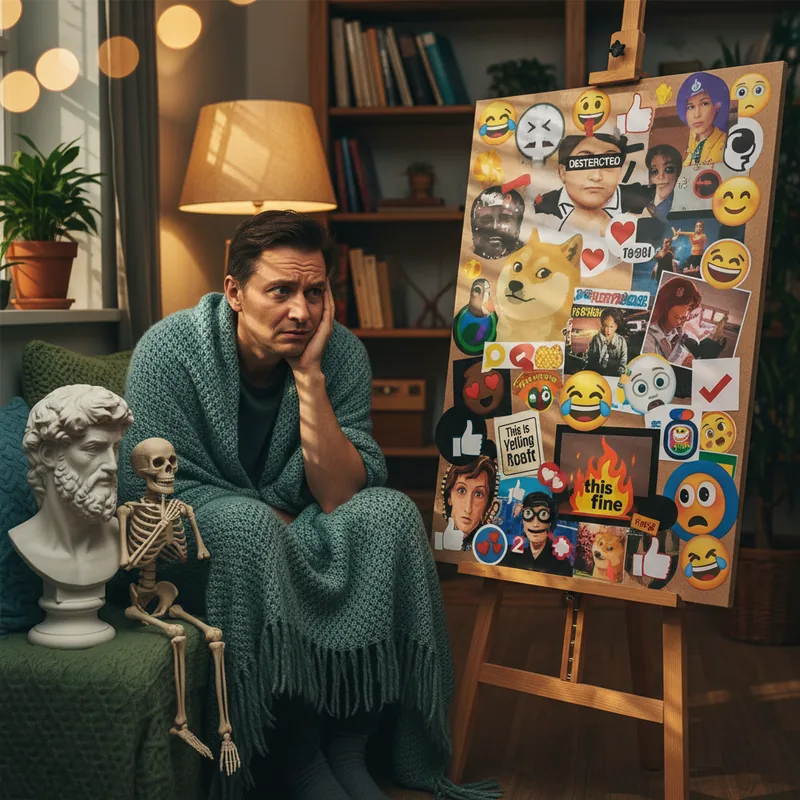
We live in an era of unprecedented connection, yet many feel more isolated than ever. Social media promises community, but often delivers anxiety, especially for younger generations navigating a world where every misstep can go viral. This paradox isn't just reshaping how we interact; it's creating entirely new cultural touchstones that leave many of us scratching our heads.
Welcome to your out-of-touch adults' guide to understanding the peculiar habits and anxieties shaping today's youth culture.
The Curious Case of the "Alpine Divorce"
If you've stumbled across the term "Alpine Divorce" in your feeds and felt a pang of confusion, you're not alone. At its core, an Alpine Divorce describes a scenario where a man intentionally abandons his wife during a mountain hike, leaving her to fend for herself. It's a chilling concept that speaks to profound breakdowns in trust and partnership.
While the phrase itself dates back to Robert Barr's 1893 short story, its recent viral resurgence stems from a shocking real-life legal case and a compelling TikTok video. An Austrian mountain climber was recently convicted of gross negligent manslaughter after leaving his girlfriend behind on a treacherous trail (BBC News, 2023). This tragic event, coupled with a highly viewed video by TikToker @everafteriya documenting a milder, though still isolating, experience, has sparked widespread discussion.
Her story, played over 19 million times, resonated deeply, prompting countless women to share their own tales of feeling abandoned, physically or emotionally, during shared experiences. It highlights a darker undercurrent of relationship dynamics, amplified by social media's power to surface and validate individual struggles. This is a crucial topic for any out-of-touch adults' guide to modern relationship anxieties.
The "Cringe" Conundrum: When Vulnerability Goes Viral
Beyond the dramatic narratives of abandonment, a more pervasive anxiety defines how younger generations navigate public life: the fear of "cringe." This isn't just about embarrassment; it's a deep-seated aversion to public imperfection, to anything that might be perceived as awkward, uncool, or inauthentic by an unforgiving online audience.
Consider the viral phenomenon of the Pennsylvania improv troupe, Act on Demand. On the surface, their beginner-level improv videos appear unremarkable. Yet, for millions of young viewers, these clips have become a fascinating, almost voyeuristic, window into a collective generational psyche. Comments like "is this a humiliation ritual?" and "World's worst improv class" flood the feeds, reflecting this intense aversion.
Why such intense reactions to people simply learning a new skill? Young people today often avoid traditional social risks--parties, spontaneous interactions, even dating--precisely because these situations involve vulnerability. To be vulnerable is to risk being perceived as "cringe," a social death sentence in an always-on, hyper-judgmental digital landscape (Pew Research, 2022). This fear is so potent, it often overrides the fundamental human need for connection.
Yet, this intense fear of real-world social interaction doesn't diminish the human craving for connection. Instead, it manifests in peculiar ways: obsessive analysis of strangers' lives in improv videos, the rise of parasocial relationships with online personalities, and even turning to AI companions for simulated friendship. Think about the "main character syndrome" on TikTok, where people stage their lives for an imagined audience, often leading to self-conscious performances designed to avoid "cringe" feedback. Or the recent trend of "de-influencing," where creators actively discourage purchases or trends, often by highlighting their perceived "cringe" or inauthenticity. This is a crucial insight for any out-of-touch adults' guide to understanding modern youth.
Decoding Modern Youth: From Digital Anxieties to Bizarre Bites
From the emotional landscapes of relationships and social anxiety, let's cleanse our palate with a look at some of the more perplexing food trends captivating younger demographics. These trends, often born on social media, range from the mildly curious to the outright bizarre.
- Sour Plates: Imagine traditional meals infused with ingredients from sour candies. TikTok user Haskell popularized "sour plates," a concept as unappetizing as it sounds. While largely a novelty, it speaks to a generation's willingness to experiment, even if it means culinary chaos and a questionable flavor profile.
- Loaded Water: This trend involves enhancing plain water with flavor boosts, fruit juices, electrolytes, or vitamins. The intention is to boost hydration by making water "more appealing." The irony? Once you add significant ingredients, you're no longer drinking pure water; you're drinking a flavored beverage, often with added sugars or artificial sweeteners (Harvard Health, 2021). It's a semantic--and often caloric--twist.
- Boy Kibble: Following the "girl dinner" trend, "boy kibble" takes minimalist dining to an extreme. Typically, it's a bland mix of rice and ground beef, often devoid of spices or vegetables. It reflects a certain utilitarian, no-frills approach to sustenance, sometimes humorously exaggerated as a commentary on perceived male culinary simplicity.
- Eating Like a Lurking Alligator: This one, surprisingly, has a certain primal charm. Young men are posting videos of themselves eating like alligators in their bathtubs--submerged, with just their eyes and mouths above water, slowly consuming their food. It's a bizarre, almost meditative act that defies easy explanation but certainly captures attention.
- Sleepy Girl Mocktail: A more recent trend involves a pre-bedtime concoction of magnesium, tart cherry juice, and sometimes prebiotics, promising improved sleep. While certain ingredients have recognized benefits, the trend often oversimplifies complex nutritional science, turning a wellness practice into a viral recipe.
The digital age has undeniably reshaped youth culture, creating a landscape filled with both profound anxieties and playful absurdities. From the serious implications of an "Alpine Divorce" to the lighthearted weirdness of "boy kibble," these trends offer a fascinating, if sometimes bewildering, glimpse into the minds of younger generations. This out-of-touch adults' guide to contemporary culture merely scratches the surface, but hopefully provides a compass for navigating its ever-evolving terrain.