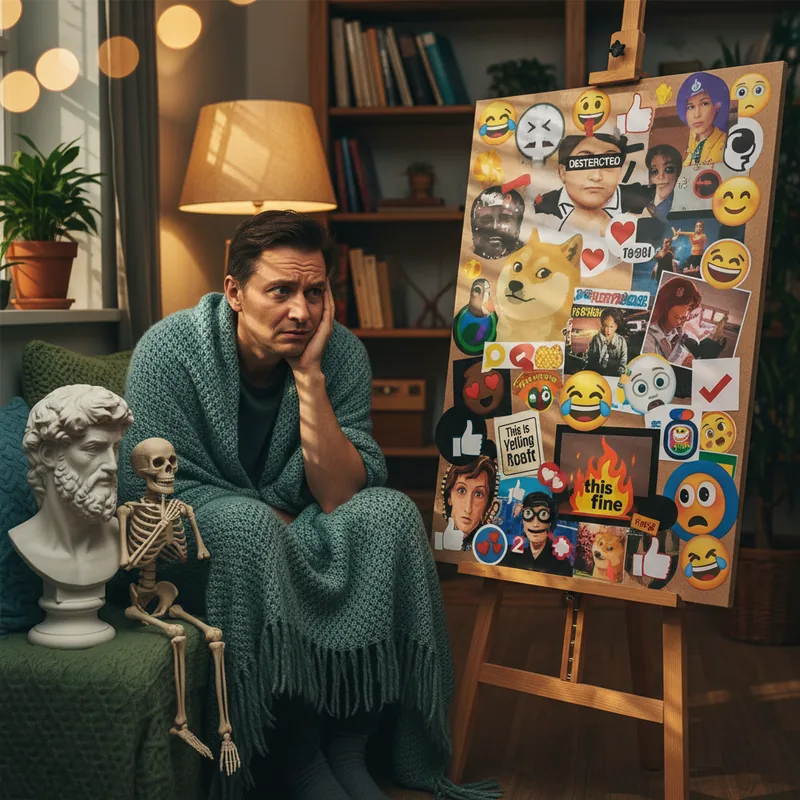
It’s 3 PM. You’ve just scrolled past a video of a skeleton talking philosophy with Socrates, followed by a clip of a rapper yelling about hitting a jackpot, and then a cryptic emoji that looks suspiciously like a dying battery. If you’re feeling utterly lost, welcome to the club. Keeping up with what the kids are into can feel like trying to read a foreign language without a dictionary, especially when trends shift faster than you can refresh your feed. This is your out-of-touch adults' guide to navigating the latest digital curiosities.
Socrates, Skeletons, and AI Shenanigans
This week’s internet darling involves none other than the ancient Greek philosopher Socrates, paired with a rather literal skeleton. These AI-generated videos present hypothetical, often absurd, scenarios. Imagine Socrates and you opening a vintage record store in Athens, or perhaps debating the merits of modern streaming services in ancient Rome. The trend, which exploded on platforms like TikTok after originating on Instagram, allows anyone to create these bizarre mashups with simple text prompts.
While it’s amusing to see Socrates pop up in unexpected places, the portrayal often misses the mark. He’s frequently depicted as an insufferable know-it-all, a caricature that, while somewhat aligned with his confrontational Socratic Method, ignores the deeper purpose. Socrates wasn't just annoying; he used pointed questions to expose contradictions in people's beliefs, pushing them toward genuine self-awareness. The AI versions, however, often highlight an out-of-touch adults' guide to misunderstanding historical figures, conflating Greece with Rome and mistaking genuine inquiry for digital-age trolling.
The Socratic Method aimed at truth through rigorous self-examination. Internet irony, fueled by AI, often uses historical figures for superficial gags, revealing more about our current disconnect than ancient wisdom. It’s a reminder that context matters, even in the age of infinite digital creation.
The 'Jackpot' Meme: Luck, Hypocrisy, and Anime
Another trend making waves is the “I just hit the jackpot” meme. It uses a snippet from rapper GameboyJones’s song “HIT THE JACKPOT! (Hakari Dance),” originally tied to the anime series Jujutsu Kaisen and its gambling-themed character, Kinji Hakari. The meme overlays this energetic chorus onto situations where someone experiences a stroke of good fortune, often with a touch of irony.
Think of the relief when a notoriously difficult exam is postponed, or the sheer delight of finding an extra fry at the bottom of the bag. These moments, however small, feel like hitting the jackpot. The meme format allows for a wide range of humorous applications, from celebrating a surprise day off to finding a rare collectible.
But the meme’s journey often dives deep into anime fandom, referencing obscure characters and plot points that leave many scratching their heads. It’s a prime example of niche internet culture bleeding into the mainstream. What starts as a simple celebration of luck can quickly become a complex in-joke, showcasing how specific communities create their own cultural shorthand. This meme format is a perfect illustration for an out-of-touch adults' guide to understanding layered online humor.
Decoding 'Love Over Lust' and the 🪫 Emoji
Adding another layer to youth lingo is the phrase “love over lust mfers.” While “mfers” is a common internet expletive, the “love over lust” sentiment is more nuanced. On the surface, it champions prioritizing deep emotional connection over fleeting physical attraction. Videos featuring this phrase often portray a performative sincerity that, predictably, invites backlash.
This backlash often manifests as ironic counter-content, humorously suggesting that anyone proclaiming a preference for “love over lust” is secretly a hyper-sexual individual. This comedic tension pairs perfectly with the “jackpot” meme, creating a meta-commentary on sincerity and hidden desires. It’s a complex dance of authenticity and performance that defines much of online interaction.
Then there’s the 🪫 emoji. Forget needing a charger; for younger generations, this symbol represents emotional depletion, burnout, or a profound sense of being overwhelmed. It’s a digital sigh, a more versatile version of the wilted rose (🥀), signifying a general state of exhaustion rather than just romantic heartbreak. Understanding this emoji is crucial for any out-of-touch adults' guide to modern communication, signaling a need for support or a moment of quiet understanding.
Originality Shines: The Cartoon Chase Videos
Amidst the AI-generated content and meme-ified philosophy, there’s a refreshing wave of pure human creativity. The rise of “cartoon chase” videos showcases old-school ingenuity. These creators use classic sound effects, clever editing, and a deep understanding of comedic timing to recreate iconic cartoon moments. Think meticulously staged slapstick, perfectly timed pratfalls, and visual gags that harken back to the golden age of animation.
These videos are a testament to the power of practical effects and imaginative storytelling. They don’t rely on algorithms but on skill and a shared cultural memory of beloved characters and gags. They remind us that while AI can mimic, it often struggles to replicate the spark of genuine human artistry and humor. This is the kind of content that proves the internet is still a place for original voices, offering a welcome contrast to the more formulaic trends.
Navigating these trends might seem daunting, but understanding the underlying currents—the desire for connection, the humor in absurdity, and the constant evolution of digital language—is key. It’s less about mastering every meme and more about appreciating the dynamic, often bewildering, landscape of contemporary youth culture. For the out-of-touch adults' guide to understanding, it’s a continuous learning process, one meme at a time.