Imagine scrolling through endless streaming options, only to land on something you vaguely remember wanting to watch months ago, but now… you can’t find it. It’s a common frustration for media enthusiasts, with studies suggesting that the average person spends significant time each week deciding what to watch, often feeling overwhelmed by choice (Nielsen, 2023). For many, meticulously tracking what’s on their watchlist is the solution, but existing tools can be clunky. I recently tried Binge, an app aiming to simplify this process, and found it might just be the more intuitive Letterboxd alternative many are looking for.
Meet Binge: Your New Media Companion
Binge, available on iPhone, iPad, and Mac, positions itself as a direct competitor to the popular film-tracking app, Letterboxd. While Letterboxd focuses primarily on movies, Binge expands its scope to encompass both movies and TV shows. This dual functionality was a major draw for me, as keeping separate lists for films and series often felt like a chore. The app also introduces a unique feature: jump scare warnings, though my experience with this particular function was a mixed bag.
For those of us who struggle to keep our viewing habits organized, Binge offers a streamlined approach. Unlike Letterboxd, where I often found myself logged out or my viewing history outdated, Binge’s unified platform for movies and TV felt immediately more accessible. It’s designed for users like me who appreciate a simple way to log what they’ve seen and what they want to see next, without the overwhelming feature set of more complex platforms.
A Cleaner Interface for Easier Tracking
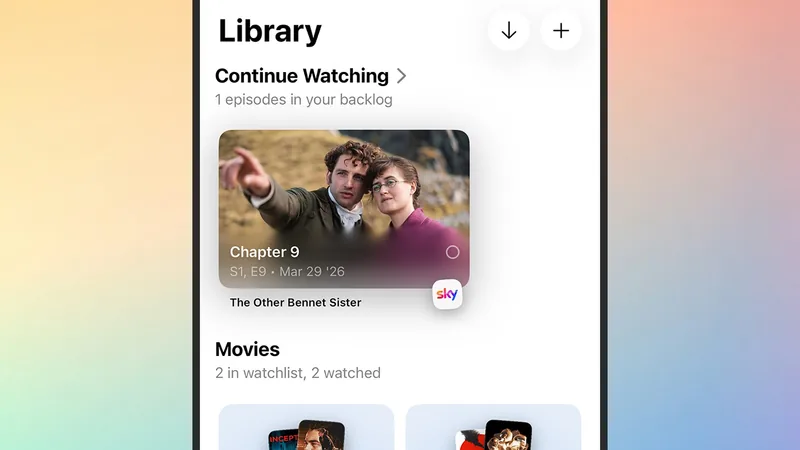
Getting started with Binge is refreshingly simple. You don’t even need an account to begin tracking, but signing up allows for seamless syncing across your Apple devices. The interface is divided into four main tabs: Discover, Movies, Shows, and your personal Library. This clear division makes navigating the app intuitive.
The core tracking mechanism is straightforward: mark titles as watched, or add them to your future watch list. For TV shows, you can even log your progress by indicating how many episodes you’ve completed. All this information populates your Library, creating a visual timeline of your media consumption. One feature I particularly enjoyed, which is absent from Letterboxd, is the option to randomly select a title from your want-to-watch list – a godsend on nights when decision fatigue sets in.
Compared to Letterboxd, which can feel cluttered with its array of options for rating, listing, and sharing, Binge offers a refreshingly minimalist experience. It strips away the noise, providing just the essential tools for logging and discovery. This simplicity is a significant advantage for anyone seeking a low-effort way to manage their viewing habits, rather than a full-blown social network.
While Letterboxd boasts a more robust search function, allowing deep dives into genres, release years, and cast members, Binge opts for a more direct keyword search. It’s efficient for finding specific titles or people associated with them. However, where Binge truly shines is in the depth of information it provides for each title. Beyond cast and crew lists, you’ll find trailers, aggregated web ratings, awards, streaming service availability, and even a parents' guide flagging potentially frightening or violent content.
The Library tab is exceptionally well-organized, but you also have the flexibility to create custom collections. The “Your Next Watch” section, which suggests titles based on your viewing history, proved to be a surprisingly effective curator, unearthing some gems I might have otherwise missed. Think of it like a personalized recommendation engine, similar to how Netflix suggests content, but focused on your explicit tracking data.
Customization is another strong suit. You can disable features you don't care about, such as user reviews or award counts, and even tweak visual effects like parallax and shimmer to your preference. This level of personalization ensures the app adapts to your needs, not the other way around.
The Jump Scare Feature: A Noble Idea with Flaws
As someone who dislikes horror and jump scares, finding movies that balance critical acclaim with my aversion to being startled is a constant challenge. Binge’s jump scare warning system is an innovative attempt to bridge this gap. It offers a timeline indicating when jump scares occur in a film, sometimes with details about the scene itself (beware of spoilers!).
The app also features a “Live Activity” notification that aims to alert you just before a scare happens. While the timeline feature was functional, the Live Activity notifications were inconsistent during my testing. The app often lost track of the playback progress, and there’s no manual way to adjust the timing once a movie has started. Despite these technical hiccups, the jump scare timeline itself remains a valuable tool. Scares are categorized as minor or major, providing a useful heads-up for those who want to brace themselves or cover their eyes at the right moment.
It’s important to note that jump scare data isn’t universally available. While popular titles like *The Invisible Man* (2020) and *Prometheus* (2012) had these warnings, older classics such as *Silence of the Lambs* (1991) and *Single White Female* (1992) did not. The source of this data isn't always clear, which means its reliability can vary.
Furthermore, this standout feature is part of Binge’s premium subscription, which also unlocks episode ratings graphs, custom poster options (a feature also requiring payment on Letterboxd), and upcoming release reminders. The subscription tiers are monthly ($1.99), yearly ($17.99), or a lifetime purchase ($49.99). This pricing model positions Binge as a freemium service, where core tracking is free, but advanced features come at a cost.
On the upside, Binge excels in data management. It allows you to import your viewing history from platforms like Trakt, Letterboxd, and IMDb, and export your data in JSON format for safekeeping or migration. Syncing with Trakt is also possible, though this too is a premium feature. This robust import/export capability is a significant plus for users invested in their long-term media tracking.
Is Binge the Letterboxd Alternative You Need?
For dedicated cinephiles who thrive on community interaction and detailed film analysis, Letterboxd will likely remain the preferred choice. However, for the broader audience seeking a simpler, more integrated way to track both movies and TV shows, Binge presents a compelling case. Its intuitive interface, clean design, and useful organizational tools make it a strong contender.
The app manages to balance functionality with ease of use, offering features that genuinely enhance the viewing experience without becoming overwhelming. While the jump scare feature needs refinement, its very existence highlights Binge’s commitment to innovative solutions for specific viewer needs. Ultimately, Binge might just be the tool that finally gets you to consistently log your watches, transforming your viewing habits from haphazard to happily organized.