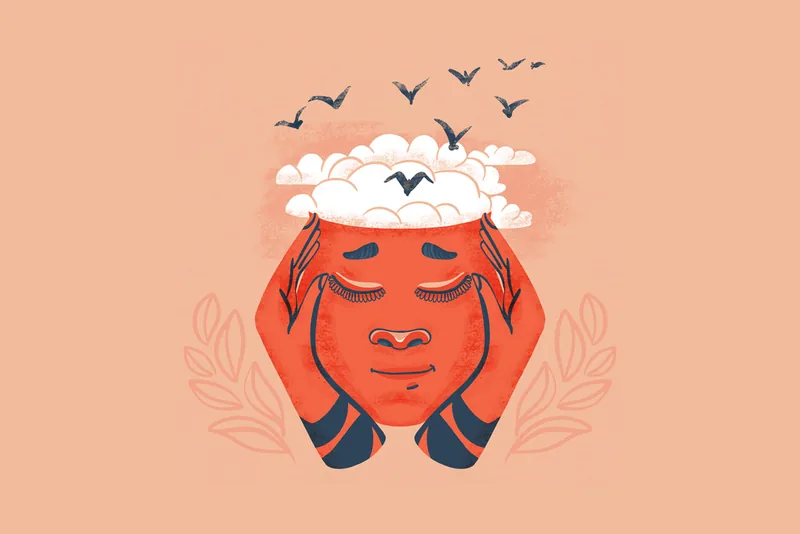
Anxiety sucks. Let’s just get that out of the way. It’s a suffocating blanket, a relentless inner critic, and a thief of joy. But what if, amidst the struggle, anxiety also holds keys to a deeper understanding of ourselves and the world? This isn’t about toxic positivity or pretending the discomfort doesn’t exist. It’s about acknowledging the pain while recognizing the unexpected wisdom that can emerge from a lifelong relationship with an unwelcome companion.
The Unseen Roots of Worry
For many, the anxiety we experience today has echoes in childhood. For me, it started subtly, a stark contrast to the rough-and-tumble freedom of the 1980s. While others worried about broken fingers on the football field, a far less dramatic event triggered a deep-seated fear: the fear of public exposure. The image of a teammate’s bare backside, accidentally revealed during a touchdown, sparked a disproportionate panic. This seemingly small incident led to days of tying my pants with a string so tight it hurt, a physical manifestation of an internal unease that would follow me for years.
Back then, terms like “anxiety” weren’t part of the everyday lexicon. Mental health was a hushed topic, if discussed at all. I was simply the kid who got sick before school, a mystery to myself and others. Fast forward to the modern era, especially after experiencing COVID-19, and that familiar unease has intensified, forcing a more conscious confrontation. It’s never easy, but it has undeniably illuminated crucial aspects of life.
The journey through anxiety, though arduous, has revealed a surprising landscape of personal growth. It's a testament to the human capacity to find meaning even in suffering. As we navigate this, remember that acknowledging the difficulty is the first step toward uncovering the lessons anxiety sucks and it taught.
7 Unexpected Lessons Anxiety Taught Me
Anxiety is a powerful, often overwhelming force. It demands attention and, in its own disruptive way, offers profound insights. Here are seven lessons that have emerged from my own persistent companion:
1. The Gift of Presence
When anxiety hits hard, focus narrows to an intense, almost suffocating point. Reading, writing, or even enjoying a movie becomes impossible. This forced stillness, however, roots you directly in the present moment. It’s not a pleasant presence, but it’s authentic. By observing the raw physiological sensations—the racing heart, the tight chest—you can begin to see them not as threats, but as pure energy. The suffering often arises not from the sensation itself, but from the mind’s interpretation and narrative around it (Kabat-Zinn, 2013).
This deep presence allows for a crucial distinction: the physical feeling versus the emotional reaction. It’s a difficult skill to master, but it offers a path to observe anxiety without being consumed by it.
2. The Illusion of Control
My tendency towards hyper-independence and meticulous planning likely stems from deeper roots, perhaps even trauma responses. Therapy has offered insights, but anxiety provides a constant, practical lesson: distinguishing what I can control from what I cannot. The anxious mind often fixates on external triggers—work, relationships, finances—things fundamentally outside our direct command. The relief, however, lies in recognizing that while the *situation* may be uncontrollable, my *response* is entirely within my power (American Psychological Association, 2022).
This realization shifts the focus inward. It encourages a surrender to the larger forces at play, whether you call it a higher power, fate, or simply the natural unfolding of life. It’s a humbling reminder that trying to control everything is an exhausting, unwinnable battle. Learning to box within your weight class, so to speak, is essential for well-being.
3. The Necessity of Boundaries and Habits
When life feels smooth, it’s easy for self-care to slide. Poor eating habits creep in, exercise becomes optional, and late nights filled with distracting media become the norm. Worse, unhealthy relationships can gain prominence, often under the guise of helping others. Anxiety, however, acts as an unavoidable wake-up call. It highlights the consequences of neglecting boundaries and healthy routines. It forces a “cleaning of the house,” a necessary re-evaluation of who and what truly serves your well-being.
This is where the lesson about boundaries becomes critical. Protecting your energy and mental space isn't selfish; it's self-preservation. Limiting contact with toxic individuals, no matter their perceived need, is vital. Anxiety reminds you that you can't pour from an empty cup.
4. The Imperative of Growth
After clearing the clutter, anxiety often spurs a desire for positive change and personal development. It encourages looking at new projects, learning new skills, and consciously evolving into a better version of oneself. This process has been challenging during intense periods of anxiety, but the seeds planted—good habits, new ventures—begin to bear fruit. For instance, transitioning from a demanding counseling license to a more fulfilling life coaching career was a direct result of anxiety-induced re-evaluation (Burnout, 2023).
Similarly, changes in diet and exercise, prompted by health concerns and anxiety, have become sustainable, beneficial habits. These aren't just coping mechanisms; they are investments in long-term health and resilience, proving that even anxiety sucks, it taught me to prioritize my well-being.
5. The Practice of Gentleness
My natural inclination can be to be direct, sometimes to the point of gruffness. While I possess compassion, expressing it often lacked a gentle touch. The feeling of fragility that accompanies high anxiety, however, fosters a deeper empathy for others’ vulnerabilities. It illuminates how bluntness can be perceived and encourages a softer approach. Around 2018, as anxiety began to re-establish itself, I noticed a significant shift: my anxious state made me inherently more considerate and gentle with those around me.
This newfound gentleness isn't about being less authentic; it’s about tempering authenticity with kindness. It’s recognizing that everyone is navigating their own internal storms, and a little softness can go a long way.
6. The Wisdom in Slowing Down and Asking for Help
When anxiety spikes, the instinct is to act quickly, to change things, to find an immediate fix. This often leads to impulsive decisions that create more problems down the line. A crucial lesson has been learning to pause. An anxiety surge is not the optimal time for major life decisions. Instead, it's a signal to slow down, gather information, and approach choices with deliberate intention. Furthermore, I’ve learned the profound value of talking things through with trusted friends or professionals—something I historically resisted.
Asking for help isn't a sign of weakness; it's a strategic move towards resolution and support. It acknowledges that we don't have to carry every burden alone. This has been particularly true when facing complex personal or professional challenges, where an external perspective is invaluable.
7. The Acceleration Through Action
This might seem contradictory to the previous point, but it’s about context. While major decisions require a pause, certain anxiety-provoking tasks benefit from immediate action. These are often the mundane but necessary chores: making difficult phone calls, tackling bureaucratic paperwork, or running errands that trigger dread. The folk singer Joan Baez famously (though perhaps misattributed) stated, “Action is the antidote to anxiety” (Baez, cited in Author, 1970s). The principle holds true.
By taking small, decisive steps to address these dreaded tasks, the anxiety associated with them diminishes significantly. This practice has bled into daily life, fostering a proactive habit. Mowing the lawn, taking out the trash, or getting the car serviced—these tasks are handled promptly, preventing them from festering into larger sources of worry. This learned efficiency, born from confronting anxiety, has become a powerful productivity tool.
Anxiety Still Sucks, But It Teaches
These seven lessons are profound, hard-won insights. Yet, they don’t magically erase the discomfort of anxiety in the moment. Anxiety is, by its nature, designed to be unpleasant. It’s a signal that something needs attention, a prompt to address a perceived threat. In our modern world, however, many of these threats—job security, financial stability, global issues—are complex and often unresolvable through direct action alone (Frankl, 1946).
In such cases, perhaps the ultimate lesson anxiety offers is the ability to sit with discomfort. It's about building resilience, not by eliminating the struggle, but by learning to navigate it with greater awareness, intention, and self-compassion. The anxiety sucks, it taught me so much, and the journey continues.