If you've been watching the tech world, you might feel like you're witnessing the end of an era. With Tim Cook's announcement to step down as Apple CEO, we're looking back at a period of immense change and innovation. It's natural to wonder what defined this significant chapter. Over nearly 15 years, Cook has steered Apple through unprecedented growth and transformative product launches. This isn't just about sales figures; it's about the decisions and creations that have fundamentally reshaped how we interact with technology. We've compiled 11 of the biggest moments in Tim Cook's time as CEO that truly tell the story of modern Apple.
The Dawn of Intelligent Assistants: Siri (2011)
Even before Tim Cook officially took the helm, a groundbreaking feature was unveiled: Siri. Introduced with the iPhone 4s on October 4, 2011, Siri wasn't just another app; it was a paradigm shift in human-computer interaction. Imagine asking your phone for the weather, to set a reminder, or read your messages while driving. This voice-activated assistant promised a more intuitive way to engage with devices. While Siri's journey has seen its share of development hurdles, with ongoing efforts to enhance its AI capabilities as noted at WWDC 2024, it remains a core element across Apple's ecosystem, a testament to its early impact.
A Rocky Start: Apple Maps (2012)
Before 2012, iPhone users relied on Google Maps for navigation. Apple's decision to launch its own mapping service, Apple Maps, was a bold move. However, the initial release was, to put it mildly, a disaster. Missing cities, inaccurate directions, and a famously flawed app icon depicting a car driving off an overpass led to widespread criticism. The fallout was so significant that Scott Forstall, then VP of iOS, reportedly left the company over the issue (The Verge, 2012). Despite this inauspicious beginning, Apple Maps has significantly improved over the years, becoming a preferred navigation tool for many iPhone users today.
Expanding the Audio Landscape: Beats Acquisition (2014)
In the era before AirPods dominated the wireless earbud market, Apple made a colossal move to bolster its audio presence. In 2014, Apple acquired Beats by Dre for a staggering $3 billion. This acquisition was more than just a financial transaction; it was a strategic play to gain significant market share and leverage the popular Beats brand. For a couple of years, Beats headphones became the de facto premium audio choice for Apple users, bridging the gap until Apple launched its own line of premium headphones and, of course, the AirPods.
The Watch Revolution: Apple Watch (2014)
When Apple unveiled the first Apple Watch in 2014, the 'Edition' model, crafted from gold and commanding a five-figure price tag, stole the spotlight. It hinted at a luxury market focus. However, the true genius lay in the more accessible aluminum models that brought the device to the masses. This initial iteration laid the groundwork for what has become a ubiquitous wearable. Today's Apple Watch is a sophisticated health and communication hub, far exceeding its predecessor with features like cellular connectivity, advanced health monitoring, and emergency services. Tim Cook himself often shares inspiring stories of how the Apple Watch has positively impacted users' lives, highlighting its profound importance to the company.
A Trillion-Dollar Valuation Milestone (2018)
On August 3, 2018, Apple achieved a historic feat, becoming the first publicly traded U.S. company to reach a $1 trillion valuation. This was a monumental achievement, especially considering the company's near-bankruptcy in the 1990s and the uncertainties following Steve Jobs' passing. It underscored the remarkable turnaround and sustained growth Apple experienced under Tim Cook's leadership. This financial landmark was just one of many, as the company continued its ascent, eventually reaching a $4 trillion valuation.
Cutting the Cord: AirPods (2016)
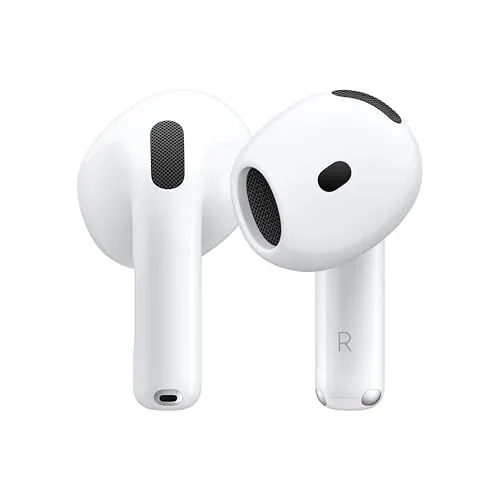
The infamous removal of the headphone jack from the iPhone 7 in 2016 was met with considerable backlash. Yet, it paved the way for one of Apple's most successful product launches: the AirPods. Initially priced at $169, these wireless earbuds were a bold statement, requiring users to either adapt or purchase Apple's new solution. Despite initial skepticism and enduring jokes about their design, AirPods have become a cultural phenomenon. They have not only popularized truly wireless earbuds but have also evolved into a diverse product line, including Pro and over-ear models, cementing their status as a must-have accessory. This was one of the biggest moments in the transformation of personal audio.
Entering the Streaming Wars: Apple TV+ (2017)
The announcement of Apple's foray into the streaming service market in 2017 was met with a degree of industry weariness. Facing established giants like Netflix and Hulu, many questioned if Apple could carve out a niche. However, what began as Apple TV evolved into Apple TV+, a platform that has since become home to critically acclaimed and wildly popular shows such as Ted Lasso, Severance, and For All Mankind. It stands as a significant, albeit initially underestimated, expansion of Apple's content strategy.
A Design Renaissance: iPhone X (2017)
To mark the iPhone's 10th anniversary, Apple introduced the iPhone X, a device that radically redefined smartphone design. It bid farewell to the iconic Home button and the substantial top and bottom bezels, embracing an edge-to-edge OLED display and the innovative Face ID facial recognition system. The distinctive notch housing the front-facing camera became an instant design cue. Even years later, the iPhone X's aesthetic remains strikingly modern, influencing smartphone design across the industry. It was a bold step that showcased Apple's commitment to pushing design boundaries.
Apple Silicon: In-House Chips (2020)
Perhaps one of the most strategically significant decisions during Cook's tenure was the transition to in-house Apple Silicon for Macs, beginning in 2020. Having already mastered custom chips for iPhones, Apple applied this expertise to its laptop and desktop lineup, ending its reliance on Intel. This move granted Apple complete control over both hardware and software integration, leading to unprecedented performance gains and power efficiency. The M-series chips have revitalized the Mac line, with many users finding their Macs more capable and longer-lasting than ever before. This shift represents one of the biggest moments in the evolution of personal computing.
The Vision Pro Debut: Mixed Reality (2024)
After years of anticipation, Apple finally entered the burgeoning mixed-reality market with the Apple Vision Pro in 2024. This device, powered by the new visionOS, showcased impressive hardware and a unique approach to spatial computing. Features like linking a MacBook for a virtual ultra-wide display and creating virtual personas for FaceTime calls demonstrated its potential. However, the $3,499 starting price point presented a significant barrier to mass adoption, especially when compared to more affordable competitors like Meta Quest devices (The Wall Street Journal, 2024). Despite its challenging market entry, the Vision Pro marks a monumental, albeit polarizing, step into a new technological frontier.
Democratizing Macs: MacBook Neo (2024)
Following the success of Apple Silicon, the introduction of the MacBook Neo in 2024 aimed to make Mac computing more accessible than ever. Priced at an aggressive $599 (or $499 with an education discount), this machine utilized an A-series chip, similar to those in iPhones, rather than the M-series. While it offered 8GB of RAM and ran macOS, it provided a capable experience for everyday tasks at half the price of previous entry-level MacBook Air models. This move has the potential to dramatically expand the Mac's reach into new markets and user segments, representing another of the biggest moments in Tim Cook's leadership.